How To Protect Your Dog’s Paws in the Winter: 5 Tips for Pet Parents
In This Article Do Dogs Need Paw Protection in the Winter? View 1 More +



In This Article Do Dogs Need Paw Protection in the Winter? View 1 More +

Why Do Some Vets Offer Non-Anesthetic Teeth Cleaning? With the benefits of dental care performed under anesthesia being so obvious, why do some vets even offer non-anesthetic teeth cleanings? Their thought is most likely that a little dental care is better than nothing for those pets whose parents won’t agree to anesthesia, but that doesn’t make it a good option for you and your pets. The best way to limit the number of teeth cleanings a pet will need over the course of their life is to brush their teeth daily. Talk to your veterinarian about types of home pet dental care that will keep your pets happy and healthy. Featured Image: Adobe/worlock1,WRITTEN BYJennifer Coates, DVM Veterinarian Dr. Jennifer Coates is an accomplished veterinarian, writer, editor, and consultant with years of experience in the fields of veterinary…,Dogs and cats need routine dental care just like humans. Without it, plaque and tartar build up on a pet’s teeth, which eventually can lead to painful gingivitis, periodontal disease, infections, tooth loss, and even problems in the rest of the body (heart disease, for example). Even with good home dental care, pets will eventually need a professional dental cleaning. This really shouldn’t be too surprising—this is what is required with our own teeth, after all. But there is one big difference between how our teeth and our pet’s teeth should be cleaned: Pets need to be put under anesthesia for the cleaning to be safe and effective.

Complete and balanced fresh dog foods are an excellent way to provide optimal nutrition, but they require extra effort when it comes to storage. Storing fresh dog food properly will help you protect both your dog’s food and their health.

Managing arthritis in cats is difficult. The drug class that is the mainstay of treatment for both dogs and people is nonsteroidal anti-inflammatories (NSAIDs). Veterinarians may prescribe NSAIDs for short-term pain management in cats under certain circumstances. When used appropriately and prescribed by a veterinarian, they can be safe and effective. However, arthritis treatment is almost always long-term. Buprenorphine is an opioid pain reliever for cats that is safe and effective but addictive to both humans and cats. It’s relatively expensive if you are using it day in and day out for the rest of your cat’s life. Veterinarians might recommend it for short-term use when other forms of treatment are no longer able to keep your cat comfortable, but they may reserve it for late-stage arthritis. Thankfully, dietary modifications have proven to be an excellent way to help treat arthritis in cats. Here are some ways you can change your cat’s diet to support their joint health: Keep Your Cat Lean Most importantly, arthritic cats should not be overfed. The weight of extra body fat stresses arthritic joints and results in pain. Fat tissue also secretes hormones that cause inflammation, and since inflammation is at the heart of arthritis, anything that increases it needs to be avoided. For these reasons, arthritic cats should be fed an amount of food that keeps them a little on the skinny side. Ask your vet for specific measurements of how much to feed the particular diet that your cat is on. The guidelines on the bag are a start, but your vet can give you a more precise measurement. Feed the Right Amount of Quality Protein Diets for cats with arthritis should contain adequate amounts of protein. Protein helps build muscle, and strong muscles help support joints. Most cats with arthritis are older, and older cats usually need more protein than they did when they were young. Foods for arthritic cats should contain high-quality sources of animal-based protein that are easy to digest. Look at the ingredient list to make sure at least one animal protein is listed as the first or second ingredient. The minimum protein percentage on the product’s guaranteed analysis should not be less than around 35% or so, on a dry matter basis. For dry food, this is the percentage you’ll see in the Guaranteed Analysis section on the bag. For wet food, you’ll need to do a little math: Subtract the percent moisture from 100. This is the percent dry matter for the food. Next divide the protein percentage on the label by the percent dry matter and multiply by 100. The result is the protein percentage on a dry matter basis. You can compare this directly to the one on the dry food bag. Try Joint Health Supplements Dietary supplements are also quite helpful in treating arthritis in cats. Cats with arthritis can benefit from chondroprotectants (supplements that promote cartilage health). A combination of glucosamine and chondroitin sulfate or extracts from green-lipped mussels are commonly used and can be mixed into your cat’s food or given as treats. Dasuquin® is a favorite option that comes in a flavored chew with glucosamine, chondroitin, omega-3, and other ingredients. An injectable chondroprotectant such as Adequan® is another option that works well. It may be difficult and stressful for all involved, however, to keep taking your cat in to see the vet for injections. Many people also like to give fish oil, the best source of omega-3 fatty acids, to cats with arthritis. Several studies have shown that arthritic cats fed high doses of omega-3 fatty acids tend to have less lameness and be more active than do cats who did not receive the supplements. Many fish oil supplements come in a pump dispenser, so you can mix the oil into your cat’s food as instructed on the label. Just be aware of how many calories you’re adding to your cat’s diet each day through fish oil. Make sure that you start out with a diet that is relatively low in other sources of fat. The last thing you want is for your cat’s arthritis supplements to cause weight gain, undoing the good you are doing by altering their diet in the first place. Featured image: iStock.com/Svetlana Sultanaeva
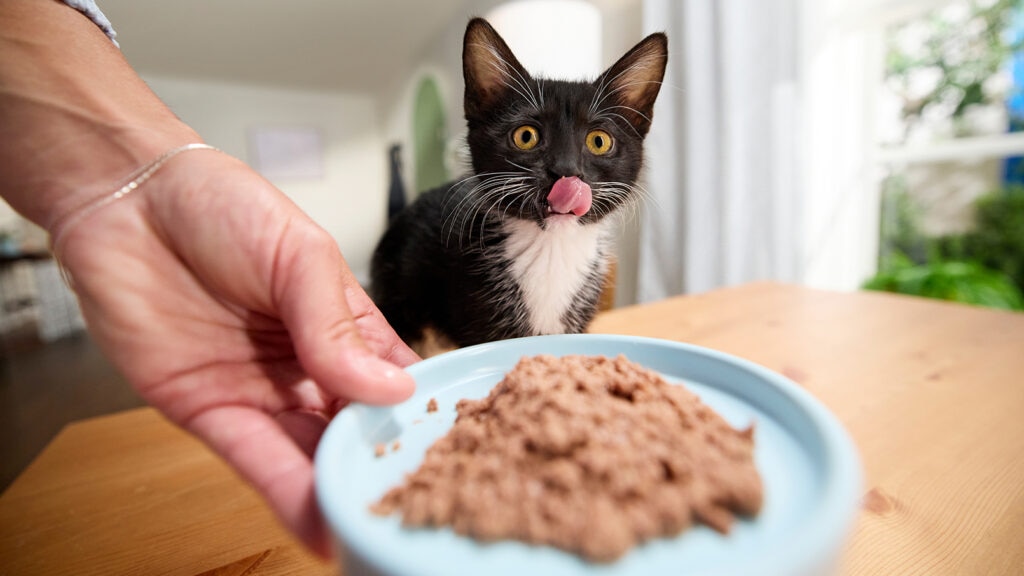
Determining how much to feed a kitten isn’t easy. Even when you hit upon the right amount, it’s going to change before you know it because they just grow so fast. Feeding your kitten the right amount of food is one of the best ways you can help them grow up to be a healthy and happy adult cat. Here’s how.

5. Cats Have Variable Memories Short-term and long-term memories serve different purposes. Short-term memories are generally relevant immediately (where a treat was hidden, for example) but aren’t useful for very long. Long-term memories can have repeat value far into the future (learning how to navigate a scary encounter with a dog, for example). Research shows that cats’ short-term memory tends to fade pretty quickly (within 10 to 30 seconds or so) and their ability to find a hidden object completely disappears in 60 seconds. Studies about long-term memory in cats are lacking. One paper showed that cats have good memories for up to 10 minutes or so, but experts agree there is anecdotal evidence that cats can remember important events and relationships for much longer.,6. Cats Have Some Concept of Time and Numbers If you’ve ever been late feeding your cat a meal, it’s probably not too surprising to hear they have a good sense of time. But you might be astonished at just how good it is. One study found that cats could even discriminate between a five-second and an eight-second time interval. And while it may be pushing things to say cats have an understanding of math, it appears they can differentiate between quantities of food. A paper published in 2008 found that cats could understand three is greater than two. More recent research revealed that even kittens could differentiate between larger and smaller amounts of food—a skill that has obvious benefits when it comes to survival. Featured Image: RyanJLane/iStock / Getty Images Plus via Getty Images,Did you know that cat brains are smaller than they used to be? This doesn’t mean that our feline friends are less intelligent than their wild ancestors, just that their brains have adapted to living with us. Some facts about feline brains are linked to how cats used to live, while others probably developed more recently as a result of domestication. In either case, knowing how cat brains do (and don’t) work can help you answer the questions that inevitably arise after watching your cat do something strange, like knocking over your cup of water (again).

Outgoingness Cats with high scores may benefit from additional toys and playtime. Cats with low scores are uncommon, but may be showing signs of aging or related health issues.,Dominance Cats with high scores may experience difficulties being around other cats, both in your home and in your neighborhood. Cats with low scores may adjust well to being in multi-cat households.,Stereotypes about cats and their personalities abound—calicos are feisty, orange tabbies are laid back. The Cat Fanciers’ Association has even put together a Breed Personality Chart. The problem with stereotypes is that when looking at an individual, they tend to be wrong as often as they are right.

Ringworm in cats is actually caused by fungi, not worms. It’s a very contagious skin condition that can affect many species, including humans, but cats are at particularly high risk. Understanding the signs of ringworm in cats and getting prompt veterinary care can help protect both your cat and your family from this disease.

Pet parents might consider mixing wet food and dry kibble for a number of reasons. Here are some benefits of mixing wet and dry pet food:,Is it safe to mix wet and dry food for your dog? Is it even worth mixing the two? Yes and yes! Read on to learn more about the benefits of mixing wet and dry dog food, when it makes sense to mix them, and how to do it properly.

In This Article Summary View 5 More +


What Is a Horse Whisperer? Your Guide to Natural Horsemanship

The 5 Best Winter Dog Sports and Activities to Try With Your Pup