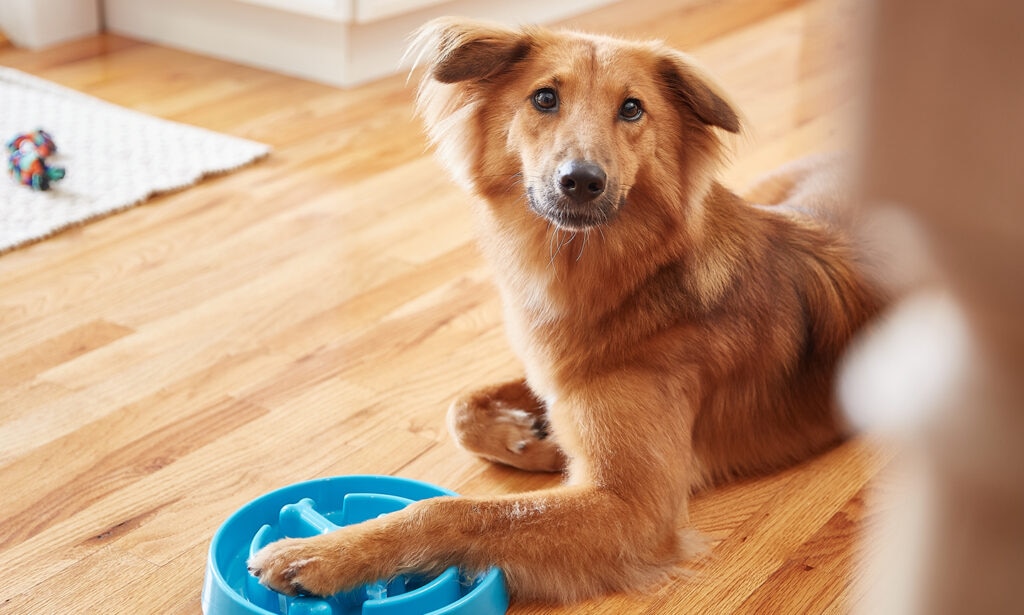
There are several possibilities as to why your canine companion has a lack of appetite (known as anorexia) or a decrease in appetite (hyporexia). Food Preferences If you’ve noticed your dog hasn’t taken a liking to their food lately, it could be because they simply don’t like the taste or texture of it, says Bethany Hsia, DVM, mobile veterinarian and co-founder of CodaPet, in Clovis, California. What’s more, indulging in one too many treats or human food throughout the day can cause some dogs to become finicky. (A dog’s diet should consist of 90% regular dog food and only 10% treats.) As a result, they might find their regular meals less appealing, says Sarah Cortright, DVM, chief medical director at Underdog Community Project, in Los Angeles, California. Not Feeling Well When we’re under the weather, it can feel like a chore to sip soup or even drink water. The same can apply to our furry friends. Examples of issues that can cause a decrease in a dog’s appetite or discomfort while eating include gastrointestinal issues, such as an upset stomach or acid reflux, food sensitivities, and dental problems. A few medical-related causes that might result in a dog eating less or refusing food include: Gastrointestinal disease Foreign object obstruction A systemic illness (kidney failure, or liver disease such as hepatitis) Arthritis or hip dysplasia Medications Tumors or cancer If a dog consistently refuses food or is displaying other concerning symptoms, visit your vet to rule out any medical issues and get them back to eating normally. Stress or Anxiety A trigger or change in your dog’s environment or routine can impact their emotional well-being and subsequently affect their appetite. Behavior-related causes that can be associated with a reduction in appetite can include: Stress Anxiety Phobias Fear Depending on your pup’s personality, it can take them extra time (and love!) to adapt to certain changes—such as moving into a new home, boarding, or traveling—and eat as they usually do. Distractions in Feeding Environment Some dogs cherish their peace and quiet more than others, especially when they’re trying to eat. “Distractions, like a busy household or other pets nearby, can make it difficult for a dog to focus on eating,” Dr. Cortright says. Saving It for Later Another reason why your pooch might not be eating their food is because they’re saving it for later, like when they bury bones. Wild canines buried or stashed their food to protect it from scavengers or save it for when they were hungry. Domestic dogs instinctively do this for several reasons, from being uncertain about when their next meal is to having too much food available at once, Dr. Cortright says. “Anxiety or stress can also play a role—some dogs may feel uneasy eating in a particular environment and choose to ‘store’ their food instead,” she adds. “In multi-pet households, dogs might hide food to prevent other animals from getting it.”,Does your dog take one look at their food, turn up their nose, and ignore it for the rest of the day? An indifferent attitude toward their food or a skipped meal altogether can cause any pet parent to worry—and it certainly raises the question, “Why is my dog not eating?” We talked to veterinarians to learn more about why dogs might not eat their food, tips on how to get them to eat, and when to consult a vet.