Can Horses Eat Bananas?
In This Article Are Bananas Good for Horses? View 6 More +



In This Article Are Bananas Good for Horses? View 6 More +

In This Article FAQs

By Kellie B. Gormly Barking can be a noisy nuisance to dog parents (and their neighbors!), and is often tops the behavioral problem list. However, canine vocals aren’t all bad. Sometimes, a barking dog can provide a safety warning and other times, teaching a dog to bark on command can make for a fun party trick. “A lot of people would absolutely want their dog to bark when there are strangers around, or something is out of order in the neighborhood,” said Los Angeles-based certified dog trainer and behavior consultant Jonathan P. Klein. “When we teach a dog to do something on cue, the key is to get them to reliably do the behavior one way or another.” How, then, do you teach your dog to bark on command without confusing him or encouraging annoying barking? By teaching a trick and not a bad habit, said Beth McGonigal, certified dog trainer and owner of North Pittsburgh Animal Behavior. “We don’t want to create a little yappy monster.” She compares teaching dogs to bark to a sweet arrangement she has with one of her dogs, Jefferson. When she says the magic words, “give mommy some romance!” Jefferson gives her a kiss on the lips, which is fun on command but not something a pet parent would want done all the time. How to Make a Dog Bark Capture the behavior you want and reward it by enticing your dog with a trigger that excites him, like holding a ball or ringing the doorbell. Right before the dog barks, say the command you want to teach (he will then associate the command with vocalizing) then give your dog a treat for barking on command. If he barks but you haven’t said the command, don’t reward him. After a few repetitions, he will begin to realize that if he barks, he will get a treat, said McGonigal, who also uses clickers to train. You can also trigger the bark by doing something that frustrates the dog, like bouncing a ball out of his reach behind a baby gate. After you say the command, you can then reward the dog by giving him the treat of playing with the ball. Repeat the process by rewarding your dog for barking on command then, once he learns the command, reduce the treats and make them more intermittent, Klein said. A common command to teach is “speak,” but dogs have no inherent knowledge of that English word; they only know it if people teach them to associate it with barking, McGonigal said. Therefore, you can invent a word or phrase of your own to get your dog to bark on command, or just use the simple, “speak.”
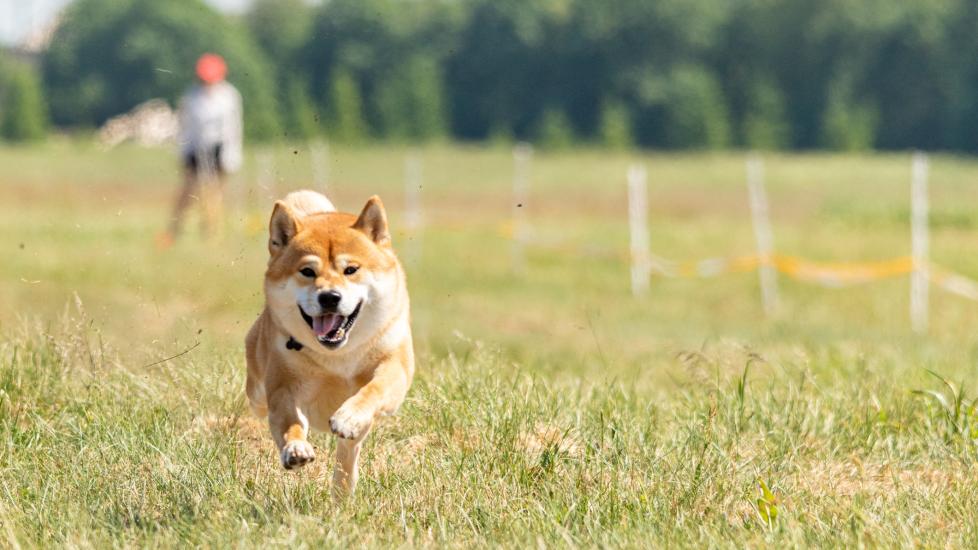
In This Article What Is Lure Coursing for Dogs? View 4 More +
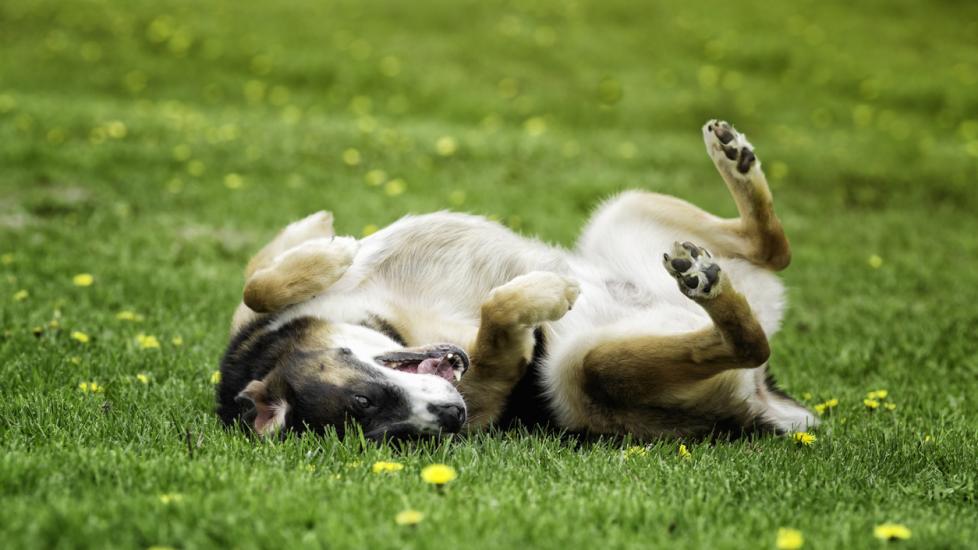
References Coren, S. Why do dogs roll in garbage, manure, or other smelly stuff? Psychology Today (2009) Wolves. Wolf Park. McConnell, P. Why Do Dogs Roll in Disgusting Stuff? The Other End of the Leash. (2015),References Close,Have you ever had your pup come running up to you after rolling around in the grass, only to find out that they smell like roadkill? Although it’s gross, many dogs enjoy rolling around on dead animals. There are several theories why dogs roll in disgusting things like poop or dead animals: To Mask Their Own Scent Probably the most popular theory is that dogs—like their wolf ancestors—roll around in a strong scent like a dead animal to mask their own scent. This helps them sneak up on their prey more easily. Whether or not your dog realizes why they are doing this is still a mystery. They could be acting out some of the ingrained instincts they’ve received from their ancestors with no intention of seeking out prey.
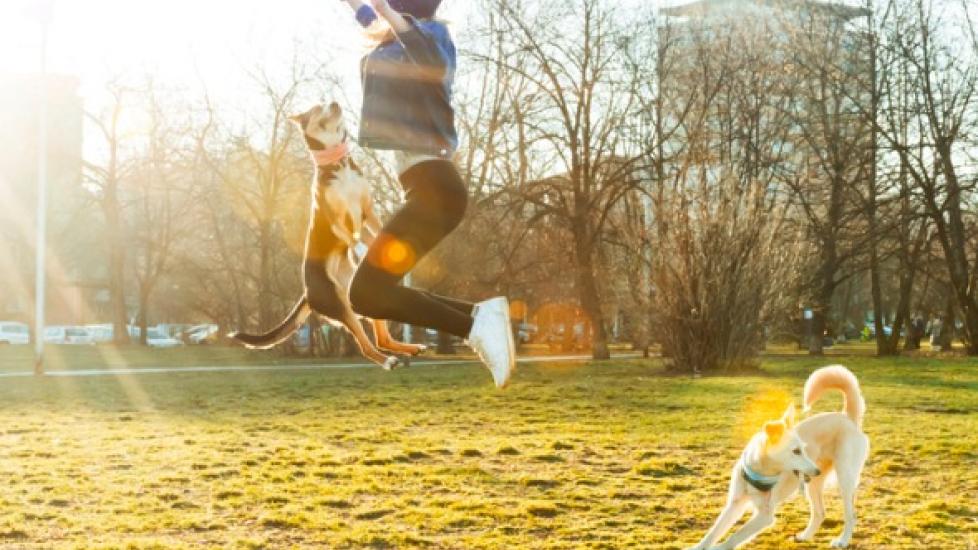
Image via iStock.com/Elitsa Deykova By Paula Fitzsimmons Looking for a fun, safe and affordable activity you can do with your pup just about anywhere? Welcome to the world of dog parkour, a low-impact sport associated with a number of benefits for dogs, including confidence-building, increased focus and physical fitness. Although parkour dog training is designed to be safe and appropriate for dogs of all physical abilities, check with your veterinarian to make sure it’s a good fit for your best pal. Then get outdoors and have the time of your lives! Dog Parkour Basics In some ways, dog parkour resembles traditional dog agility courses. “Parkour invites your dog to move his body over, under, around and through various structures and barriers,” explains Julie Daniels, a dog agility expert and trainer with Fenzi Dog Sports Academy. The difference is that this low-impact sport relies on natural and man-made obstacles found outdoors. Instead of using dog agility tunnels, obedience jumps, dog walks and other standard dog agility training equipment, you instead rely on structures like fire hydrants, rocky walls and bike racks. Unlike dog agility courses that are more structured, dog parkour is an informal, highly customizable activity that emphasizes fun. It’s also a noncompetitive sport, but pet parents can submit videos of their dogs doing parkour and submit them to International Dog Parkour Association (IDPKA) to earn titles. “Each level has different, and increasingly difficult, requirements. This takes some training and some careful practice,” says Daniels. While she doesn’t pursue dog parkour titles, Daniels still participates in the sport. “I enjoy what parkour offers to supplement my dogs’ physical and mental training for agility competition. My dogs use parkour almost every day as we cross-train for the more structured sport of agility.” It’s an activity you can enjoy with your dog in any city or rural setting. “Walking in a park, through a neighborhood or along nature trails with our dogs is a wonderful experience, and it is fun to engage with those spaces in a different way while connecting with our dogs through training and fun that parkour adds to the experience,” says Meredith Biehl, owner of Thinking Dog Dog Training and Behavior Consulting in the Milwaukee, Wisconsin area. Dog Parkour Instills Confidence and Strengthens the Human-Canine Bond Dogs who participate in parkour oftentimes gain confidence, says Biehl. “They learn how to better and more safely move their bodies when active and create a more unique bond with their people while enjoying more time outside. The human gets to enjoy time outside and learn more about how their dog learns, moves and reacts to distractions or new objects, while also adjusting the activity level to suit both them and their dogs.” Dog parkour is based on reward-based training, says Biehl. “Dogs look forward to being able to jump on and go over, around, under or through objects. It becomes a fun game that gives them great exercise while allowing them to also play and work with their human. The humans get to see happy dogs who are learning and engaged with them with the added benefit of a relaxed dog who’s burned off some energy.” It also fosters teamwork and strengthens the bond between pet parent and dog. “We get to explore the world together in an active way. My dogs get to run around things and jump on things and crawl under things. I get to communicate with them as I encourage them and reward them … Sometimes I need to help them balance if we are working with narrow or unsteady surfaces. My dogs trust me! That sort of trust is earned. It cannot be demanded. It’s part of the foundation which we have built into our day-to-day relationship,” says Daniels. Can Your Dog Do Parkour? Parkour is a low-impact activity, and experts say that you can customize it for all skill levels. “It is possible to safely start a dog while minimizing physical or mental strain,” says Biehl. People of all ages can do parkour with their dogs, Biehl says. “My 5-year-old daughter has worked on parkour skills with our dogs and will pretend to do it with her stuffed animals too. It helps her explore her environment—looking at trees, rocks, railroad ties, benches and other things differently and brings out creative ideas while keeping her active outside.” Biehl’s canine students of all ages and sizes benefit from dog parkour. “Everyone celebrates each other’s success when a dog tries something in a new place or accomplishes a new skill they’ve been working on,” she says. What’s Involved in Parkour Dog Agility Training? After ascertaining your dog’s physical abilities (ask your vet for help with this), start parkour training slowly and easily to build your dog’s confidence and ability levels, says Daniels. “Make sure you know how to reward your dog, not just for success but also for effort. Everyone likes to feel smart as they are working to get better at a skill. Everything from praise, clapping and cheering, cookies and playtime, all of these things are part of a reward system for training your dog in parkour.” It’s not a sport you need to do on a set schedule, says Dr. Abigail Curtis, a veterinarian, dog trainer and co-founder of IDPKA. “You can have just as much fun practicing once a day as you do once a month. Many people incorporate it into their daily walks, and find new stuff to explore when they are walking their dogs. Some people only go out exploring once a month. There is no right or wrong answer to how much you should train parkour, as long as you are both having fun and keeping safety in mind.” Most of what you need for parkour dog training is already in the environment, but there are some dog supplies you will need, says Biehl. These include a leash, a safe and properly fitting harness, dog treats, dog toys and dog poop bags. “For most skills, dogs should wear a flat buckle collar (no prong, choke, shock collars or head halters), be on a harness and leash with a human spotting the dog. This ensures that in case a dog slips or missteps, someone is there to help support the dog to minimize risk of injury,” says Biehl. Maximize Your Dog’s Safety and Well-Being Dog parkour is considered a safe sport, but there are some things you can do keep your pup safe. “Always check your surfaces,” says Karin Coyne, a dog trainer and IDPKA co-founder. “Watch out for surfaces that are too hot or cold, slippery surfaces, small holes that toes might get caught in, and dangerous items around your obstacle such as glass or nails.” Adult dogs should not jump onto hard surfaces that are taller than shoulder height, and puppies should not jump off surfaces that are taller than stopper pad height. “Find another way down or help them down,” says Coyne. Always spot your dog, adds Curtis. “Always be in a position that you can help your dog if needed.” Work at your dog’s pace and never force her to do an obstacle, she adds. “Dog parkour is all about having fun and building confidence.” Being respectful to others is also important. “Please clean up after your dog if they go to the bathroom, do not do parkour on art installations and statues, and please only use children’s playgrounds if dogs are allowed on them and when children are not present,” says Biehl. Jumping and climbing are activities that require strong joints. Ask your vet if joint support dog supplements, like Zesty Paws Hip & Joint Mobility Bites and Nutramax Cosequin maximum strength plus MSM soft chews, or special diets like Royal Canin Sporting Life Agility 4100 dry dog food, can help with dog agility. Dog parkour is a safe, fun and challenging agility sport that you and your best pal can enjoy together just about anywhere. While you can most definitely do dog parkour on your own, IDPKA offers classes if you need help getting started.
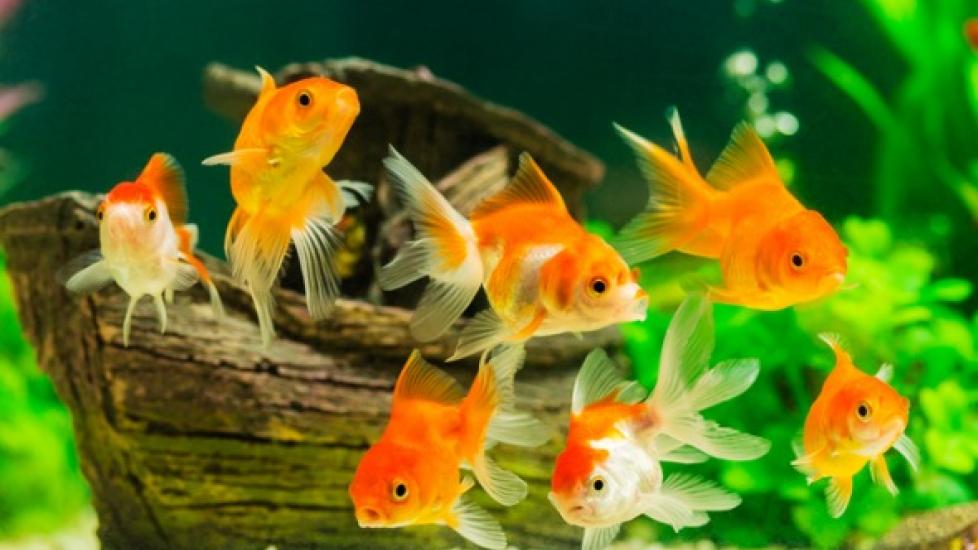
What About Bettas and Goldfish? Even though there really isn’t any fish species that is suited for life in a bowl, bettas and goldfish are especially poor choices. Bettas Yes, you’ve seen it before. Bettas in bowls! Cups, even. And yes, a betta might even survive for some time under these conditions. But again, we should ensure that the animals in our care thrive, not merely survive. Bettas prefer very warm water—even warmer than many other tropical fish. Thus, a dependable water heater (such as the Marina betta aquarium heater) is necessary. Also, poor filtration can be fatal for this species. The fact that they can breathe air while in oxygen-poor environments has more to do with a hot climate (oxygen solubility decreases with increasing temperature) than with polluted waters in their native habitat. Exposed to dirty water in an unfiltered or poorly filtered bowl or tank, bettas are highly susceptible to infections in their characteristically long fins. Goldfish Goldfish are perhaps the worst choice for a bowl, or any small container. Not only are they notoriously messy fish that generate copious amounts of waste, but they also grow to sizes more fit for a pond. Yet the term “fish bowl” is nearly synonymous with “goldfish bowl.” This is mostly the result of millions of juvenile goldfish having been given away as carnival prizes, usually from inexperienced aquarists to inexperienced aquarists. Though they can live to many years of age, the unfortunate specimens obtained under these circumstances very rarely survive for more than a few weeks. Fishkeeping is indeed a hobby where many, many conflicting opinions abound. However, among the most experienced aquarists and industry professionals, there is almost universal agreement that fish bowls just don’t work. Specifically, a bowl cannot provide an adequate living environment for any fish, big or small. So, give the fish under your care what they need and deserve: the biggest, healthiest home possible. By: Kenneth Wingerter Feature Image: iStock.com/satit srihin,Even for many of us who already own and maintain sizable aquarium systems, the idea of keeping fish in a tiny enclosure can be rather appealing. Whether on the office desk, a bedroom nightstand or an entry table in your home, it’s understandable why someone might want that little splash of life that a fish bowl seems to provide. You do have to admit that many of these bowls, especially when stocked with a miniature fish and a sprig of aquatic plant, can be quite cute. Additionally, some hobbyists, particularly those who are hesitant to spend much money, might consider a fish bowl a cheap alternative to a fish aquarium. But for fish, they do not provide a healthy or suitable environment. Let’s find out why. Fish Bowls Are Not Easier to Maintain Most often and most incorrectly, some believe that because a fish bowl is smaller, it is easier to maintain than an aquarium. Nothing could be further from the truth. As many seasoned aquarium retailers will surely tell you, the vast majority of attempts to keep fish in bowls ends in one of two ways: either keepers quickly find the bowl too difficult to manage and upgrade to a conventional aquarium system anyway, or their experience with the bowl is so frustrating that they give up on fishkeeping altogether. This is particularly so where novice fishkeepers are concerned.
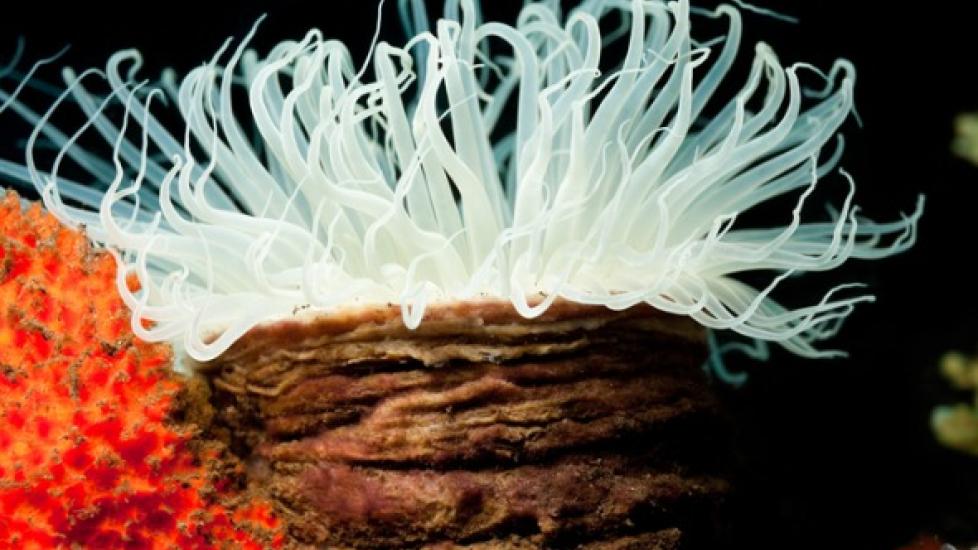
As reef aquarists progress in the hobby, their eyes and hearts are drawn to increasingly unusual animals. Indeed, after mastering the care of corals (no small feat in itself), one might find themselves looking for new challenges as well as novel species. Some species are not only desirable in their uniqueness but are also quite attractive. Among these, some are even relatively hardy and easy to care for. One such animal is the tube anemone. What Is a Tube Anemone? So, let us get one thing straight right from the start: Tube anemones are not anemones. Cerianthids do superficially resemble the distantly related “true” sea anemones (Order Actinaria). Although they also belong to the Hexacorallia, they are placed in the Order Ceriantharia. The order is made up of around 25 species in three families. Cerianthids are most different from sea anemones in that they lack a pedal disc (i.e., the adhesive foot). Instead, they possess a long, taproot-shaped foot that is capable of penetrating soft substrates. The foot is usually buried in mud, sand or gravel; however, in rarer cases, it can tunnel between rocks or in deep, rocky pits. The group’s common name comes from the protective tube that they build. The tube may be much longer than the animal itself. This slimy, stringy duct is made from mucus and specialized cnidae threads (i.e., ptychocysts). Other materials such as sand can become embedded in and become part of the tube. The inside surface of the tube is rather smooth and slippery, easing movement of the creature within. The tentacular crown emerges from the top end of the tube. When threatened, the animal can immediately slip away from harm into the safety of the subsurface tube. Tube anemones can be very brightly colored. Colors are highly variable (sometimes even within a given species). Exceptionally beautiful fluorescent greens, purples and oranges are common in aquarium import specimens.
In This Article Do Cats Recognize Their Own Name? View 4 More +

What Is a Horse Whisperer? Your Guide to Natural Horsemanship

The 5 Best Winter Dog Sports and Activities to Try With Your Pup