What Are Vapor Wake Dogs?
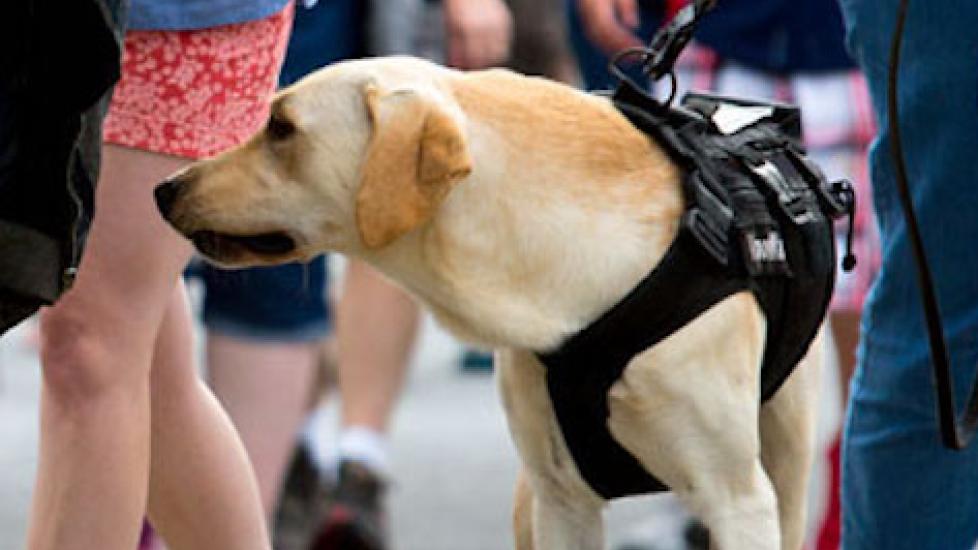
A Rigorous Training Process Vapor Wake training begins at puppyhood. Dogs enter an 11-month “puppy school” program that incorporates socialization, health assessments, basic training, acclimation, and olfactory testing, Johnson says. “Individual prison inmates are paired with these dogs to develop basic skills and to become acclimated to a busy, regimented environment.” The dogs complete their training over the next several months through the VWK9 Academy and are usually ready for service when they’re about 18 months old. “We don’t start putting them on explosives until they’re about a year old. At the 18- to 24-month mark is when they introduce a handler for another seven weeks of training,” Dober says. “The dogs given to the handlers are pre-trained. When they graduate the course, they graduate as a team and are certified by VWK9.” The dogs and their handlers are typically retrained and reassessed annually, “but it can occur more frequently depending on the environment in which the dog is performing and the odors the dog is being deployed to detect,” Johnson adds. Success rates of Vapor Wake dogs are tough to measure at this point because dogs working in the United States have not yet encountered an actual explosive device, Dober says. This may, in part, be because they’re effective deterrents—people are less inclined to bring explosives to events if they know a Vapor Wake dog is working there. “But that is changing and the reason why Vapor Wake has become so popular,” Dober says. “We will be moving into a time where the threat will be more real. We’ve seen that overseas, we’ve seen it in Manchester, so it’s just a matter of time before it’s on our doorstep.” It is our canine companions—with their unfailing loyalty—who may be our best hope for defense. Photo courtesy of VWK9,By Paula Fitzsimmons Law enforcement agencies have had to find effective ways to defend the public from growing terrorist threats. Enter Vapor Wake Dogs, a class of K-9s trained to detect and deter suicide bombers. The demand for Vapor Wake technology is growing, and with good reason. Many in the security industry consider it the gold standard for public safety, says Dr. Calvin Johnson, dean of the College of Veterinary Medicine at Auburn University in Alabama, where the technology was developed. “When I see Vapor Wake dogs working at an airport or a stadium, I am confident that the venue has taken the appropriate steps to secure the facility beyond the capabilities of screening personnel, mechanical detection systems, or passenger imaging systems,” Johnson says. This added level of security doesn’t come easily, however. A lot of thought and training goes into the grooming of these four-legged powerhouses.