Three Types Of Habitats For Your Mudskipper
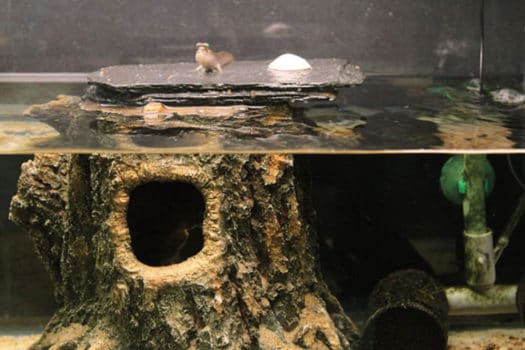
The receding tide slowly uncovers a vast mudflat and creates a flurry of activity from scurrying crabs, swooping gulls and unusual fishlike animals scampering from newly exposed holes. Some of these little fish awkwardly swagger, moving only an inch at a time, while others seemingly spring forward as if propelled by springboards. These extraordinary fish are mudskippers. Mudskippers are in the Gobiidae family in the Oxudercinae suborder. Of the 10 mudskipper genera, four species are highly amphibious and spend much of their lives on land. Two of the most common genera available to hobbyists are Periophthalmus and Periophthalmodon. Mudskippers are Old World fishes and originate in tropical intertidal mudflats and brackish mangrove estuaries, from the Atlantic Coast of Africa east through the Indian Ocean to the western Pacific. The name “mudskipper” derives from the mudskipper’s ability to use its tail and body for skipping and hopping on land. They also use their muscular pectoral fins in an alternating manner, called “crutching,” to produce a gawky movement resembling a person on crutches. It is simply amazing to watch these fish deliberately exit the water, move to a rock or log, and bask in the warm overhead lighting like a turtle would.