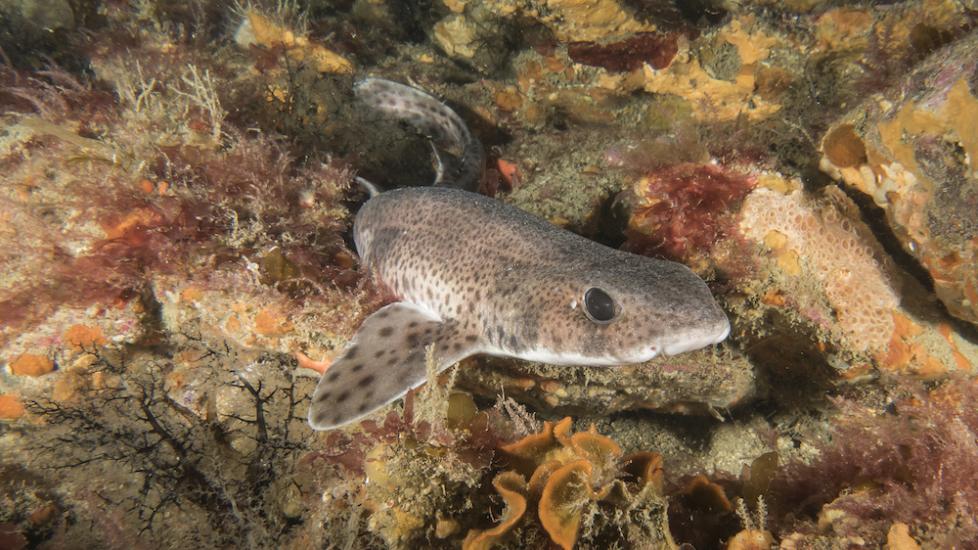
Interested in adding a shark to your saltwater aquarium? First, seriously consider how much space and care these individuals require. Even major aquariums can have issues taking care of these wonderful species. If you’re up for the challenge, a shark aquarium is a unique view of the underwater ecosystem and can be exceedingly enjoyable. What Saltwater Sharks Can You Keep in an Aquarium? All shark species should only be kept by expert saltwater owners who have many years’ experience working with saltwater environments, life support, and various species. Epaulette Sharks (Hemiscyllium ocellatum) iStock.com/Nigel Marsh Native to Northern Australia and New Guinea, the Epaulette shark has a light tan body with brown bands and black spots. They are nocturnal animals, so don’t expect them to be active during the day. They tend to like living on the bottom of your aquarium and may even “walk” about using their ventral fins. This can be a long-lived species of shark, living up to 20-25 years. The Epaulette Shark is one of the smaller shark species, but can grow up to 42” and will do so very quickly. They require a minimum of 350 gallons of water per individual but can be kept in a group (preferably single-sex) and a very robust filtration system and sandy substrate. Carefully consider any additional fish or invertebrates that may be kept in your tank in addition to any decorative items. Since these sharks are bottom dwellers, you will need to leave a considerable portion of your tank bottom as substrate-only. Cat Shark (various species) iStock.com/Velvetfish There are over 150 species of cat sharks, named for their whisker-like barbels at the front of their mouths. Some common species include: Coral Catshark, Australian Marbled Catshark or the Banded Sand Catshark. The largest of these species can grow up to 60” and may need up to 500 gallons for only one shark. Before bringing one of these cat shark species home, be sure to do your research so you can provide the correct environment and food source to keep your shark happy and healthy. Horn Shark (Heterodontus francisci) iStock.com/Kirk Wester The Horn Shark is named for their spines at the leading edge of their dorsal fins. Special handing precautions must be taken when dealing with this species of shark. Horn Sharks are typically brown on the back and tan on the bottom with dark spots sprinkled along their bodies. They are also primarily nocturnal fishes that will hide in caves and crevices during the day. The Horn Shark can be very aggressive and will require a minimum of 500 gallons per fish. It is not recommended to keep more than one Horn Shark in a tank. An individual can grow up to 4’ long, so be sure to choose a tank that will be wide enough for them to turn around comfortably in addition to having enough water. Carefully select other species for your Horn Shark tank, because they may become dinner. Short Tail Nurse Shark (Pseudoginglymostoma brevicaudatum) iStock.com/Charlotte Bleijenberg The Short Tail Nurse Shark is the smallest member of the Nurse Shark family at only 30” long. They are relatively peaceful sharks with a dark brown coloration. Native to the Western Indian Ocean, they have a uniquely shortened extra fin before their tail which gives them their name. Plan for a long life with your Short Tail Nurse Shark, with one individual living over 30 years! One of the more docile shark species, the Short Tail Nurse Shark can grow up to 30” making it the smallest species on this list. It can also have periods of laying on its side, which can be very concerning for novice shark keepers, but is completely normal for these sharks. Be sure to have plenty of space for your Short Tail Nurse Shark with a tank of at least 300 gallons. Speckled Carpet Shark (Hemiscyllium trispeculare) iStock.com/Akkarachai Ditjanapongpon The Speckled Carpet Shark, native to Australia, are benthic or bottom-dwelling sharks with a tan and brown banded coloration with characteristic ocelli or “epaulettes” (dark round patch with a light border) right behind their pectoral fins. These sharks have small, rounded pectoral and pelvic fins that can be used to “walk” along the bottom of their aquarium. Although they like to remain on the bottom of their tank, they do exhibit periods of free swimming and have a varied diet of small fish, crustaceans, cephalopods, and bivalves. They can grow up to 31” long and will do OK in small groups. You will need at least 300 gallons per shark with lots of bottom space and open upper water column for free swimming.