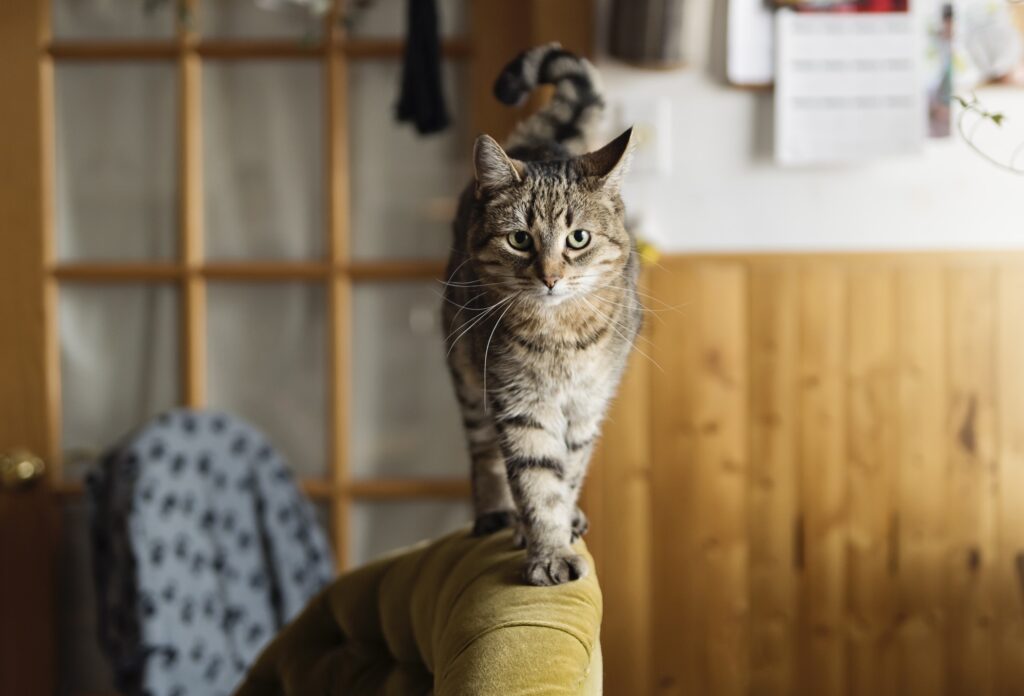
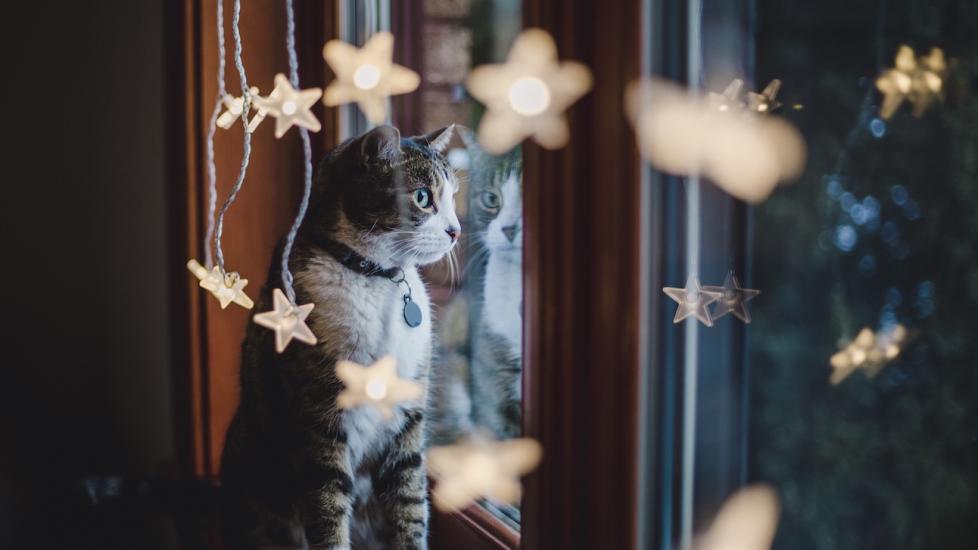
Many people who do not consider themselves to be cat people see cat behavior as random and unpredictable. But for those paying attention, understanding cats’ reactions and behaviors isn’t all that mysterious. Problems arise when people unfamiliar with cat language do not pay attention to the messages a cat is trying to communicate. The result is an unpleasant experience for everyone involved. The key for preventing these negative experiences is through educating people who are not versed in cat language—especially your cat’s—about what is appropriate and what makes your kitty uncomfortable. This is especially important if you plan to have houseguests over who may want to interact with your kitty. Your cat may see your guests as invaders of their space, and thus act accordingly. To make sure that your feline, your friends and your family members get along without a scratch, consider the following tips for helping visitors get better at understanding cats. A Cat’s Curiosity Is Not an Invitation for Contact Cats may approach guests without any desire to interact. And many guests refuse to accept this fact. “If the cat gets up and then approaches, but with a stiff tail or quivering tail, it may be just investigating, not being friendly,” explains Pamela Uncles, M.Ed., CDBC, Companion Animal Behavior, who practices in the Washington, D.C. Metro area. If the cat is receptive—as shown through slowly blinking eyes, head bumps, and other similar behavior—“ask the person to sit down and simply reach out a hand with a finger extended gently, or with hand closed, fingers facing the floor, and allow the cat to approach to sniff or touch the middle knuckle with its nose. “ A guest may allow the receptive cat to rub its face against their hand or even scratch the cat under the chin or behind the ears. But guests shouldn’t go overboard, and neither should pet parents. “Don’t rub the fur or pet vigorously,” says Uncles. “Gently stroke the cat.” When a cat has its ears back, twitches its tail or has dilated pupils, it likely has had enough interaction and would like to be left alone. Remember that cats need to be easily able to escape any situations that are making them uncomfortable. It is smart to offer cats a variety of vertical and other hiding places throughout the home, like cat trees or a cat perch. “This can be very helpful when young children are visiting. Say ‘Leave kitty alone when she is in her tree—that’s her safe place.’”