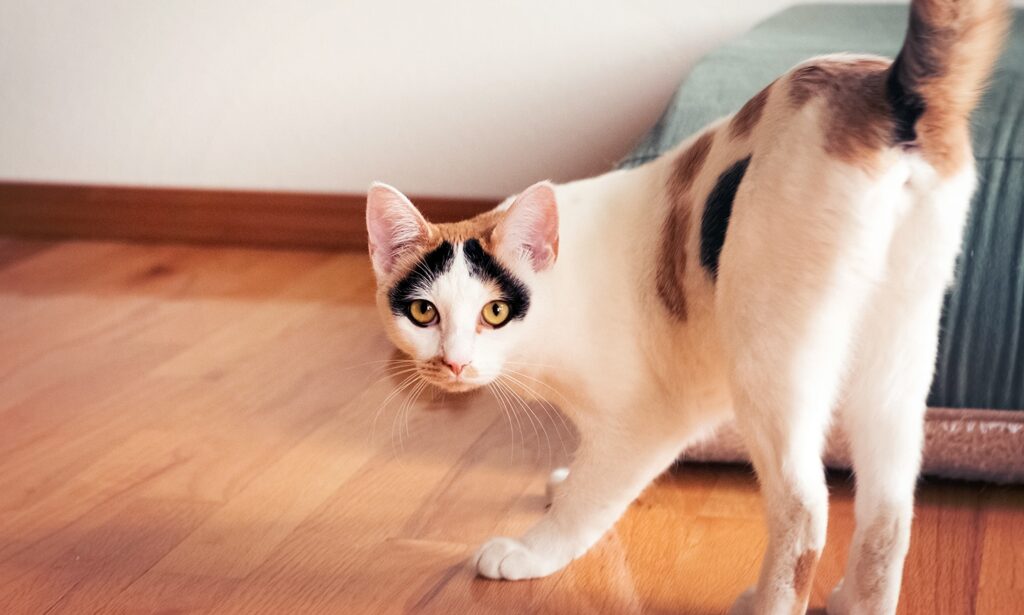
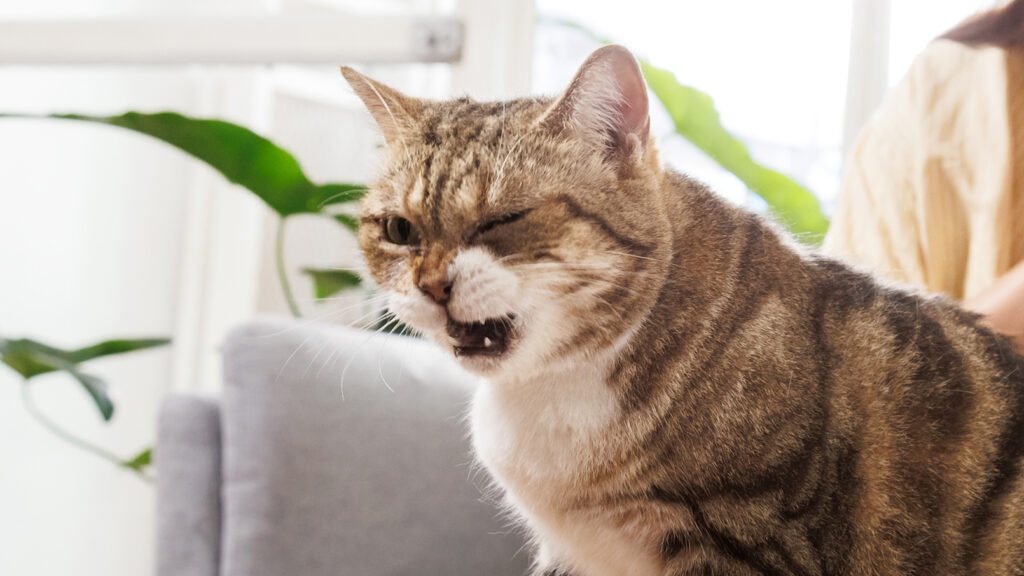
Whether calico, tortoiseshell, orange, black, brown, or gray, a cat’s fur color is derived from two dominant colors: Black and red. These colors can mutate into different shades—black can become chocolate, cinnamon, lilac, blue and fawn. And red, which is determined by the orange gene, can become cream. The color genes for black and red in cats are contained within the X chromosome. This is the same chromosome that, along with Y in males, determine a cat’s sex, says Dr. Jerold Bell, adjunct professor of genetics at Cummings School of Veterinary Medicine at Tufts University in North Grafton, Massachusetts. “They are actually alleles, meaning they are two variations of the same gene in one location on the chromosome,” he says. So an X chromosome can contain either a black hair gene or an orange hair gene, but not both. “One allele will create orange coloration. This allele will cover up all other colors, except pure white. The other allele will create a non-orange coloration. This allele is ‘recessive’ and allows for expression of a non-orange (usually black) coloration,” says Dr. Susan Konecny, medical director for Best Friends Animal Society in Kanab, Utah. Males normally carry only one X chromosome. Therefore, males can be black or orange (or other color variations based on other gene locations) but cannot have both black and orange hair colors on their body. The female’s extra X chromosome allows the possibility of her receiving both a black and orange gene, says Bell. A cat DNA test, like this one from Wisdom Panel, can help you learn more about your cat’s traits beyond color, such as your cat’s breed(s) or genetic health risks. ,You’ve always assumed the calico cat that sits in your neighbor’s window is a she. And you’re certain that the orange tabby cat you want to adopt at the cat shelter is a boy. Chances are, you’re right. Most orange cats are male and most calicos are female. The color of a cat’s coat is closely linked to its gender. As you may recall from high school biology, mammals have two chromosomes that determine their sex—XX for females and XY for males. But a number of additional chromosomes are present and vary depending upon species, says Dr. Robert Grahn, a forensic analyst at the veterinary genetics laboratory at the University of California in Davis. “These other chromosomes contain genes that affect hair color, pattern, shape and length,” Grahn says. “Since the genes for sex and hair colors are on different chromosomes, they are inherited independently of each other. Thus, no color is associated with a particular sex, except in cats and hamsters.” Nature doesn’t always abide by a rigid set of rules, however, including when it comes to feline fur color. A small percentage of orange cats are female, and even a more minuscule portion of calico cats are male. Below, learn how genetics and sex influences a cat’s coat color, and why some cats don’t fit typical color patterns.