Bringing Home a Cat From a Shelter or Rescue? Here’s Everything You Need to Know
Jump to section Should I Adopt a Cat? How To Adopt a Cat Cat Adoption Supplies Cat Adoption FAQs


Cats
Jump to section Should I Adopt a Cat? How To Adopt a Cat Cat Adoption Supplies Cat Adoption FAQs

Styrofoam wreath Pine rope garland Several stems of wired artificial holiday flowers Metal paperclips Holiday ornaments,Celebrating the holidays with pets is a great way to spread the joy of the season. Whether you spend the holidays cuddled up by the fireplace or cooking in the kitchen, being with your pets allows you to strengthen the special bond you share with your four-legged friend. If you want to show some extra pet love this holiday season, try your hand at creating this simple Christmas wreath with a pet theme. Just follow these 12 simple steps for DIY holiday wreaths to amp up your seasonal celebrations.
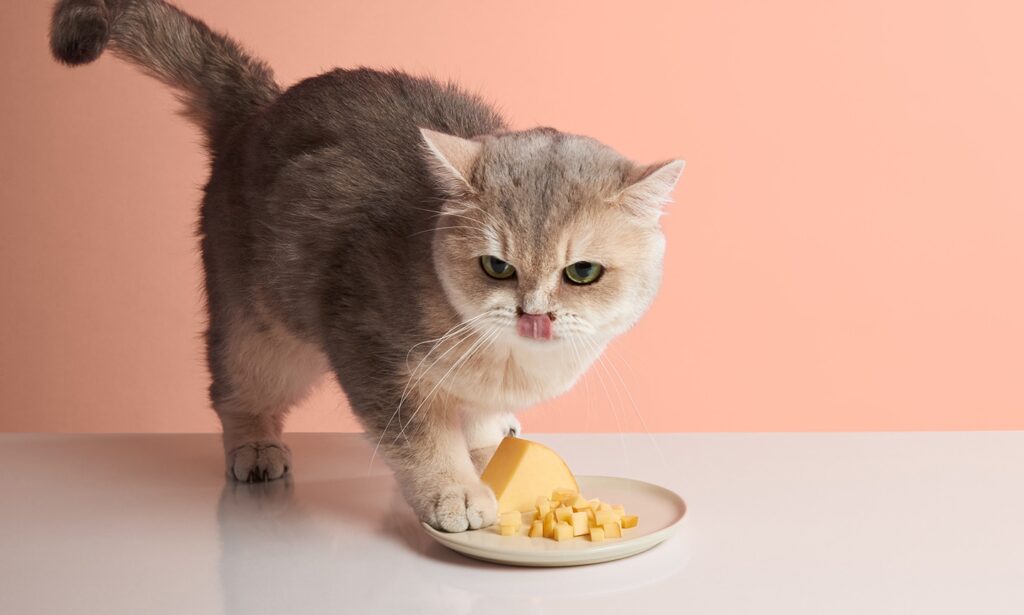
Cats can have cheese, but how much of this yummy food can they eat? And are there benefits? “Cats are often drawn to cheese, and it can be an acceptable low-carb snack,” says Dr. Bayazit. “It’s high in calcium and protein, and cats really love protein. Keep servings to a little sprinkle atop the main course; or, offer the tiniest of bites, she notes. The benefits of feeding cats cheese include: Cheese is a low carb treat, which is a good thing, because your furry friend has no requirement for carbohydrates in their diet. Cheese is high in calcium and protein. The protein helps entice your cat. Just a bite of cheese helps the medicine go down. It’s a useful way to hide pills and to make them more palatable. If your cat’s health is good, a teeny cube of cheese (about the size of a die) makes for a fine, fun snack. Just remember: No matter how much they enjoy it, only 10 percent or less of your purr baby’s daily diet should come from treats. Talk to your vet about your kitty’s daily calorie needs, and try this handy calorie calculator from the Pet Nutrition Alliance. Lastly, what’s not to like? Many cats are super fond of the taste. “Cheese has a high fat content and plenty of protein, both of which cats naturally relish,” says Dr. Bayazit. Bottom line: Cheese is typically safe for cats and provides a few advantages, too.,Jump to section Benefits of Feeding Cats Cheese Downsides of Feeding Cats Cheese How to Feed Cheese to Cats Cat-Friendly Recipe with Cheese Top Cat Treats with Cheese FAQs About Cats Eating Cheese

Jump to section 8 Ways To Keep Your Indoor Cat Happy and Healthy Do Cats Need To Go Outside? Benefits of Keeping Your Cat in the House How To Transition an Outdoor Cat to an Indoor Cat How To Safely Let Your Indoor Cat Enjoy the Outdoors
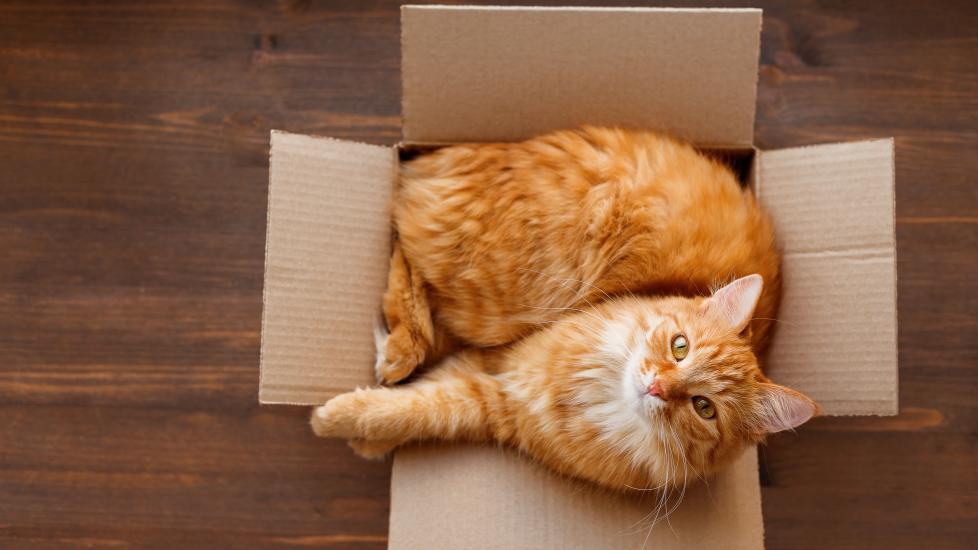
5. Boxes Are Fun to Explore Cats are curious creatures, and boxes present an exciting world of exploration. Cats love investigating new things, and a new box, with its smells and textures, represents a new puzzle that must be unraveled. Cats may peek or hop into the box to explore it.,6. Boxes Relieve Stress A study from the University of Utrecht in the Netherlands showed that newly arrived shelter cats who had access to boxes recovered faster and adapted quicker to their new environment compared to cats who did not have access to boxes. Because boxes offer an opportunity to hide, they provide comfort and security, which are crucial when cats are feeling stressed or anxious. Cats may nestle in the safe haven of a box to take a break from the outside world.,Have you ever bought new toys or a towering cat tree for your kitty, only for him to be much more excited about the box it came in? You’re not alone. Cats seem to possess an unexplainable fascination with boxes. But why do cats love boxes? Simply put, what’s just a simple cardboard box to us is much more to our feline friends. To cats, a box isn’t just a container—it’s a cozy hideaway, a playground, and a source of endless fun. Let’s uncover some of the reasons why cats like boxes.

Salamanders—which look like long-bodied frogs that forgot to lose their tails—are unique animals that make wonderful, entertaining pets for the right pet parents. But while most salamanders are relatively easy to care for, they have specific dietary needs. So what do salamanders eat?
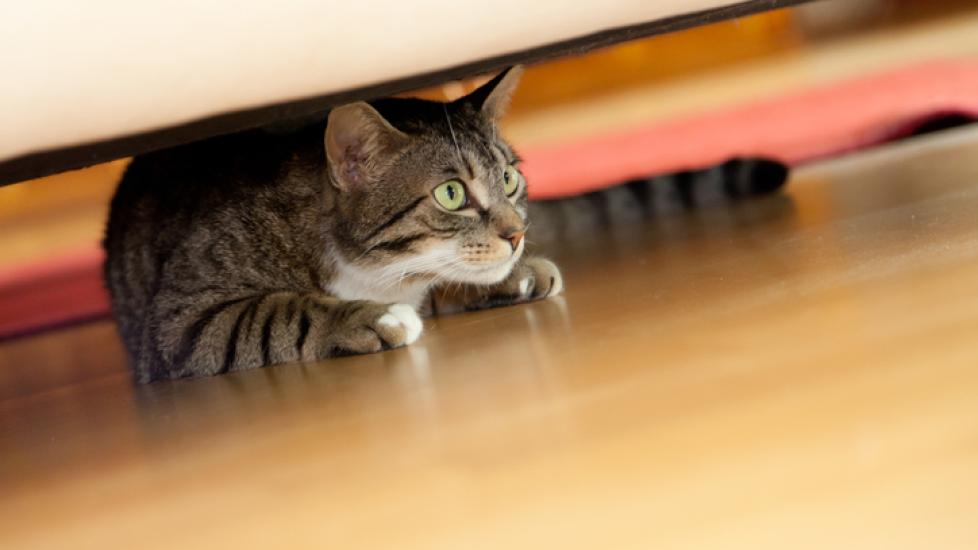
By Paula Fitzsimmons Sounds and smells we may enjoy or don’t think twice about can make our feline family members miserable. Cats have a heightened sense of smell and hearing that serves their wild counterparts well. But our homes are not the wild. Nobody can say precisely why your cat reacts to a certain stimulus, mostly because there’s not a lot of scientific research available on this subject. Still, experts agree it’s beneficial to identify sounds and smells that stress out your cat, and make necessary adjustments to your environment. The following are some of the most common irritants for cats. Thunderstorms and Fireworks Unexpected loud noises and sudden changes in air pressure likely alert cats to be on guard, says Lauren Demos, president of the American Association of Feline Practitioners. “They can warn of impending situations that may require the cat to fight or take flight.” A cat’s reaction to loud and abrupt noises is an evolutionary response, says Dr. Bruce Kornreich, associate director of the Cornell Feline Health Center at Cornell University in Ithaca, New York. While humans also get startled by sounds, we can easily figure out that the noise won’t harm us, unlike cats. Cats may also equate loud noises with negative experiences, Kornreich says. And sometimes, there’s just no logical explanation for their reaction. While you can’t control every noise, you can pre-plan for certain situations, such as fireworks and thunderstorms. “I recommend confining your cat to a room where she feels comfortable and away from the noise,” says Adi Hovav, senior feline behavior counselor at the ASPCA Adoption Center in New York. “However, if she’s already found a hiding spot, consider leaving her there, as moving her to another spot may increase her stress.” If you do set up a quiet “sanctuary” room for your cat, make sure she has access to a cat litter box, Hovav adds. A white noise machine to mask the sound may be useful, too. “Or, offer her some quiet attention in the form of yummy treats or gentle petting,” Hovav says. “Not all cats are going to be comforted by being held if they are frightened or stressed, even if they enjoy being held under normal circumstances, so don’t force your cat if she’s not accepting of this type of attention.” Cat calming products like compression shirts designed for cats can also be helpful for short periods, as can synthetic pheromone sprays, collars, or diffusers, Demos suggests.
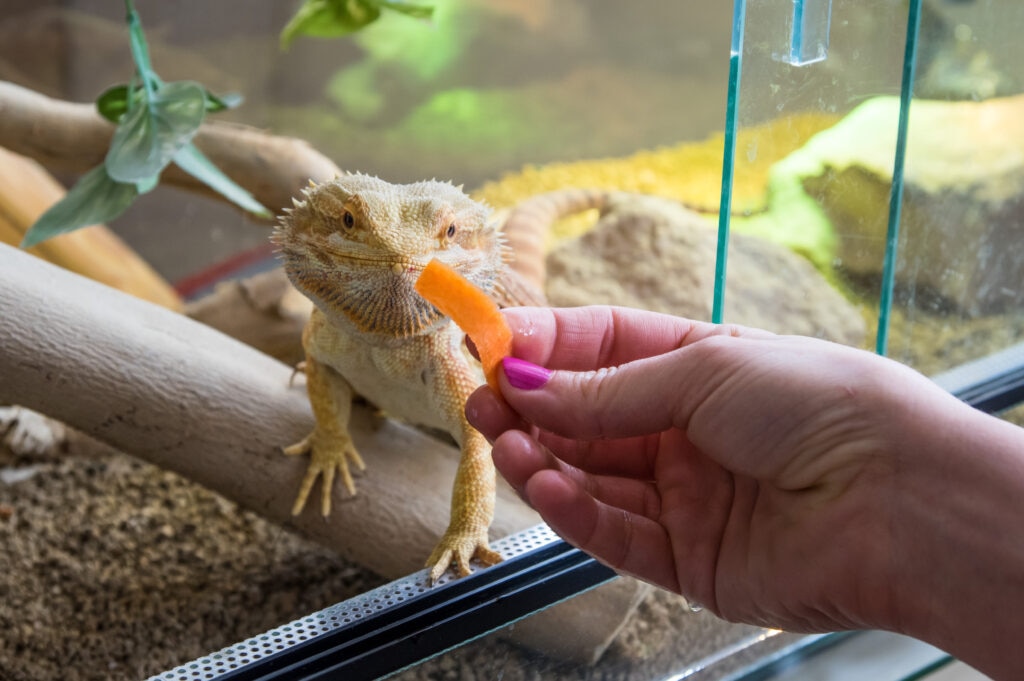
Thinking about mixing up your bearded dragon’s diet with carrots? While safe for an occasional treat, they shouldn’t become a staple. Here’s why you shouldn’t overdo it on the carrots—even if your beardie finds them delicious. Before introducing any new food into your bearded dragon’s diet, always check with your veterinarian.

Facial swelling in cats is usually a noticeable sign of inflammation within or under the skin. You will usually see it around a cat’s eyes or nose area, but sometimes you can see swelling on a cat’s cheek or under their chin. Facial swelling can show up suddenly or over time and is usually a cause for concern. It can be caused by a variety of medical issues, all of which require appropriate diagnosis and therapy to make the swelling go down. What To Do if Your Cat’s Face Is Swollen If your cat’s face suddenly swells and/or is paired with any of the following, take them to the emergency veterinarian as soon as possible: Lethargy Having trouble breathing Collapse Decreased appetite Wounds Vomiting Diarrhea Hives Hair loss Having trouble eating If your cat’s face has slowly become swollen and your cat is otherwise acting happy and alert, and is eating well, then it is OK to wait a few days to see your veterinarian. There are few to no at-home remedies for facial swelling in cats, though. Do not give your cat any medications that are intended for people, as some contain ingredients that are toxic—sometimes lethal—for animals, even over-the-counter drugs.
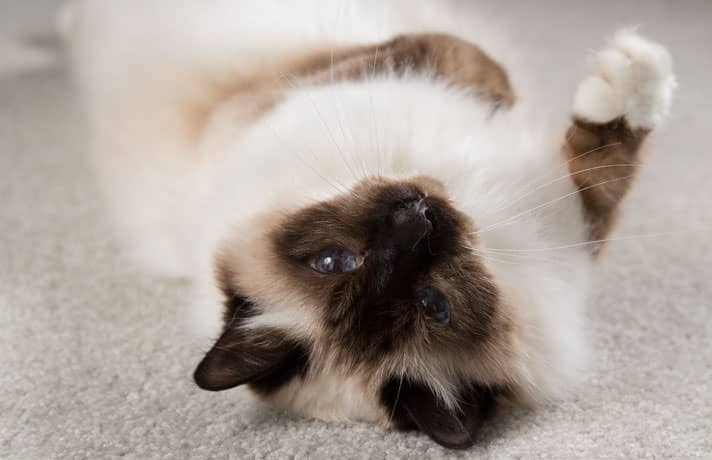
The phone calls often go like this: “We need to bring our kitten in right away. We are afraid she might be rabid!” Rabies is certainly not something to rule out lightly as it is a very serious disease. However, when further questioning shows that the cat involved is a 6-month-old female kitten who has not been spayed, I can be quite sure she is simply “in heat.” But I understand the confusion. The behavior changes of a cat in heat are enough to concern any family.


What Is a Horse Whisperer? Your Guide to Natural Horsemanship

The 5 Best Winter Dog Sports and Activities to Try With Your Pup