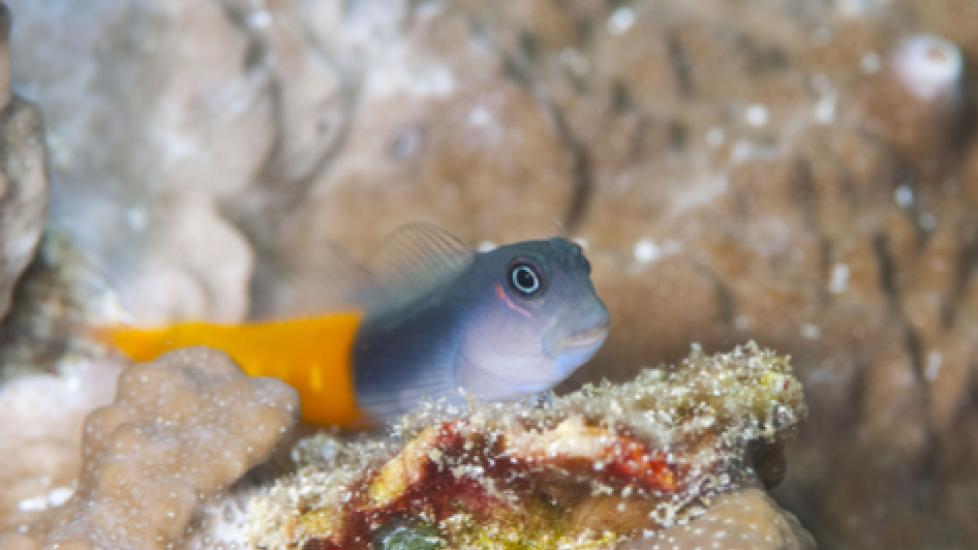
By Kenneth Wingerter With so many brilliantly hued marine fish available for the home aquarium, it’s easy to become smitten by their vibrant colors and exquisite finnage. Even so, most aquarists’ favorite specimens are often those that possess the most “personality.” In terms of personality, few fish groups compare to the blennies. Combined with a (usually) good temperament and hyper-alertness, their daring antics make them quite entertaining to watch. Compared to many other marine aquarium fish groups, blennies make for extremely low-maintenance pets. Simple to feed and comfortable in smaller tanks, these tough, disease-resistant fish seldom pose any major problems for even novice aquarists. To be sure, they provide much reward for the relatively simple care they require. More than a few hobbyists would describe their blenny’s appearance and behavior as “cute,” entertaining, and even comical. With such endearing personality, along with being so temperamentally well suited for captivity, it is not surprising to so often see at least one blennioid inhabitant in most home marine aquaria. As a group, the blennies are reliably reef-safe, and their small adult size and overall hardiness also make them an excellent choice for any marine aquarist, including beginner hobbyists or those with smaller-sized aquaria. Indeed, numerous blenny species have been staples in the ornamental fish trade for decades. What is a Blenny? As a group, the blennies are enormously varied. The so-called “true blennies” are known as blennioids and form their own taxonomical group. Though some aquarium literature speaks as though these true blennies form a family, the blennioids actually make up an entire suborder, with six families comprising the suborder Blennioidei. This suborder claims around 833 separate blenny species in 130 genera. While they are rather species-rich, the blennioids share a few basic characteristics. They are mainly marine (that is, saltwater, though there are a few brackish and freshwater species), and they are strongly benthic in habit; that is, they are bottom dwellers (lake floor, sea bed, etc). They frequently exhibit strong nesting behaviors due to being demersal spawners — preparing nests at the bottom and laying their eggs there to develop. The eyes and mouth of a blenny are relatively large. They oftentimes bear distinctive cirri — wispy antenna or whisker-like appendages — on their heads. Their bodies are long and sleek, some so long they resemble eels and snakes, but nearly all members of the blenny group are smallish in body size. Image: Red Sea Mimic Blenny