From Ponies to Racehorses, How Fast Can Horses Run?
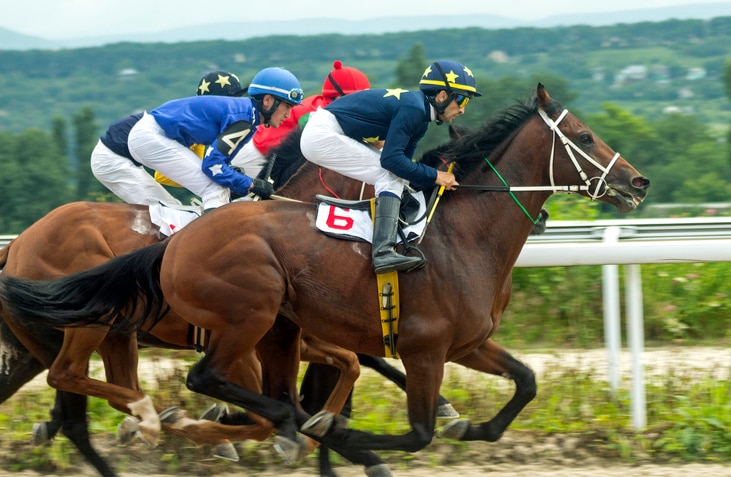
Several factors contribute to a horse’s top speed: Breed: Some breeds, like the Thoroughbred and Quarter Horse, are bred specifically for speed. Generally speaking, “lighter” built breeds are faster than “heavier” breeds, such as cold-blooded draft horses, which are stronger but slower. Height and weight: Tying in to breed, lighter horses with longer legs tend to be faster. Those with a big stride and efficient gallop cover more ground with each step, meaning they reach the finish line faster. Stride: “Some of the main factors determining a horse’s speed are stride length and stride rate, two factors that are often tied to a horse’s body size,” explains Courtnee Morton, DVM, CVA, CVC, a veterinarian at Chewy and the owner of Southern Comfort Equine, based in Hico, Texas. Training and conditioning: Racehorses undergo rigorous training regimens to maximize their speed and endurance. Horses who go through strength and speed conditioning will have stronger muscles and better-conditioned lungs and cardiovascular systems, allowing them to get up to and maintain a faster pace. Health and nutrition: High-quality horse feed and proper hydration can play a part in how fast horses run. ,Whether galloping across open plains or sprinting around a racetrack against the clock, horses are among the fastest land mammals. As prey animals who rely on speed to escape predators in the wild, they have long been admired for their speed. But exactly how fast can a horse run? The top speed of a horse depends on several factors, including breed, training, and environmental conditions. Let’s take a look at the average speeds of different types of horses, their top speeds, and the breeds known for their incredible velocity.