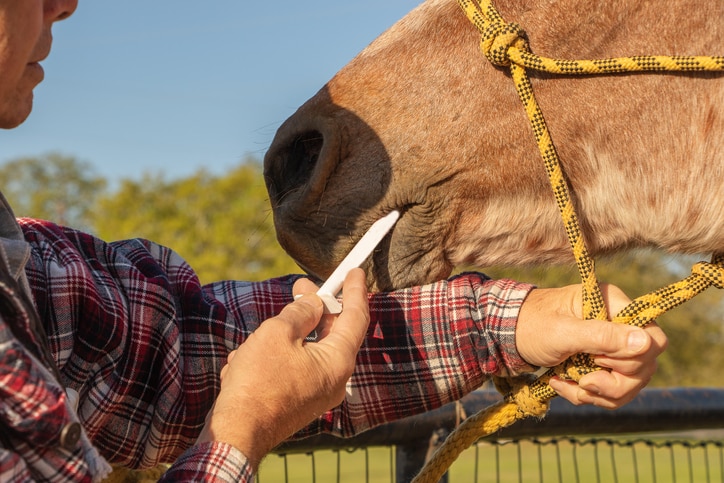
While any horse can have parasites, foals, older horses, or those that have compromised immune systems are most likely to develop colic or become otherwise ill due to parasites. Having a deworming schedule for your horse helps reduce the number of parasites living in their gut. A few of the most common internal parasites that affect a horse’s health include: Strongyles Ascarids (roundworms) Tapeworms Pinworms Botflies Hairworms Stomach worms Roundworms are most likely to cause issues in foals, whereas tapeworms or small strongyles are most problematic in adult horses. Most—as much as 90%! —of internal parasites come from the environment. Most parasite species enter the body while the horse is grazing on grass. However, horses can also get parasites when grooming themselves, particularly while licking their legs, where botfly larvae typically lay their eggs. Left untreated, parasites in horses can lead to: Poor body condition Pot belly Weight loss Less than optimal performance Gut slides or impactions in young horses, which is rare but fatal However, sometimes horses with lots of parasites may not show any signs at all, says Sandra Tasse, DVM, who works for Rood & Riddle in Saratoga, New York. That’s why it’s so important to test your horse for parasites—and, more importantly, keep them at a manageable level by using dewormers. ,Left unchecked, internal parasites can cause health issues in horses. Administering regular horse dewormers can help prevent illnesses and other complications brought on by a high parasite load in a horse’s body. Here’s what you need to know about horse dewormers.