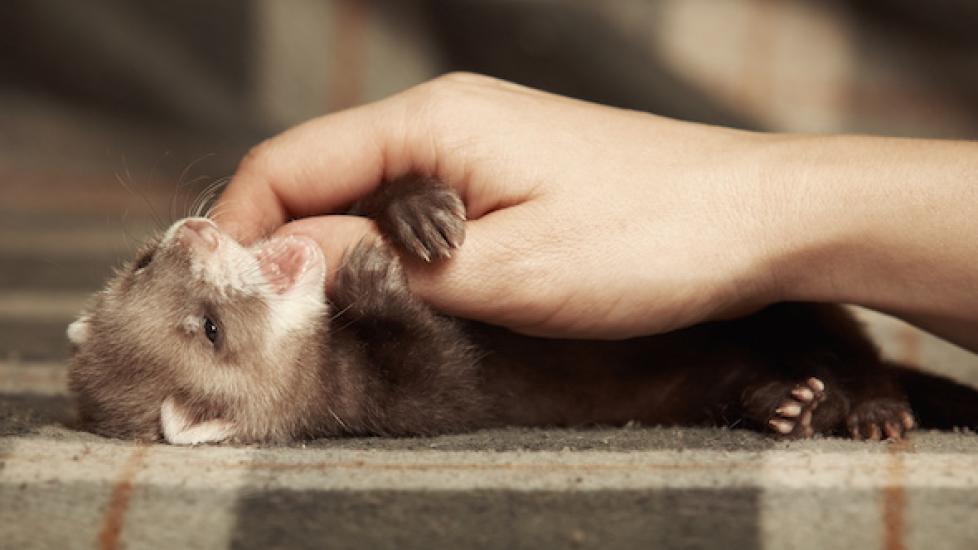
By Samantha Drake Ferrets are often compared to cats and dogs. Like cats, they sleep a lot and can be trained to use a litter box. Like dogs, ferrets are social and crave the company of people. But the truth is, ferrets are in a category all their own. With their friendly, inquisitive natures and furry, cuddly bodies, ferrets make great pets, given the right pet parents. If you’re considering purchasing a ferret, learn more about their care needs, including what you’ll need and how to keep your ferret healthy, below. Ferret Facts Ferrets are a member of the weasel family that weigh between one and a half and five pounds as adults and can live between six and ten years, according to the American Ferret Association (AFA). They tend to sleep a lot—18 to 20 hours a day—and are most active in the early morning and evening. Male ferrets are called “hobs,” while female ferrets are called “jills” and baby ferrets are called “kits.” A group of ferrets is known as a “business.” They come in shades of tans, browns and blacks, with various color combinations and patterns and are usually neutered or spayed and de-scented when they are between five and six weeks old to reduce odor and aggression. Ferrets have a friendly, playful nature, enjoy being around people and love attention. Ferrets are very intelligent and can be trained to come when called, use a litter box and even perform a few tricks, according to the AFA. They require constant supervision when outside their cage, however, and are not recommended for children under six years old as they can bite. Ferrets also like to steal things and hide them, and enjoy exploring (particularly when there’s an opportunity to squeeze into a tight space). Ferrets are also prone to a variety of health problems, which can make them an expensive pet, and will often chew things and swallow foreign objects, making ferret-proofing essential, said Dr. Dan Johnson of Avian and Exotic Animal Care in Raleigh, North Carolina. While ferrets make good companions for larger house pets with careful introductions and supervised interactions, ferrets should be kept away from birds, rabbits, hamsters, gerbils, guinea pigs and reptiles, according to the AFA.