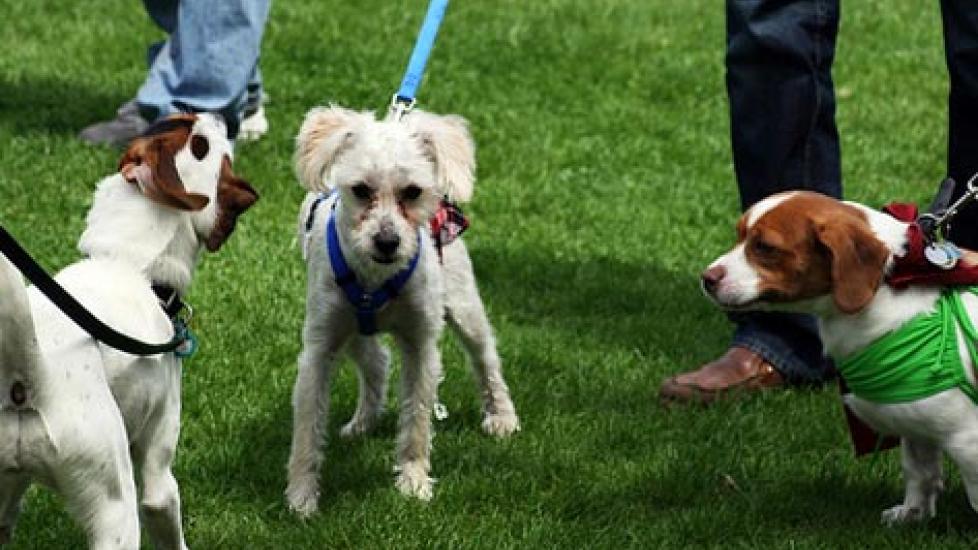
The lyrics are true: it’s a small world. Unless you live in a deeply rural area with no other homes for miles around, the chances that you will meet other, “strange” dogs are pretty high. You want your encounters to be civil and controlled, so the early walks, while your dog is still a puppy, will be important for setting the ground rules for walking and meeting behavior. A proactive approach is the best approach, so that you can guide your dog through the proper responses and behaviors in a controlled setting. Dos and Don’ts Both verbal and physical (body language) cues are important when meeting new dogs and their people. Try not to allow your body to tense up, and do not suddenly tighten your grip on your dog’s leash. Your dog will get the message that something is wrong and will respond accordingly. If you respond in a hesitant or fearful way at the approach of another dog, your dog may also react fearfully, or even aggressively, toward the new arrival. There are some justified circumstances for not wanting to interact with another dog, and this is why it is so important to keep your dog on a leash at all times. Whether your concern is due to the other dog’s appearance or to its owner’s appearance (they appear threatening), because you know from previous experience that your dog gets skittish around strange dogs, or any other reason you have for not wanting an interaction, just calmly change your direction to one that is opposite to the path of the other dog. Continue to walk at a normal, steady pace, keeping your dog on a short leash, and your dog should follow. If there is no other option but to pass the other dog, try to keep some space between your dog and the other dog so your dog does not feel threatened or crowded. You may even try distracting your dog with some direct commands while passing by the other dog. Once your dog has successfully passed the other dog without responding in a fearful or aggressive way, verbally praise him and give him a training treat.