Does a Dog’s Breed Affect Their Behavior?
In This Article Does Breed Affect Behavior? View 3 More +



In This Article Does Breed Affect Behavior? View 3 More +

In This Article Overview View 8 More +

In This Article Five Things to Know About Nutrition for Senior Dogs View 1 More +

Image via iStock.com/Zbynek Pospisil By Rebecca Desfosse January is National Train Your Dog Month, and there’s no better way to celebrate the bond you have with your pup than by teaching him a few tricks in an exciting, new way. That’s exactly why the Association of Professional Dog Trainers created the National Train Your Dog Month in 2010—to remind pet owners to make training a part of everyday life with their dogs. When it comes to training your dog, there are a variety of “cues” you can use. A “cue” is a stimulus used to get your dog to do a particular action or trick, like sitting or giving you his paw. Many pet parents use voice cues, but hand signals for dogs are completely underrated as cues. In fact, they’re one of the most effective cues you can use to train your dog. Hand signals for dogs are easy to teach and use. They’re especially useful when teaching deaf or hard-of-hearing dogs or when training in a noisy environment. Why Use Hand Signals for Dogs? Using dog hand signals for training is effective because of a dog’s innate nature and propensity for understanding body language. “Dogs communicate with each other primarily through body language. Yes, they use vocal cues too, but their body cues are more dominant. From saying they are ready to play or expressing they aren’t comfortable with something, they can do it all with body positioning,” says dog trainer and founder of Fun Paw Care, Russell Hartstein, CDBC. It only makes sense that dogs learn and respond so well to body cues. Using hand signals for dogs during training also helps to minimize user error. According to Jessica Gore, CPDT-KA, animal behaviorist and founder of Competent Pup, “For the average person, hand signals may be the way to go, and will definitely offer results. Other forms of training—like shaping with a clicker, for example—require skill and finesse not always possessed by the average dog person (or trainer, for that matter).” Dog hand signals are easier for you to execute and for your dog to understand.

In This Article How To Pet a Horse: Step-by-Step Instructions View 4 More +

By Cheryl Lock While there’s undoubtedly a lot to love about your pet, if you’ll be taking on a roommate in the near future, it’s important to do some research on the best ways of introducing cats and dogs to a new person. Alternatively, if you already have a roommate and you’d like to get a brand-new pet, there’s an appropriate way to broach that subject, as well. “Neither pets nor people like to have someone or something forced on them,” says Dr. Mary R. Burch, certified applied animal behaviorist with the American Kennel Club. Dr. Burch suggests taking on either scenario very slowly and following a few simple steps to ensure everyone walks away happy—after the introduction, and for the length of the relationship afterwards. Picking Out a Prospective Roommate If you’re a pet owner who has decided to take on a roommate, the first thing you’ll want to do is meet with any prospective roommate options and discuss living arrangements. You should talk about expectations on both ends and logistics, but a key part of this conversation should also include information about your pet. Be sure to ask if potential roommates have allergies right off the bat, says Dr. Burch. “If they do, your two cats and furry dog may be a deal breaker,” she says. Once you’ve established that you are both animal lovers, the next step in a smooth roommate/pet interaction is to discuss responsibilities. While you should never expect your roommate to care entirely for your pet, if you’d like her to at least fill the cat bowl with water if it’s empty or let the dog out a couple times a day, it’s best to address those expectations up front. Additionally, as the advocate for your animals, don’t be shy about telling the roommate how to interact with your pets, says Dr. Burch.

5. They Simply Want Attention Context means so much when you’re trying to discern why your dog is barking, but Spaulding says it can sometimes be entirely unclear to you what your dog wants, assuming they want anything at all. “Often, a dog’s bark means they’re bored or frustrated, and they want us to fix it,” she says. “In situations where you’re not sure what the cause of the barking is, it’s fair to assume your dog would like to interact with you.”,How To Correct Barking Behavior To stop a dog from barking excessively, try one of two approaches. Train a Replacement Behavior Teach your dog a behavior to replace barking, such as running to a mat and lying down. This works best for demand-style barking. Note when your dog is likely to bark at you and what kind of attention they’re looking for (for example: access to the backyard, a game of tug, or dinner). About 10 to 15 minutes before you expect them to start barking, ask them to go to their mat and lie down. Once there, deliver the item or event your dog wants. Train Your Dog to Bark a Little The second method is to train your dog to bark a specific number of times. This is a good approach to alarm barking. Once the dog reaches the target number of barks, mark it with a word or a clicker and feed them a treat. If your dog begins to bark again, repeat this process. Once they bark the target number of times and look at you, start to move farther away from them so they must leave the window or door they’re barking at to collect their cookie.,All dogs bark, and they bark for many different reasons. But what if your dog just won’t stop barking? They’re likely trying to tell you something, and it’s up to you to figure out what that is. “Barking is driven by a whole bunch of things,” says Dr. Kristina Spaulding, PhD, CAAB. “And while some dogs don’t bark much, they’ll sometimes find other ways to show their emotions or signal that they want something—like pawing at you, jumping, mouthing, stealing things, or finding other ways to get into trouble.” If your dog is being overly vocal or barking excessively, here are some of the common reasons for the behavior.

by Matt Soniak While ferrets seems like a less expensive pet than a dog or a cat, that isn’t always the case. All pets, ferrets included, require a significant investment of time, effort and money. Before bringing a ferret into your family, you’ll want to learn more about the kind of financial commitment you’ll need to give it. Find out how much ferrets cost and what you’ll need to properly care for your ferret. How Much do Ferrets Cost? Ferret purchase prices vary greatly depending on where you get them, said Mary McCarty-Houser, director of the Pennsylvania Ferret Rescue Association and shelter chair of the American Ferret Association. Ferrets can be found in shelters, in pet stores, and from reputable private breeders (which will charge the most for their ferrets). Adopting a ferret from a shelter can cost around $100, but many shelter ferrets are up to date on their vaccines, saving you the cost of those. Plus, McCarty-Houser says, shelter staff will work extensively with their ferrets to get to know their personalities, do any behavioral training (if necessary), and understand what type of home environment would be best for them. “[Shelter staff] are also a lifelong resource to the new owner for questions and help with problems,” McCarty-Houser added. Pet store ferrets generally cost more (up to $300), depending on the area, but come with no prior veterinary care, creating additional costs on top of purchase price for owners to get their ferrets vaccinated, tested for any diseases, and examined by a veterinarian, McCarty-Houser said. Reputable private breeders who put a lot of time and effort into tracking family lines and socializing their animals generally sell ferrets from $275 and up. “Privately bred kits [baby ferrets] go to the owners with health and temperament guarantees and lifelong support of the breeder to the owner,” McCarty-Houser says. “They are usually given their initial canine distemper vaccine, sometimes their rabies shot, and are Aleutian Disease Virus (ADV)-negative guaranteed.” The new owner will be responsible for additional distemper vaccines, as well as the spaying/neutering of the kit at an appropriate age.

By Kenneth Wingerter With so many brilliantly hued marine fish available for the home aquarium, it’s easy to become smitten by their vibrant colors and exquisite finnage. Even so, most aquarists’ favorite specimens are often those that possess the most “personality.” In terms of personality, few fish groups compare to the blennies. Combined with a (usually) good temperament and hyper-alertness, their daring antics make them quite entertaining to watch. Compared to many other marine aquarium fish groups, blennies make for extremely low-maintenance pets. Simple to feed and comfortable in smaller tanks, these tough, disease-resistant fish seldom pose any major problems for even novice aquarists. To be sure, they provide much reward for the relatively simple care they require. More than a few hobbyists would describe their blenny’s appearance and behavior as “cute,” entertaining, and even comical. With such endearing personality, along with being so temperamentally well suited for captivity, it is not surprising to so often see at least one blennioid inhabitant in most home marine aquaria. As a group, the blennies are reliably reef-safe, and their small adult size and overall hardiness also make them an excellent choice for any marine aquarist, including beginner hobbyists or those with smaller-sized aquaria. Indeed, numerous blenny species have been staples in the ornamental fish trade for decades. What is a Blenny? As a group, the blennies are enormously varied. The so-called “true blennies” are known as blennioids and form their own taxonomical group. Though some aquarium literature speaks as though these true blennies form a family, the blennioids actually make up an entire suborder, with six families comprising the suborder Blennioidei. This suborder claims around 833 separate blenny species in 130 genera. While they are rather species-rich, the blennioids share a few basic characteristics. They are mainly marine (that is, saltwater, though there are a few brackish and freshwater species), and they are strongly benthic in habit; that is, they are bottom dwellers (lake floor, sea bed, etc). They frequently exhibit strong nesting behaviors due to being demersal spawners — preparing nests at the bottom and laying their eggs there to develop. The eyes and mouth of a blenny are relatively large. They oftentimes bear distinctive cirri — wispy antenna or whisker-like appendages — on their heads. Their bodies are long and sleek, some so long they resemble eels and snakes, but nearly all members of the blenny group are smallish in body size. Image: Red Sea Mimic Blenny
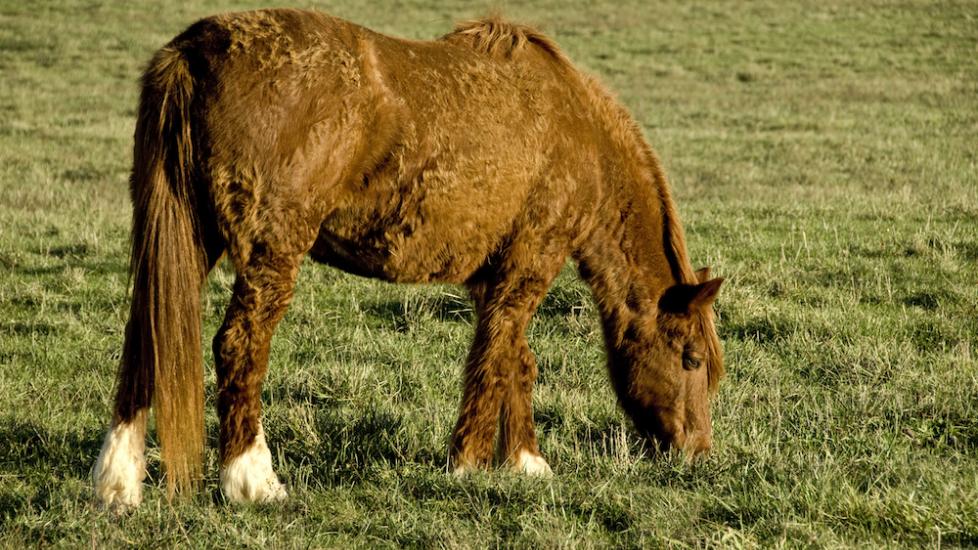
Reviewed for accuracy December 8, 2022. The American Bashkir Curly is a horse breed that purportedly originated in central Nevada, though some argue to the contrary. A common U.S. horse breed, it is mainly used for riding purposes today. Physical Characteristics Ironically, not all American Bashkir Curly horses have curly hair. In the summer, they shed the silky and kinky hair on the mane, eventually growing the ringlets back during the winter. Common coat colors for the breed include gray, black, bay, Appaloosa, and Pinto. A typical American Bashkir Curly stands at 14.3 to 15 hands high (57-60 inches, 145-152 centimeters) with a stout, muscular, and noble frame. It has a muscular back and hocks; powerful, rounded shoulders; a round, crease-free rump; and a wide, deep chest. Its legs, meanwhile, are straight with flat knees and tough, almost-perfectly rounded black hooves. An American Bashkir Curly’s eyes are also wide-set, providing it with a wider range of vision.


What Is a Horse Whisperer? Your Guide to Natural Horsemanship

The 5 Best Winter Dog Sports and Activities to Try With Your Pup