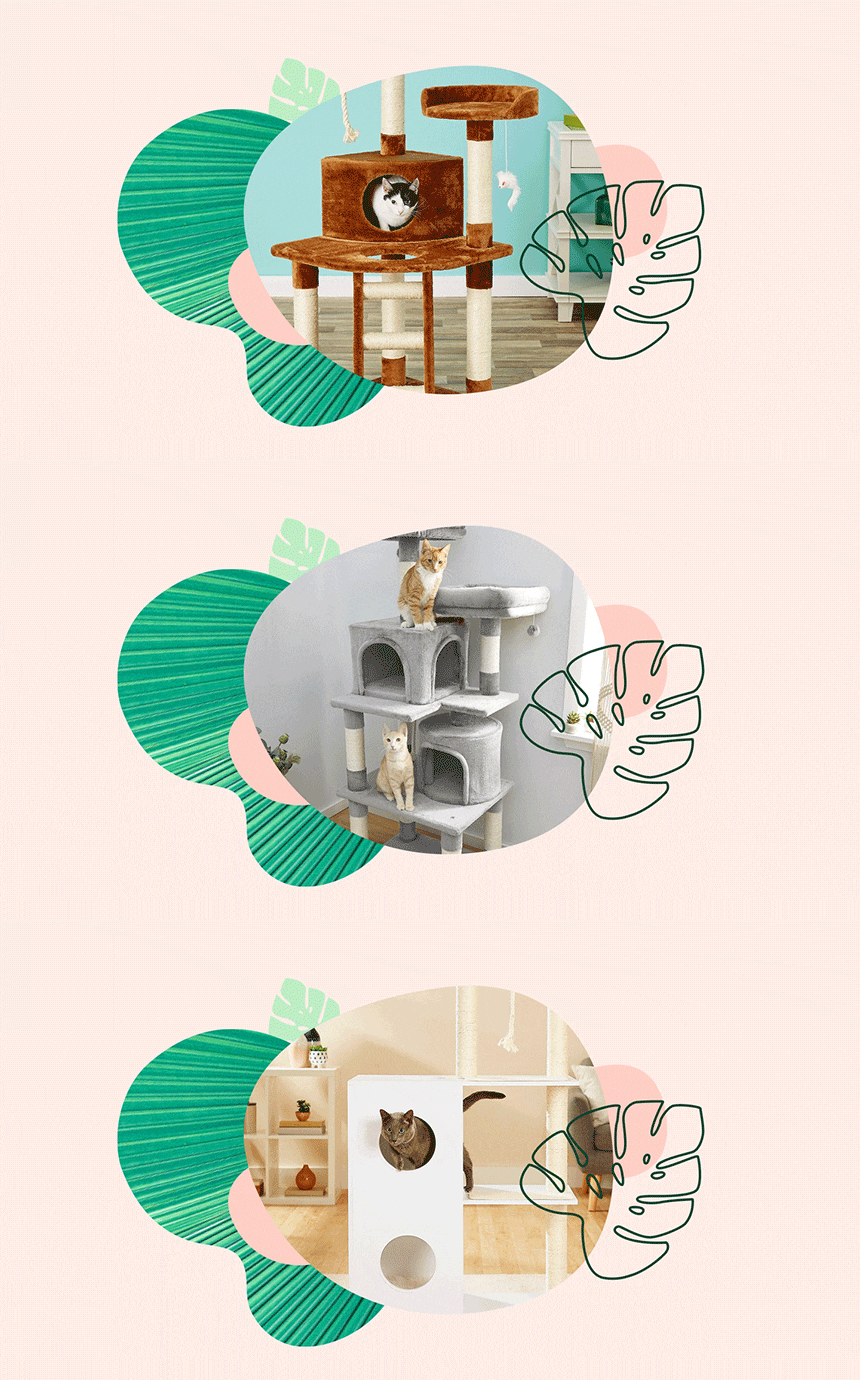
There are a lot of different types of cat trees to consider: some have condos (or little compartments) that allow cats to hide, some have toys built in and some are very tall while others are lower to the ground. Don’t be overwhelmed! First, ask yourself these questions to help narrow down your options: How many cats do you have? All roommates fight, and that includes our pets. When animals are in a spat, they may block or guard an opening in a cat tree, trapping a cat inside. “So, if you have multiple cats or a mix of cats and dogs, make sure your cat tree’s condos have both an entrance and an exit,” Bloom says. That way, cats have multiple ways to get in and out. Is your cat a scratcher? Most cats really enjoy scratchers, but it’s not a “one size fits all” situation! Some cats like their scratcher to be horizontal, while others prefer vertical. Before investing in a cat tree, Bloom recommends testing out a regular cat scratcher, such as the Frisco 21-in Sisal Cat Scratching Post with Toy. Present it to your cat on the ground, at belly level, and at an angle where they need to stand on their hind legs to scratch it. See how your cat interacts with it. Most cats have a preference, and you’ll have the best results with your cat tree if it matches your cat’s optimal scratching angle. Does your cat like heights? Perching up high is an instinct many cats have—but no two cats are completely alike. So, consider your cat’s natural inclination to scale furniture and shelves. A cat who likes to hide under the bed might have more fun with a small cat tree that’s low to the ground, while a cat who’s always perched on the highest surface in the room would thrive with a tall cat tree. How active is your cat? “There are three major factors to consider when making a smart purchase for your cat: health, age and athleticism,” says Bloom. Simply put, cats in their senior years are less likely to jump around than kittens and younger adults. A taller cat tree with more space between the levels might be exciting for a younger cat, but intimidating for an older cat. If your older cat suddenly seems disinterested in the cat tree they used to love, it may be time to swap in a cat tree that better fits their lifestyle, like a shorter model or one with more ramps or ladders. How playful is your cat? Some cats truly prefer to engage with their humans, but a cat who’s good at playing independently will flourish with a cat tree that has toys on it. You can even attach your own toys to a cat tree to make it an ideal play space for your cat. How social is your cat? If you have a cat who tends to tuck into nooks and crannies—not just when they’re frightened, but rather as a comfort tactic—look for a cat tree with condos to give them a little hideout. But there are also a few things to look for no matter what type of cat tree you choose. The first is a claw-friendly surface for your cat to grip, whether it’s sisal, faux fur, faux fleece or carpet. If your cat tree material doesn’t provide good traction, your kitty could slip or fall—and even if they’re not injured, they probably won’t feel safe on the tree and are unlikely to use it again. Some cat trees are a big investment, so you want to make sure your choice stands the test of time. Look for a frame made of solid wood, AKA the most premium and durable material—it’s heavier, sturdier and will last longer. Other material options are engineered wood and sometimes cardboard, which is generally found in scratching posts, rather than the cat tree frame itself. And of course, consider the size constraints of your home when making a decision. A cat tree’s no use to your cat if it doesn’t fit in the front door! If possible, set up the tree near a window so they can perch and watch the world outside. Ready to shop? Start by browsing your options below.,Condos or scratchers? Hammocks or ramps? Cat trees come in about as many varieties as, well, actual trees. So how do you pick the best cat tree? Does your kitty really need one? Yes, says Irith Bloom, cat and dog trainer and Certified Behavior Consultant with The Sophisticated Dog in Los Angeles, California. Cats instinctively gravitate to high perches “to see more, because they predators,” she says. “However, they are also prey animals who feel vulnerable on the ground, and may be more comfortable up high, even if there isn’t an immediate threat.” Cat trees also give your cat a space that is completely their own. The best cat trees promote exercise, giving your kitty a safe place to leap, climb, scratch, jump and play—one that’s not your furniture, counters or cabinetry. (That alone is worth major bonus points.) They also provide a safe and cozy place for your cat to relax, lounge or nap. So how do you pick the perfect one? Don’t stress—we’re here to guide you to your best cat tree.