Is Your Rabbit Sick?
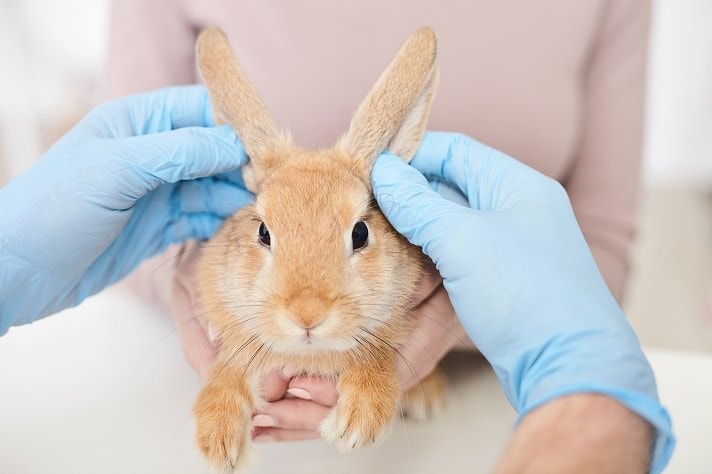
It’s been a long day. You come home from work and immediately start to fix dinner. Your daughter comes to you after checking in on the family rabbit, Hippity. “Mom, I think something is wrong with Hippity,” she says. “What do we do?” What do you do? Just like yourself, your pet rabbit may encounter some health issues along the road of life. Knowing when your rabbit is having a health issue and what to do about it will make caring for your beloved pet a lot less stressful. First of all, how do you know if your rabbit is sick? “Decreased activity, lethargy and decreased appetite,” said Angela M. Lennox, DVM, DABVP-Avian, of the Avian and Exotic Animal Clinic of Indianapolis in Indiana. “These signs are not specific for any single illness,” she added, “and can be caused by a variety of problems.” Lennox noted that as prey species, rabbits hide signs of illness and that it is common for those with chronic or long-term illnesses to suddenly appear sick. Byron de la Navarre, DVM, of the Animal House of Chicago in Illinois, explained that any change in appearance could indicate a health issue. “Normal bunnies are very meticulous, just like cats,” he said. “They don’t require a lot of grooming. If you start to notice an unkempt fur coat or hair mats that they normally don’t have or that urine or fecal material is staining where they go to the bathroom or their feet or tail, those would be indications that something might not be well with the bunny. “If you do notice something,” he continued, “hopefully you have already established a relationship with a veterinarian who is familiar with treating rabbits. Some change from the normal should prompt a call. We take lots of calls all the time during the day just to put people at ease. Or, if it’s a real issue, to schedule an appointment right away or come in right away, depending on how severe it sounds.” Sometimes health issues arise at night after the veterinarian’s office has closed for the day. Don’t panic, there may be an emergency veterinary office that is open through the night. Do some research ahead of time to know where the closest one to you is located. Typically your veterinarian’s office recommends one in its after-hours recording. Thinking of waiting until Monday? Sometimes it is best not to wait. “We’ve had some people who’ve noticed something on Saturday afternoon or Saturday evening and thought they could wait until Monday morning,” de la Navarre said. “Maybe the animal luckily is still with us, but it’s a lot sicker than perhaps if it had been treated right away.”