DIY Polka Dot Dog Bandana
The best part about this simple DIY project? You’ll be able to make two bandanas with one T-shirt—perfect for sharing with a friend.



The best part about this simple DIY project? You’ll be able to make two bandanas with one T-shirt—perfect for sharing with a friend.

The ideal age for puppies to start using stairs is 12–16 weeks of age. You might have noticed young puppies aren’t exactly coordinated or nimble before they reach this point. This is partly due to their inexperience with the world and things like gravity, but also because their joint strength isn’t very good yet, notes professional dog trainer Erin Askeland, CPDT-KA, CBCC-KA, Camp Bow Wow‘s animal health and behavior expert based in Atlanta. Puppies’ inherent incoordination causes them to be a little more on the clumsy side, which isn’t ideal when climbing stairs. Another issue they may have before reaching this age is their size. As cute as they are, this petite puppy package makes using the stairs nearly impossible. Think about the scale of a single stair in comparison to their body, then imagine having to make that climb yourself. Whew! While 12–16 weeks is a good benchmark, Askeland says there’s some nuance here. “When puppies can use the stairs is dependent on the size and health of the puppy, as some dogs this age are still not big enough to safely navigate the stairs, or if a puppy has a medical condition that may be impacted by stair use,” she says. When in doubt, ask your veterinarian for advice.,Jump to section At What Age Can Puppies Use Stairs? Are Stairs Bad for Puppies? How to Puppy Proof Stairs How To Teach Your Puppy To Take the Stairs Are Stairs Bad for Adult Dogs? Should Some Dog Breeds Not Climb Stairs? Best Staircase Gates for Dogs FAQs About Puppies on Stairs
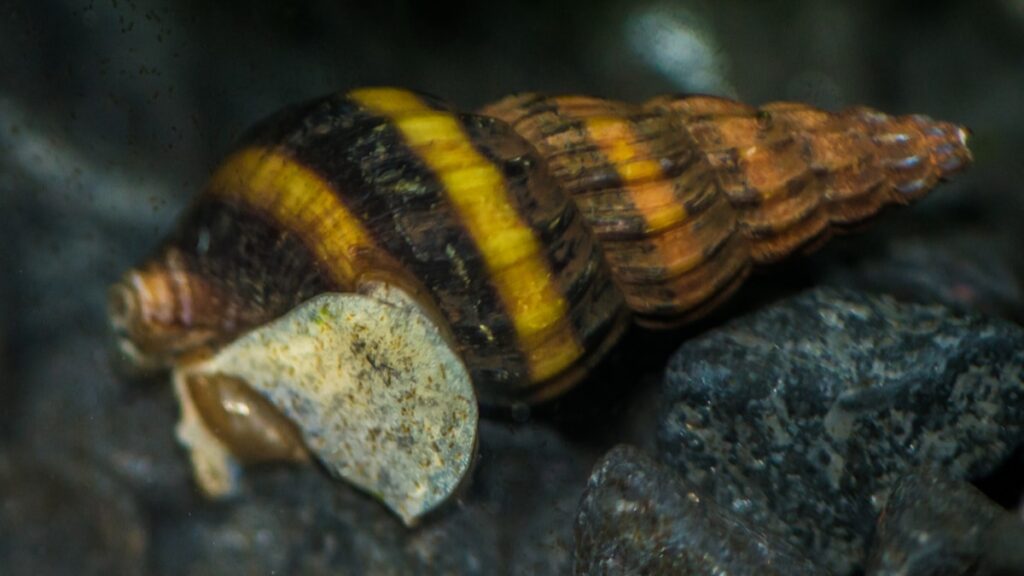
Melanoides tuberculata snails, often called trumpet snails, are prized in many planted tanks for the same reason that earthworms are welcome in gardens: their movement through the substrate is beneficial to the plants. Yet it only takes one tiny, hard-shelled trumpet snail to wreak havoc on the impeller blades of a power filter. Similarly, ramshorn snails (Planorbis spp.) are often put into rearing tanks with free-swimming fry to help take care of uneaten food, which they do enthusiastically. The downside is that if they get plenty of food, they can breed explosively, overwhelming a tank in a surprisingly short time. In short, despite the undeniable benefits of snails, they simply are not welcome in some situations and/or setups, at least not in large numbers. True, if you avoid overfeeding, you can help curb their reproduction and keep their numbers under control. However, this can be an issue in tanks where plenty of snail food needs to be available at all times. I was amazed at the fecundity of ramshorn snails sharing an aquarium with a batch of Ancistrus fry I was growing out. The near-constant presence of soft vegetable matter fueled a population explosion. Once we have decided that our snails are too numerous, what is the best way to remove them? Manual removal and trapping can reduce their numbers. Some fish snack on them, and others are very effective snail hunters, such as most pufferfish and many loaches. As a last resort, there are commercially available chemicals sold for use in aquaria that can kill snails, if used as directed. All of these methods can play a role in snail control, but a few years ago, a new biological weapon appeared in the aquarists’ potential anti-snail arsenal: the assassin snail. The name says it all—this species actually attacks and eats other aquarium snails. Assassin snails (Clea helena) are distinctive in appearance, and thus easy to recognize. They sport an attractive black- and light brown-striped shell, a light-colored body with small, darker flecks, and a very thin, prominent proboscis, something like the proboscis of a trumpet snail but much thinner and lighter in color. A few years ago, I bought five of these snails, and I have been very pleased with the results. This article documents my experience with these shelled assassins.

Green beef tripe is called ‘green’ not because of the color—it’s usually brown—but because it is not processed and still contains contents of the grazing animal’s stomach. Be careful not to buy white beef tripe, which has been bleached, stripping away many valuable nutrients for your pet’s health.,Green Tripe Can Benefit Your Pet’s Health

It’s likely you’ve heard the old adage, “you can’t teach an old dog new tricks,” but is there actually any truth behind the saying? Learn how to train your dog with these expert dog training tips! “It really depends on the dog, what you’re trying to teach them, and how much time and patience the owner has,” says Annie Angell, CPDT-KA and co-owner of My Two Dogs, Inc. “Dogs are a bit like people—if there is motivation to do something, they will do it, as long as there is something in it for them.” If you’ve adopted an older dog and you’re interested in learning how to train your dog—at least for some of the basics—Angell suggests that you start by being reasonable with what you want to teach. “If I thought a trick would be physically uncomfortable for a dog, then I wouldn’t teach it,” she said. “For example, if you want to teach a 12-year-old overweight Lab mix how to jump through a hoop, my advice would be to skip that and teach him instead how to step inside the hoop and sit, if the dog has no problem with his hips.” If you’re reasonable with your dog training expectations, Angell says it’s relatively easy to teach an older dog a new trick like find, give paw, touch and pick it (where your dog picks which hand the treat is in). “Just because they are older doesn’t mean they don’t want to have fun or learn something new; it just may take a little more practice,” Angell said. As with a pooch of any age, picking the right motivation is key in the initial steps of learning how to train your dog. Dog treats like Merrick Power Bites Real Texas Beef Recipe Grain-Free Soft & Chewy Dog Treats and Wellness CORE Tiny Trainers are great options. Other dog training products like Four Paws Cotton Web Training Dog Lead might also help. Once you’ve discovered a treat to help with your dog training, basic commands can all be learned pretty easily, but it’s the behavioral modifications that many find a bit trickier with older dogs—things like bark control, separation anxiety and dealing with other pets in the house. While all three of those behavioral issues would likely require larger help from a trainer—and can get worse over time—Angell does offer some suggestions to get started. For barking: Wait for your dog to bark, and then during a quiet pause between barking, say “quiet,” tell your dog “good boy” and reward the quiet. “I usually tell people to allow the dog about two barks before you say quiet,” Angell added. For separation anxiety: From the moment you bring your new dog home, you should have a plan in place for the dog to be alone. “I always suggest adopting a new dog when you can take some time off from work and start leaving the dog home alone for small amounts of time,” says Angell. For other pets: To start, never leave new pets home alone, cautions Angell. “You need to make sure that everyone is safe, no matter what species,” she said. One thing you can work on is teaching the new dog how to come when called. “This way, when your dog starts showing interest in the other pet, you can call your dog’s name and then reward her for coming to you instead,” said Angell. “You can also teach a ‘leave it’ command.” Dog training at any age doesn’t need to be stressful. Just follow the above dog training tips, stay patient and take your time. Before you know it, your older pet will be behaving just as well as any younger dog.

Persians’ personalities precede themselves. Few owners of these gentle cats report bad behavior, instead citing serene temperaments and dignified demeanors. They grace homes with their calm presence, showing off their unsurpassed beauty at any chance they can get. “They do tend to be — as a whole — a more laid back, gentle breed than others,” Cook Henry says. “I wouldn’t consider Persians to be a feisty breed. But that’s not to say that they don’t have individual or quirky personalities, because they do.” Despite their passive personas, Persians are cats after all, and they can display normal feline behavior gone wrong, such as, jumping on the counter, play fighting and furniture scratching, which can frustrate any pet owner. You can correct these bad habits, however, if you address them when your Persian is a kitten or young cat. You can then be assured of a harmonious life with your little angel.

Because many etiologies can lead to similar signs of disease, it is impossible to decide what is causing the circling you are seeing in your mouse because so many causes look exactly the same. This could be a bacterial infection, a viral infection, a benign tumor, a malignant tumor, a toxin, a genetic disorder or even degenerative disease. And these conditions can be in the middle or inner ear or in the brain. With so many possible causes, a physical examination is needed to best figure out what part of the anatomy is being affected. Why is this important? If this is an infection in the ear, one class of medication may be useful, whereas if this infection is in the brain, a different class of medication will be effective. You bring up a great question about antibiotics, specifically tetracycline, which you can purchase over the counter for any animal, even though it is designed to be used for fish. Due to a loophole in regulations, a few antibiotics are available without a prescription. It is dangerous to use these medications on our small mammals. Tetracyclines can cause gastrointestinal disruptions. And if you use it incorrectly — too much, too little, stop too soon, use it too long — you can contribute to bacteria that become resistant to this and other antibiotics. This is a serious problem in both animal and human medicine. Tetracyclines are a poor choice for most infections in pet mammals, so it is never a good idea to use this medicine, even if you can get it without a prescription.,Q:

Kittens are born with their eyes closed, and the fun increases when their eyes open at 10 to 12 days of age. At that age, vision will be a bit blurred. Cats tend to be farsighted, but are very sensitive to motion. Your cat’s vision will gradually improve over the next few weeks.

It’s common for local animal shelters to offer cat adoption discounts for the furry felines in their care, especially around holidays like Halloween. But are pet promotions always a good idea? Yes, says Becky Robinson, president and CEO of Alley Cat Allies, an animal advocacy group based in Bethesda, Maryland. “Alley Cat Allies advocates for all cats, and for the relentless marketing of cats throughout the year, including seasonal promotions,” Robinson says. The group has participated in and supported a variety of adoption events for cats waiting for a forever home. So with Halloween just around the corner, now could be a great time to welcome a sleek, onyx-colored kitty into your home.
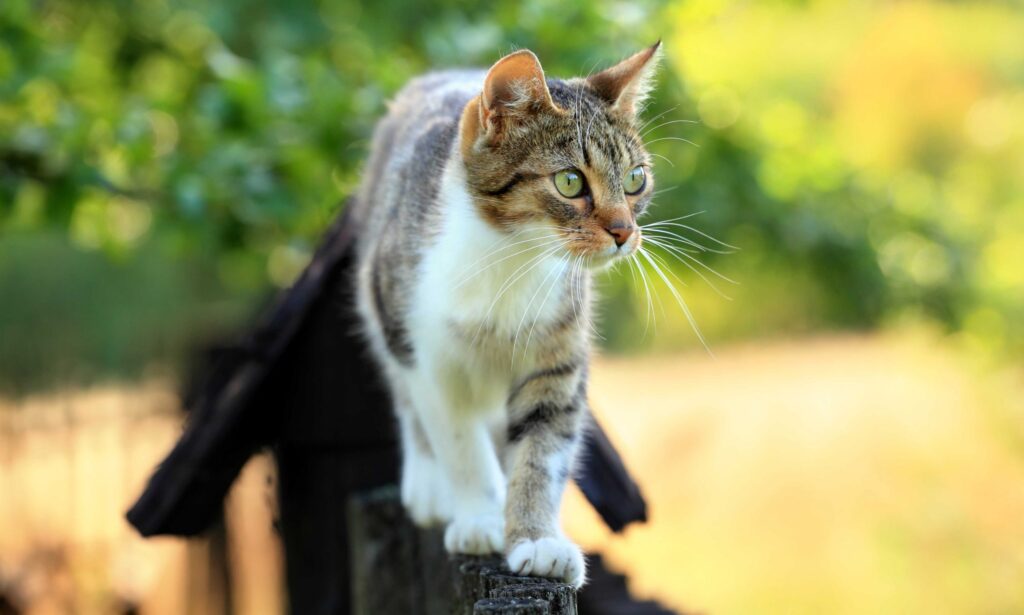
Many people don’t realize that the only difference between feral cats and domestic, house cats is the way they behave and their level of socialization, says Becky Robinson, president and founder of Alley Cat Allies in Bethesda, MD. “Cats have always lived outside,” she explains, “and in our country, cats are in urban settings and wild settings.” But these outdoor cats are still part of the domestic species, she notes. “‘Feral’ is just a behavioral description—they’re just not socialized.” So, how do you tell the difference between a feral cat and a pet that has strayed? It’s pretty easy, according to the ASPCA. Stray cats tend to rely on humans—living close to them, seeking cat food and exhibiting friendly behavior like meowing or rubbing against legs. Feral cats, on the other hand, are more elusive, avoiding human contact and living together in close-knit “colonies.”,It’s a familiar sight in most neighborhoods: the outdoor cat. Perhaps you encounter them skittering across the street, materializing on your deck when you’re grilling or yowling in the night during a heated cat-on-cat brawl. While some of these freewheeling neighborhood felines are simply pets roaming for the day, most fall into one of two categories: stray and feral cats. Stray cats have been lost or abandoned, while feral cats are, to a certain extent, wild. The Humane Society estimates there are 30 to 40 million of these “community” cats living throughout the U.S. And while some neighborhood residents consider feral cats a nuisance, there are plenty of people and groups that implement Trap-Neuter-Return programs (TNR) that manage populations without harming the animals. These cat activists are trying to dispel the myth that feral felines are bad for communities. We’ve compiled a list of common misconceptions about these community cats in an attempt to reverse the negative stereotypes.


What Is a Horse Whisperer? Your Guide to Natural Horsemanship

The 5 Best Winter Dog Sports and Activities to Try With Your Pup