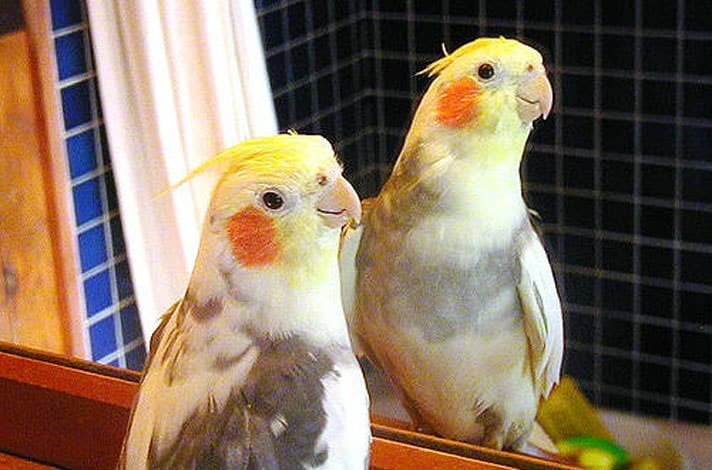
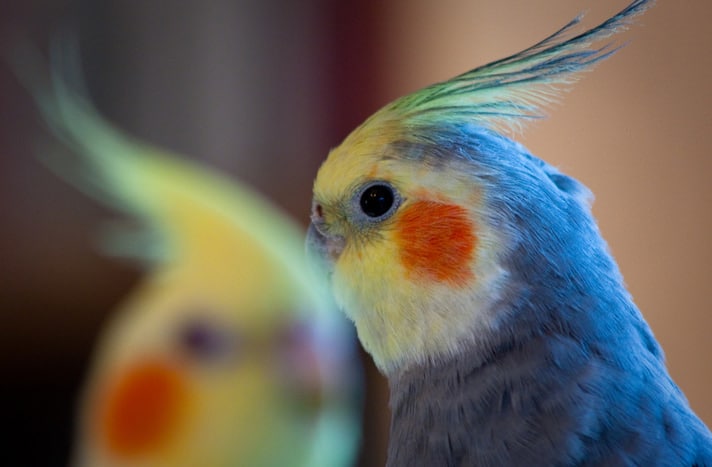
Cockatiels seem to suffer from “night frights” more than any other species of bird. By “night fright,” I mean that they become easily spooked or unnerved in the darkness and quiet of the night. Any sort of disturbance, whether it is a shadow, a noise, a bright light or a sudden waft of cool air, can send a single cockatiel or an entire aviary of cockatiels off into a mad frenzy. This is not only distressing and potentially dangerous for the pet birds, but upsetting for the owner, too. To help understand the psychology of the cockatiel and why it suffers from this heightened unease and trauma, we have to look at the cockatiel in the wild. A wild cockatiel flock spends a good portion of the day on the ground foraging for food. Because of this potentially hazardous practice, nature has had to provide them with the perfect survival technique to enable them to get airborne fast. Cockatiels possess ultra-quick reactions and a super-efficient capability for rapid and powerful vertical flight. This makes cockatiels well equipped to react to and flee the clutches of predators stalking them on the ground. Even in the wild, a certain level of noise is maintained during the night by the other inhabitants of forests, which offers a degree of comfort to a dozing cockatiel flock. The muted lighting provided by the moon and stars adds to this reassurance. On such occasions when a “blanket of silence” descends over the area, it often indicates acute danger. A flock of cockatiels will instantly become fearful and anxious, as their responses become intensely heightened. It is not surprising, therefore, that darkness and silence, followed by a sudden disturbance, can seriously spook a cockatiel, too. This is compounded by the fact that pet cockatiels housed in bird cages might feel especially panicky and tormented, because they cannot “escape” this perceived threatening situation, thus sending them into frenzies. Cockatiels that become spooked are simply responding to their deep-rooted natural instinct to fly upward in an effort to get airborne. But, as a consequence, they often crash into the cage bars at the top, and then flap around wildly, knocking into the perches and sides of the cage in total panic. A cockatiel can see very little in the dark and, while in this state, is likely to do itself much damage. This phenomenon can also cause distress to other birds, such as finches or budgerigars. But, generally they are not affected to the same degree and regularity as cockatiels seem to suffer. If injuries are incurred, they will serve to intensify the cockatiel’s anxiety and sometimes can even prove to be fatal. If other cockatiels are housed nearby, either indoors or outside, they can suffer from the domino affect; all quickly become panic-stricken, thrashing around in their cages or aviaries, not even knowing the source of the scare.