What Is a Cat’s Primordial Pouch?
In This Article What Is a Primordial Pouch? View 3 More +


Cats

In This Article What Is a Primordial Pouch? View 3 More +

Reviewed for accuracy on May 21, 2019, by Dr. Katie Grzyb, DVM When adopting a cat, the first 30 days are very important for setting up your new family member for success. These first weeks should be used to establish a strong bond between you and your cat and create healthy routines. To get your relationship with your new cat started off right, here are some essential cat care tips for transitioning your cat into your home. Let Your Cat Settle In When you adopt a new cat, you can expect that she will need time to adjust and acclimate to her new surroundings. Dr. Megan E. Maxwell, certified applied animal behaviorist (CAAB) and owner of Pet Behavior Change, explains, “Understand that the [new] cat may be timid in his or her new surroundings and may not show all of her normal play behavior or other personality characteristics at first.” Dr. Adam Behrens, VMD, owner of Wandering Vet and member of the American Association of Feline Practitioners, recommends that you allow the cat to approach you on her own terms when you first bring her home. This will help your cat feel a sense of control. Keep Your New Cat Separate From Your Other Cats If you have other cats in the household, you should keep them separate from your new cat until she has settled into her new routine. “Cats are all about routine and territory,” Dr. Behrens continues. “If there are other cats in the house, it is critical that they avoid visual contact until the new cat is comfortable in the new home and has started to adapt to a daily routine.” The general recommendation is to keep cats separated for 2 weeks. This can be considered a quarantine period, so that you can make sure your new kitty doesn’t have an upper respiratory infection or parasites. After the 2 week period, it will be up to your new kitty to set the pace for acclimating to their new home. There’s no magical number of days it will take your cat to settle in. Be patient and give them time, and you’ll set your new relationship up for success. Have Her Space Set up Beforehand To help your new cat settle in, Dr. Maxwell recommends having the cat’s space set up before you bring her home. She explains, “Be sure to have the litter boxes and food and water bowls set up before bringing the cat home, and start with small spaces for the cat at first.” Dr. Behrens says, “It is critical to establish some area of your house that belongs to the cat. And it is important to allow them to widen their territory slowly over the coming days or weeks [after adoption].” For example, a bedroom with separate areas for the cat litter box and food and water bowls is preferable to opening the entire house to the cat in the first week or so. Provide Enrichment for Your Cat In addition to your standard cat supplies, you should also provide your kitty with a variety of enriching cat toys until you learn which they prefer. Dr. Maxwell says, “Investing in a few different styles early on, and encouraging play by sitting with your new cat and playing with the toys yourself will be helpful.” Along with cat toys, you should provide your cat with cat scratcher options. Dr. Maxwell explains, “They should have more than one scratching option—perhaps a post with vertical threading and also a flat scratching board with an alternative material or direction of threading.” Some cats prefer vertical sisal cat scratchers, like the Frisco scratching tower, while others prefer horizontal pad scratchers, like The Original Scratch Lounge. Offering your cat options will give you a better idea what she likes, and it will certainly make for a happier cat. Establish Structure and Routine Providing structure and routine is a great way to help your kitty smoothly transition into her new home. When establishing this new routine, Dr. Behrens recommends regular times for feeding, grooming and play. Perform Regular Cat Grooming and Dental Care Dr. Behrens recommends brushing your cat’s teeth regularly. You will want to wait until your new cat has completely settled in and is comfortable in their new surroundings before incorporating these new activities into your routine. If you’ve never brushed your cats teeth before, Dr. Behrens advises pet parents to start slowly. “Feeding small amounts of toothpaste from the tip of a finger for a month or two may actually lead to being able to eventually brush their teeth, but cat parents should take things slowly and not rush to brush.” Dr. Behrens recommends Virbac C.E.T. Enzymatic dog and cat toothpaste for brushing teeth. Never use human toothpaste to brush your cat’s teeth. Dr. Behrens also recommends that cat parents brush their cat regularly. He suggests the Safari self-cleaning slicker brush for all cats. Whether you are brushing your cat’s teeth or fur, remember to start slow and offer rewards to make the experience a positive one. Cat Training and Play Sessions Start small with training, and use it as a time to bond with your new friend. Dr. Maxwell recommends, “A first training goal can be to teach the cat to look at you in response to his name.” To do this, call her name in a happy voice, and then throw a cat treat or toy across the floor. Repeat this several times a day, always delivering something your cat likes when you call her name. As with all other routines, take training at the pace your cat is comfortable with and encourage the good behaviors through positive reinforcement. Slowly Transition to New Cat Food When you adopt a cat, you will need to properly transition her to the cat food you plan to feed her regularly. When transitioning any pet to a new diet, it’s best to do it slowly—over the course of 5-7 days—to prevent gastrointestinal upset. Cat parents should speak with their veterinarian regarding the best cat food for their individual cat and how best to transition their cat to a new diet. When choosing a new cat food, Dr. Behrens explains, “The focus should be on feeding a high-quality food with meat as the primary ingredient. I recommend a mixture of canned and dry food—with the emphasis on canned and a small amount of dry food to help prevent the buildup of calculus on the teeth over time.” Establish a Relationship With a Veterinarian As with adopting any animal companions, an important step in the process is to establish a relationship with a veterinarian who you trust. Dr. Maxwell says, “Owners should have a relationship with a veterinarian with whom they feel comfortable and who takes the time to answer their questions regarding cat care and health.” She continues, “If they encounter behavior problems with their cat, they should seek out the services of a board-certified animal behaviorist (CAAB) or veterinary behaviorist.” Dr. Maxwell also recommends that cat parents ask their veterinarians about grooming requirements, feeding routines and cat food types, exercise opportunities, and common signs of illness to watch out for. She encourages cat parents to ask their vet about litter box habits (how often the cat should be using the litter box and how often it should be cleaned) and about common household toxins and dangers for cats. By: Carly Sutherland Featured Image: iStock.com/SilviaJansen
In This Article Are All Cats Scared of Fireworks? View 3 More +

In This Article When To Go To the Veterinarian for Cat Diarrhea View 3 More +

By Paula Fitzsimmons Given that obesity in cats and dogs is increasing at epidemic rates, there’s a good chance your furry companion is among those pets who need to shed some weight. While you may view calorie counting as a form of punishment, a better way to think about it is as a labor of love. “While pudgy pets can be cute and the extra weight may seem harmless, we see lots of health problems associated with excess weight that can have a negative impact on quality of life and decrease life expectancy,” says Dr. Wendy Mandese, a clinical assistant professor at the University of Florida College of Veterinary Medicine in Gainesville. “These include Type 2 diabetes (especially in cats), early onset arthritis, high blood pressure, ligament rupture, spinal problems (including paralysis), and heart disease.” It’s not easy to go from eating table food and super-sized portions to a bland diet, however. What animal—or human, for that matter—enjoys reducing their food intake? Luckily, there are some steps you can take to make the transition a bit easier on your companion—and you. Any new diet plan should begin with your veterinarian, who will determine appropriate body weight and calorie consumption for your pet and monitor his progress. Go Slowly Transitioning to a new diet should be done gradually, says Dr. Joe Bartges, professor of medicine and nutrition at the College of Veterinary Medicine at the University of Georgia in Athens. It can take three to four days but sometimes longer. “In some studies with diet change, it can take weeks to months. So don’t give up,” says Bartges, who is board-certified in veterinary nutrition and internal medicine. “Slowly increase the amount of the new food while decreasing the amount of the old food.” Mandese suggests increasing the amount of new food to old food by 25 percent daily. It takes time for a weight loss program to work, adds Dr. Donna Raditic, a board-certified veterinary nutritionist with Nutrition and Integrative Medicine Consultants in Athens, Georgia. “I am thrilled with just small amounts of weight loss in my patients, because I know it is not easy and at least we are moving in the right direction.” Weighing food on a food gram scale can help ease the process. “It allows us to adjust intake by saying OK, let’s decrease intake by 10 or 20 percent fewer grams of food a day,” Raditic says. “It is not only precise but seems less dramatic than going from a half-cup to one-fourth of a cup of dry food, for example.” Animals should lose no more than 1 to 2 percent of their body weight per week, according to Dr. Zenithson Ng, a clinical assistant professor at the University of Tennessee, College of Veterinary Medicine. “Bring them into the vet’s office to be weighed on the same scale on a regular basis (every two to four weeks, initially),” Ng says.

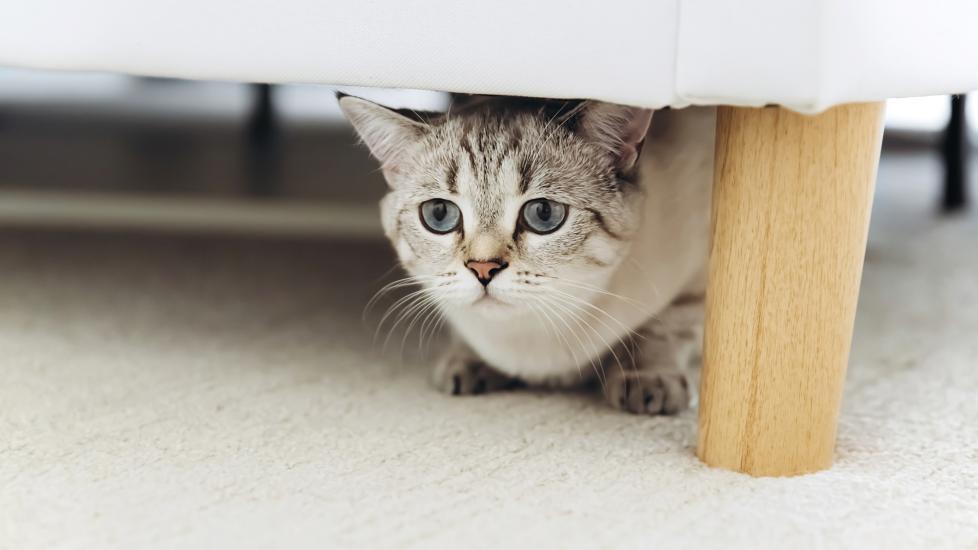
WRITTEN BYWailani Sung, MS, PhD, DVM, DACVB Veterinarian Dr. Wailani Sung has a passion for helping owners prevent or effectively manage behavior problems in companion animals, enabling them to…,A recent study found that about 30% of dogs may exhibit some form of anxiety, and in another survey, two-thirds of cat owners reported their cats had anxiety or fear. Anxiety is the emotional response a person or animal exhibits in anticipation of encountering an unpleasant experience. You may think hosting a social gathering or party is fun, but for your pets, it can be highly stressful and unpleasant. It’s important to be able to recognize the signs of anxiety in your pets so you can decrease that stress. This can improve their quality of life and mental well-being. If you notice that your pet is seriously stressed out when guests come over, you may need to rethink hosting social gatherings. Here’s what to look for and consider: Know the Signs of Anxiety in Pets Signs of anxiety in dogs include: Excessive panting Pacing Excessive salivation Excessive vocalizations Excessive licking of themselves, you, or objects Dilated pupils Ears pulled to the side or all the way back Tail hanging down or tucked under Shaking Feigned sleep Drinking more water Increased frequency of urination or defecation Not eating as much Staying close to their owners Hiding Signs of anxiety in cats include: Excessive vocalizations Hiding Using the litter box less Urinating or defecating outside the litter box Decreased appetite Dilated pupils Ears pulled to the side or flattened Tail tucked under their body Feigned sleep Hiding and not coming out to eat or use their litter box

What does it mean when your cat approaches you and rubs their face from nose to ear on your leg, arm or face? It means they like you and are happy to see you! Cats have scent glands in their faces. When they rub against you, it is an act of greeting and co-mingling scents with you. If you think about it, it is a bit like the European greeting of kissing three times, alternating cheeks each time.,Cats are very unique creatures. Their odd body language and strange habits are part of why we love them so much. But what do those weird cat behaviors actually mean? Since domestication has been a relatively recent development for cats, some things cats once did to survive may have no adaptive value now that they are adored members of the modern-day household. But there is or was a pay-off for them somewhere along the line, or else they wouldn’t bother to do them. The key is to figure out what motivates the traits we find odd in our cats. Here is a list of 15 weird cat behaviors and what they actually mean.
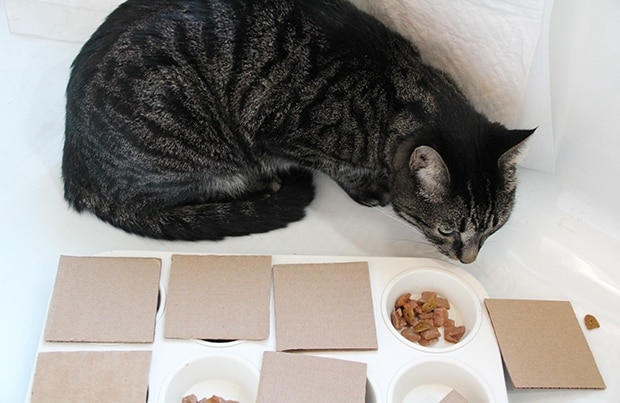
Eating out of the same bowl night after night can get pretty mundane, so why not give your cat a dose of stimulation by occasionally changing up the way that you feed her?

In This Article What Is Suffocation in Cats? View 8 More +

There are several reasons why your cat may vomit. Vomiting means a cat is forcefully removing the contents of his stomach out of his mouth. Cats can also vomit a wide variety of other substances, including yellow liquid, hairballs, blood, or random objects they’ve ingested. Any time a cat vomits may be cause for concern, especially if the vomiting is accompanied by other troublesome symptoms such as reduced appetite or lethargy. Let’s look at the most common reasons why cats throw up yellow liquid, for example, and when you should bring your cat to their veterinarian.


What Is a Horse Whisperer? Your Guide to Natural Horsemanship

The 5 Best Winter Dog Sports and Activities to Try With Your Pup