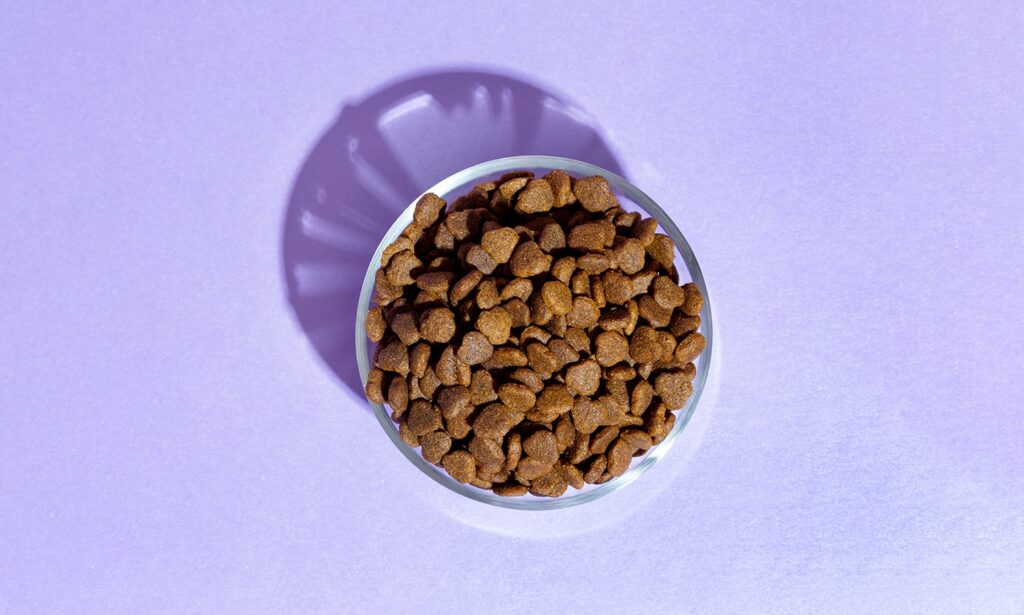
Ash, crude ash, incinerated residue, inorganic matter: These terms all refer to the same thing, and it’s not as concerning as it sounds. In the pet food industry, ash in pet food is very different from the ash at the bottom of your fireplace. “Ash is what is left when a food sample is completely combusted (burned). It represents the mineral content of food,” says Dr. Jennifer Larsen, DVM, PhD, a professor of clinical nutrition in the School of Veterinary Medicine at University of California, Davis. The minerals that remain after combustion originated from sources like bone, cartilage and other tissues, says Dr. Sara Ochoa, DVM, a veterinarian at Animal Hospital of West Monroe in West Monroe, Louisiana, and the co-founder of How To Pets. She adds that these ingredients naturally contain minerals like calcium, phosphorus, magnesium and potassium, among others. In short, pet food manufacturers heat food to extremely high temperatures. The organic matter (bone, cartilage and tissues) burns up and leaves behind inorganic matter (minerals). What remains represents the total mineral content of the food, and this is called ash (or crude ash, inorganic matter, etc.). It’s in dry pet food and in wet pet food, although the percentage is often lower in the latter.,Jump to section What Is Ash in Pet Food? The Importance of Ash in Pet Food How To Find Ash Content in Dog Food and Cat Food FAQs about Ash in Pet Food