Lupoid Onychodystrophy in Dogs
In This Article Summary View 5 More +


Dogs
In This Article Summary View 5 More +
In This Article What Type of Dog Food Is Used for Weight Gain? View 2 More +

Image via iStock.com/SeventyFour By Paula Fitzsimmons Getting your pup off the sofa and moving on a regular basis is essential to her health and well-being. If you need a tool to support this goal, consider using a dog activity tracker—a type of dog tracking collar that not only complements a dog weight loss program, but also provides you with important health data. Activity trackers for dogs vary in functionality, features and price points. Understanding the differences can help you choose a device that will best serve you and your pup’s specific needs. Your veterinarian will be the best person to ask about establishing a dog exercise regimen as well as a source of product recommendations. Dog Tracking Collars 101 The term “dog tracking collar” is a catchall for different categories of trackers. Dog GPS trackers are dog tracking collars that solely work in real time to help you locate your pup. Canine activity trackers—some of which include GPS tracking for dogs—can aid in dog weight loss by providing you with details about your best pal’s health and activity levels. Dog Activity Trackers Most dog activity trackers work like the ones we use for ourselves, although experts say they’re not as sophisticated quite yet. “They provide data on how active dogs are. This includes having a starting point—a baseline—so it’s possible to know where the exercise or activity program starts so progress can be monitored. It is also fun to see improvement and encourages people to increase their activity level right along with their dogs,” says Laura Hills, KA-CTP, CPDT-KSA, CCFT, CTDI, CGC, CLASS, VSPDT, owner of The Dogs’ Spot, a dog training center based in North Kansas, Missouri. Bonus Feature: If you hire a dog walker, you can know for sure if your pup was walked as promised. The FitBark 2 water-resistant dog activity and sleep monitor is an example of a dog activity tracker without GPS technology. Its focus is on providing details on a dog’s health, movement, rest patterns and behavior, which can help with weight loss in dogs. “In addition to providing information specific to my dog, it is providing a daily health index, calories burned, miles traveled and an activity index. I am also receiving information on how my dog, Fiona, compares to other dogs her age and relative activity level,” says Hills. Activity trackers with a GPS for dogs component can do these things as well—to varying degrees, depending on the individual product—plus give you the actual location of your pup. If your dog leaves a designated area, for example, trackers like the Whistle 3 dog and cat GPS tracker and activity monitor and Link AKC GPS and activity monitor smart collar can send you a text alert on your smartphone so you can respond immediately.

Reviewed for accuracy on May 7, 2019, by Dr. Jennifer Coates, DVM If you have a dog, you’ve probably had an emotional connection with them. Most dog owners claim that their pups are incredible at empathizing—picking up on their emotional cues and taking action to make them feel better when they’re sad or distressed. And the evidence isn’t just anecdotal; a 2018 study on dog empathy found that when their owners made distressing sounds—like saying “help” or crying—dogs would try to reach them much faster than if they made neutral sounds. It was also discovered that the higher the dog scored on a “bond test” (which measured the level of attachment a dog felt to their owner), the faster they’d try to reach them when they were in distress. Dogs oftentimes mirror our emotions, says Russell Hartstein, certified dog behaviorist, dog trainer and founder of Fun Paw Care. So clearly, dogs can empathize with humans. But can dogs feel sympathy for other dogs? Can Dogs Read Other Dogs’ Emotions? “I would argue that yes, dogs may have empathy for other [dogs],” says Hartstein. And while there isn’t a large amount of research on dog empathy, there is one promising study that explores how dogs react to other dogs’ emotions. In a 2017 study, researchers from the University of Vienna sought to test how dogs would react to human and dog emotions. The researchers had pet owners bring their dogs into a laboratory that was equipped with speakers at different points in the room. The researchers then played a series of human and dog sounds. For human emotions, they used laughing (positive) or crying (negative). For dog emotions, they used lighthearted and playful barking (positive) and dog whining (negative). They also played neutral sounds, like nature sounds or a person speaking in a neutral voice. The researchers then observed whether the dogs paid greater attention to the positive, negative or neutral audio. They also looked to see whether the dogs showed signs of distress, like paw licking, whining or barking. The researchers tallied the behaviors and assigned a “score” to each auditory cue. The study found that dogs paid more attention to emotional auditory cues than neutral ones. Even more tellingly, they found that dogs scored significantly higher when exposed to negative auditory cues, which implies that dogs can differentiate between positive and negative emotions in both humans and other dogs. They also found that dogs show higher levels of distress when exposed to negative emotions. According to the study, there was no difference in emotional reactions when dogs heard human sounds compared to when they heard dog sounds. While this study isn’t irrefutable proof that dogs experience empathy for other dogs, it certainly makes a strong argument that dogs have the ability to empathize with other canines. But Hartstein cautions, “[A dog’s] ability—or any animal’s ability—to put themselves in another’s shoes to experience what [another dog] is feeling or experiencing is not possible to measure.” Do Dogs Have More Sympathy for Dogs They Know? So, the study shows that dogs have strong reactions to hearing other dogs in distress. But what about their dog friends? If they share a home with another dog, will they have more empathy for them versus a dog they do not know? The same study suggests that dogs do empathize even more with their canine housemates. Researchers from the study explored whether dogs would behave any differently when played emotional auditory cues of unfamiliar dogs versus dogs they shared a home with. They found that the dogs showed much higher levels of stress (and scored higher overall) when played negative auditory cues from their dog friends. How to Encourage Empathy Within Your Dog If you want to encourage your dog to be more empathetic—to you, your family and to your other dogs—it starts with you. “My suggestion for creating more empathy in your pet is working on a respectful, kind relationship. This can mean simply hanging out, spending time together, and enjoying walks and playtime that is nurturing and kind,” says Dr. Jim D Carlson, DVM CVA CVTP, owner of Riverside Animal Clinic McHenry and Grove Animal Hospital & Holistic Center in Chicago. “Truly connecting with the human-animal bond will help you start to spot some humanlike emotions in your pet.” If you want to encourage more empathy between your dogs, foster your relationship with each dog and encourage their relationship and interactions with each other. “Dogs develop their own relationships within their pack. Encouraging positive behavior, comfort and fun will help dogs bond over time,” says Dr. Carlson. And don’t be surprised or discouraged if your dog’s way of showing empathy is different than yours. “Dogs have their own cues for reading emotions in each other. Many of them are physical. But they will also seek each other out during times of stress or emotion.” So, if you notice one dog licking the other’s face after a trip to the vet or rubbing his body against the other during a thunderstorm, recognize it as their way of showing empathy. If you want that empathy to continue, reward the behaviors with plenty of praise. By: Deanna deBara Featured Image: iStock.com/RedThinkHead
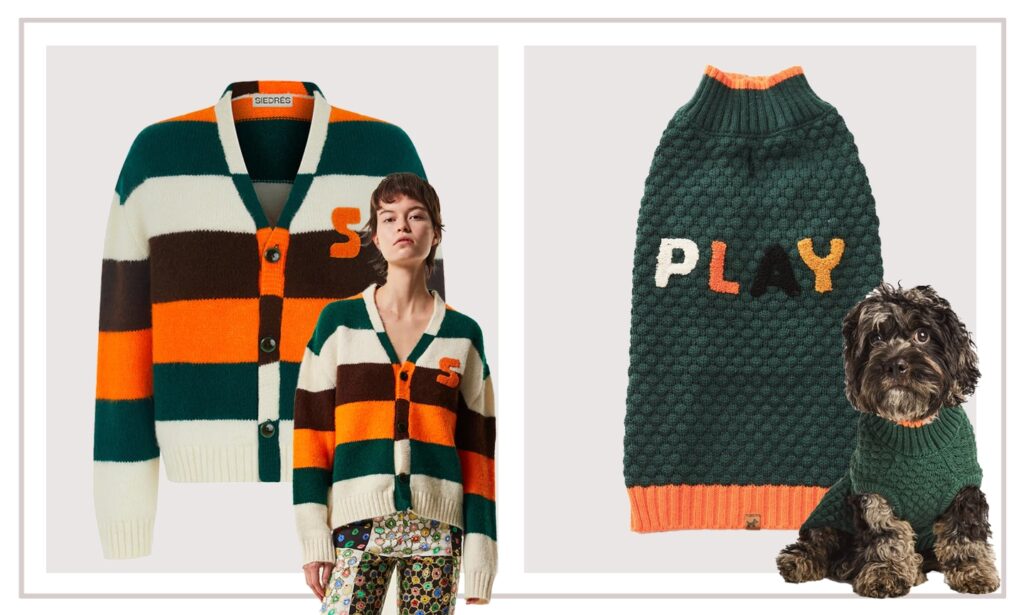
Yes, that is Chanel; and yes, it is, shall we say, aspirational. But, stay with us! We’re putting the spotlight on this amazing cardigan because a heaping helping of yummy chocolate, caramel and latte brown hues is the F/W 2022 reason for the fashion season. Details to Match: Brown in a range of shades with novelty buttons. We chose coordination over a perfect match with this gradient dog sweater that picks up on all the shades of the Chanel.,We’re not ashamed to say that we love twinning with our pets—and nothing is more fun (and more selfie-worthy) than matching sweaters. Lucky for us, our favorite F/W ’22 designer sweaters just so happen to pair perfectly with some of this season’s best dog sweaters. Don’t believe us? Take a look at Siedres’ Amber Striped Cardigan above. Everyone’s fall sweater collection deserves a cool, updated letterman’s sweater, and Siedres’ cardigan totally nails the look. Cocoon your pup in Hotel Doggy’s Play Dog Sweater (which is available in five sizes and under $20) and you have a total touchdown “mommy and me” fashion moment. For more chic and playful matching dog sweater moments, we’ve rounded up our favorite designer sweaters and paired them with the perfect mini-me sweater for your pet. And while you may not select these exact designer sweaters (they’re $$$, we get it), take note of the colors and details. Even if the sweater’s not a perfect match, it’ll still work because dogs in sweaters are always cute. (Oh, and BTW, most of the “dog” sweaters shown here are purrfect for your cat, too.)

Peppermint is known for its cool, refreshing taste and is used in a variety of products, including teas, candies, toothpaste, and essential oils. Its widespread use means a curious pooch could get their paws on it. But can dogs have peppermint? The answer depends on the form of peppermint and the amount consumed. For instance, very small amounts of peppermint leaves are generally safe for dogs to consume, while peppermint candies should be kept off the doggy menu entirely. We spoke with a veterinarian to get the 411 on the safety and risks of giving dogs peppermint.

Many dog owners face housetraining issues, such as soiled indoor rugs or urine stains, but not every canine potty problem involves the indoors. A dog that potties in inappropriate outdoor areas can also cause annoying problems, such as people stepping in a mess they didn’t expect to be there. Leslie Cox of Ashland, Kentucky, faces this situation frequently with her dog, Molly Sue, a 5-year-old Chihuahua-Dachshund mix, and wants to teach her better habits.

Looking for DIY Christmas decoration ideas? Here’s a quick and easy project to recycle your Chewy shipping box to create a unique Christmas tree ornament. We’ve provided a downloadable template of the round ornament you see above to get you started. All you need are some basic craft supplies and you will be on your way to a handmade holiday that also puts those boxes to further good use. Happy holidays!
Jump to section Why Does My Dog Follow Me to the Bathroom? Should I Do Anything About This Behavior? FAQs About Dogs and Bathrooms
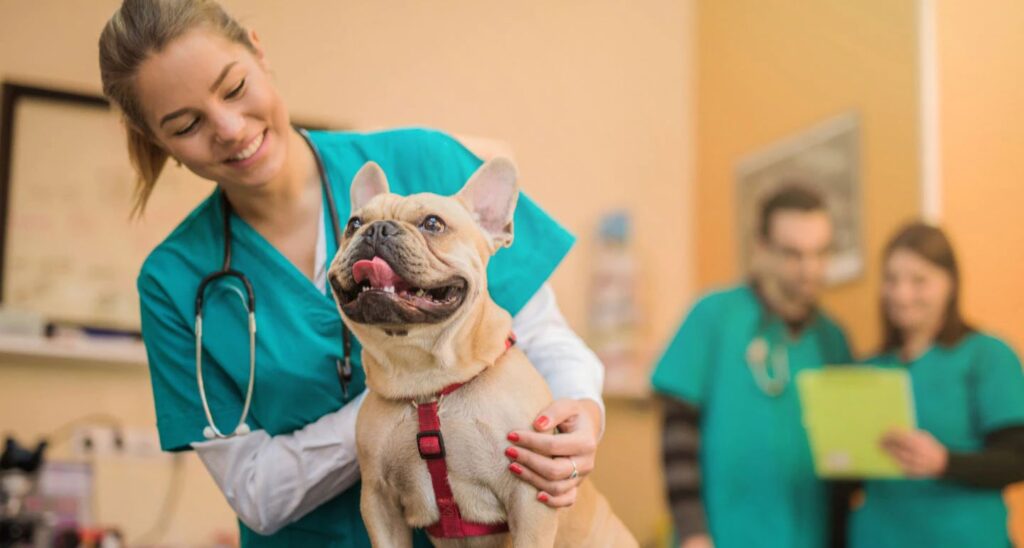
Rabies is a fatal viral disease that can infect all mammals—including dogs, cats, and people—and is certainly not something you want to risk or mess around with. It’s transmitted to other animals via a bite or scratch, and kills tens of thousands of people every year worldwide. While canine rabies has been mostly eradicated in the United States, an infected animal can still infect other dogs, cats, cattle, horses, people, and domestic animals. Making sure you get a rabies vaccine for dogs in your home is the best way to protect everyone—including your furry friends. Doing so also helps prevent the re-emergence of rabies


What Is a Horse Whisperer? Your Guide to Natural Horsemanship

The 5 Best Winter Dog Sports and Activities to Try With Your Pup