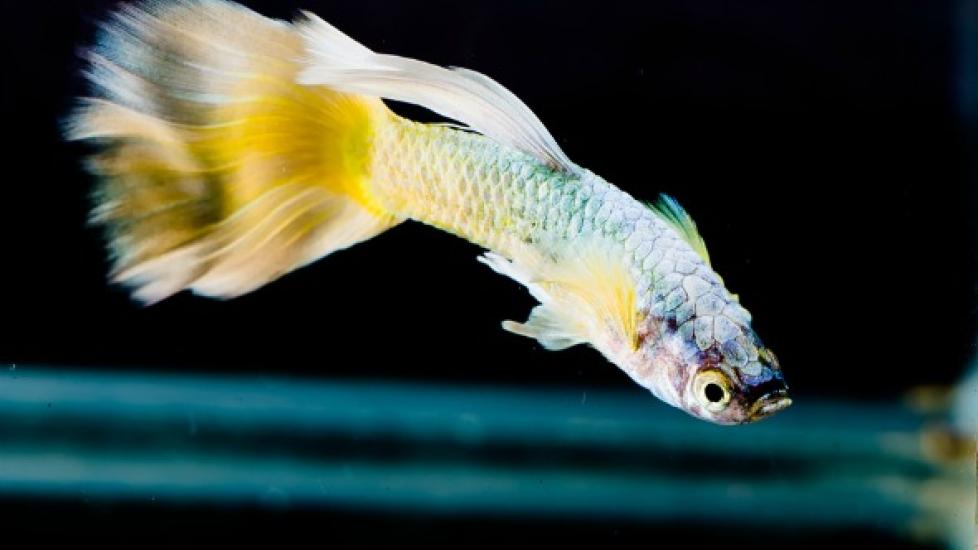
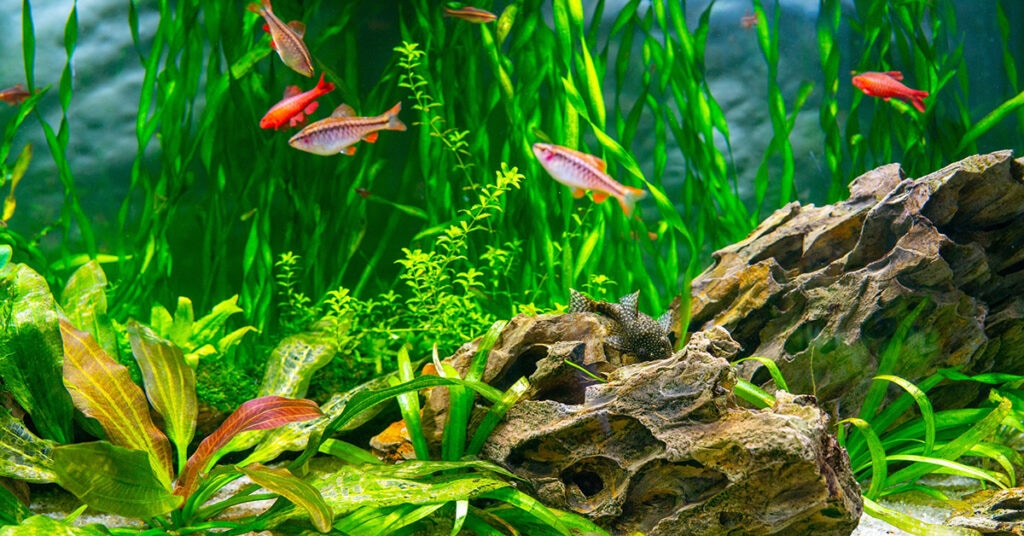
Fact #6: Watch Out! Guppies Eat Their Own Young To stop their habitat from becoming overcrowded, guppies have evolved to eat their young, Williamson said. While some recommend separating parents from offspring, Williamson said that this may not be the best option, as it can be very stressful for the parents. Instead, he recommends filling the tank with plant materials to give the fry (baby) a chance to hide from its parents.,Fact #7: Guppies Have Been Used to Fight Malaria Guppies have been deliberately set free in Asian waters to fight the spread of malaria. In 2014, an anti-malaria “guppy movement” in a city of southern India aimed to control malaria using the fish, who feed on mosquito larvae.,By Vanessa Voltolina Searching for your next finned pet? Guppies are a common and easy-to-care-for option. In fact, guppies make great pets and can be excellent additions to the tanks of both experienced fish owners and aquatic pet newbies, said Sam Williamson, former marine biologist and fish expert of more than 20 years. However, many fish owners and prospective buyers may not know much about guppies and can benefit from learning about this type of fish. “Guppies are an extremely misunderstood breed of fish,” Williamson said. “With so many different fish to choose from, it’s easy to dismiss them as boring and too commonplace.” Here, discover a handful of our favorite — and fun! — facts about guppies: Fact #1: Guppies are a Namesake The guppy is named after Robert John Lechmere Guppy, a researcher and geologist with, interestingly, no formal scientific training. Guppy was credited with discovering the fish in Trinidad in 1866, according to the National Institute of Higher Education, Research, Science and Technology. Prior to Guppy, W.C.H. Peters originally discovered the fish in Berlin, where it was overlooked.