30-Day Guide to Help Your New Pet Fish Thrive
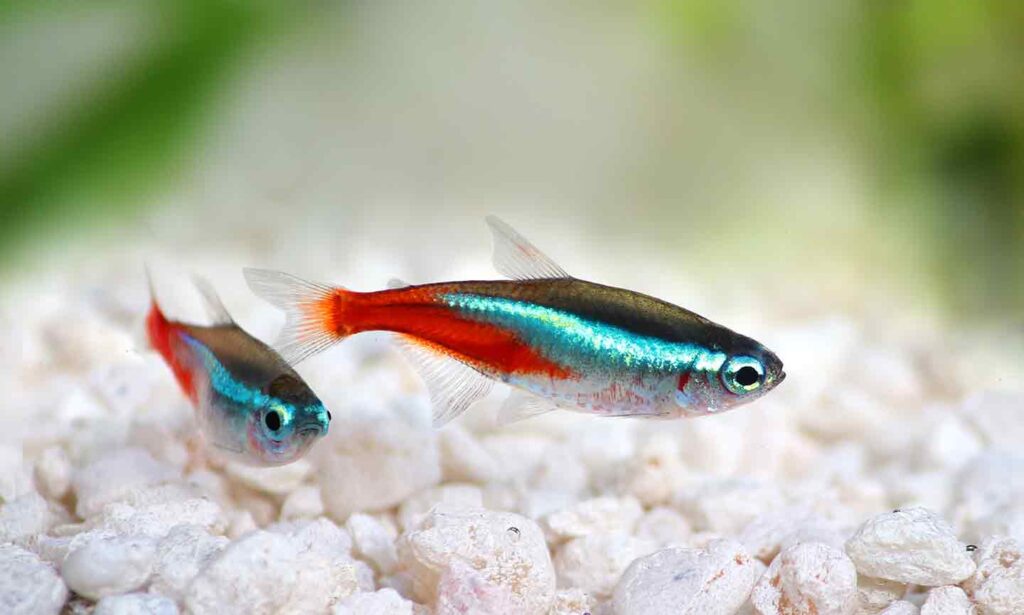
Week 3: Continue to Monitor Your Aquarium’s Water Quality During week three, you may see an increase in nitrites, which can be toxic to freshwater fish. You might have to make your aquarium’s first significant water change. Young recommends changing 15 percent to 25 percent of the fish tank’s water at this time. ,Week 4: Set Your Pet Fish Up for Continued Success By now, you’re likely in the safe zone, says Dr. Young. The bacteria levels have had time to regulate themselves, and the fish are likely adjusted to their new environment. “You’re probably doing pretty well if you haven’t had any issues at that point,” he says. Now’s the time to start your regular maintenance program. McClave recommends a 20 percent to 25 percent water change at a minimum of once every three weeks. The ideal way to perform a water change is to vacuum the substrate. This way, you are clearing the tank of the dirtiest water while also removing fish waste. You can use a fish tank vacuum to vacuum the substrate, says McClave. Finally, you want to continue to check your tank’s water two or three times per week. McClave says this is the best way to help your fish have a long and happy life. “The thing I always try to impress on people is water quality, water quality, water quality,” she says. ,Image via Brian Kinney/Shutterstock By Helen Anne Travis The first month is the most critical time for new pet fish. The adjustment to a new fish aquarium and tank can be stressful for pet fish, but with the proper fish tank setup, your new fish can thrive. This fish guide will help you figure out which aquarium supplies you need to set your new pet fish up for a long and happy life. It all starts with a little research. Determine Tank Size and Fish Type Before you go out and get new pet fish, you need to decide which type of tank you want to keep: freshwater, saltwater or brackish water. Catherine McClave, a marine biologist and owner of the Fish Doctor, Inc., in Manasquan, New Jersey, recommends a freshwater tank for beginners because it’s the easiest to maintain. McClave recommends looking for a fish tank that can hold about 30 gallons of water. “The more water you have, the easier it is for you to stay out of trouble,” she explains. “If you have a small column of water, it’s easier for things to go south quick.” Smaller tanks are more prone to such things as temperature fluctuations and overcrowding. Once you’ve picked out your tank, it’s time for the fun part: deciding which type of fish to keep in your aquarium. You can choose longer, horizontal tanks or taller, vertical tanks—it depends on the fish you choose. Some fish, like angelfish, thrive better in a taller tank while others, such as zebra danios, fare better in a longer tank. Mollies, platies and tetras are all good choices for beginners, says McClave. These pet fish have relatively easy environmental and nutritional requirements. They can also live together peacefully in the same fish aquarium.