Rain Rot in Horses
In This Article Summary View 6 More +


Horse

In This Article Summary View 6 More +

In This Article Overview View 6 More +

In This Article Overview View 8 More +

In This Article Horse Lifespan: Factors and Stages View 3 More +

In This Article Summary View 6 More +
In This Article Summary View 6 More +

In This Article Tips for How To Calm a Horse for the Vet or Farrier View 1 More +
In This Article Summary View 6 More +

In This Article Summary View 5 More +
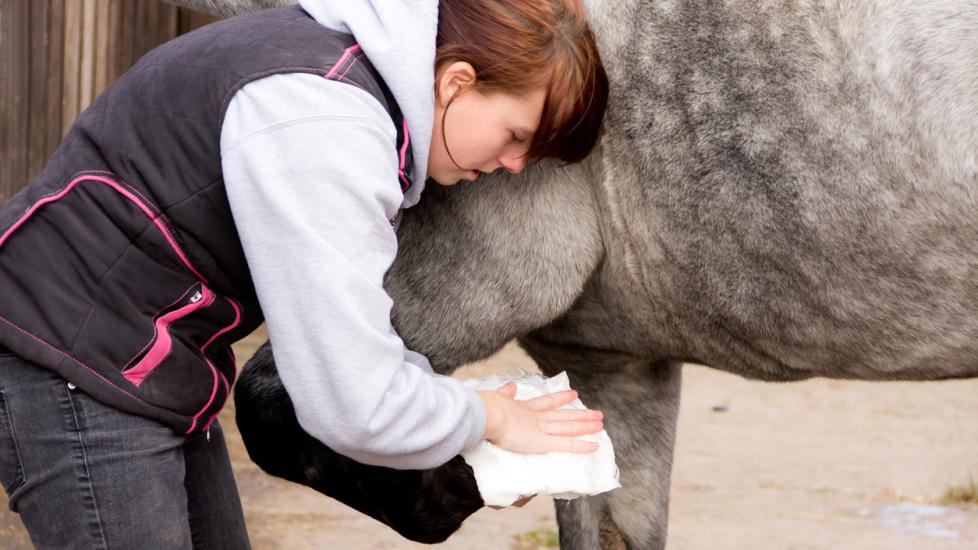
Horses are incredible athletes. Just like human athletes, they can get strains, sprains, and sore muscles. Poultices are a very common part of a horse owner’s bag of tricks to help with these mild exercise-related injuries. The legs and hooves are the most common places to use poultices on horses. What Is a Poultice? Poultices are thick, spreadable substances that are applied to the body and then covered with a bandage to keep them in place. The main purpose of a poultice is to act as a drawing agent. It can help to draw out heat, inflammation, and swelling, which are the three main consequences of exercise. By relieving these symptoms, poultices can help to start the healing process and prevent further injury. Clay-based products and Epsom salt-based products are very common for poulticing the lower part of the limb. They help make the leg cool and tight after workouts and decrease the chances of sore muscles and swelling. Other additives such as witch hazel, arnica, and comfrey are commonly found in homemade and commercial poultices. Hoof poultices often contain Epsom salts, ichthammol, or a mixture of sugar and betadine (sugardine). These poultices are typically used when a hoof abscess or bruise is suspected. They help to draw out bruising and infection.


What Is a Horse Whisperer? Your Guide to Natural Horsemanship

The 5 Best Winter Dog Sports and Activities to Try With Your Pup