Buttress Foot in Horses
In This Article Summary View 5 More +


Horse
In This Article Summary View 5 More +

In This Article Why You Should Know How To Give a Horse a Shot View 3 More +
Jump to section Traditional Horse Mane Braids Fun Horse Mane Braids Tools for Horse Mane Braiding
In This Article Overview View 8 More +
In This Article Summary View 6 More +
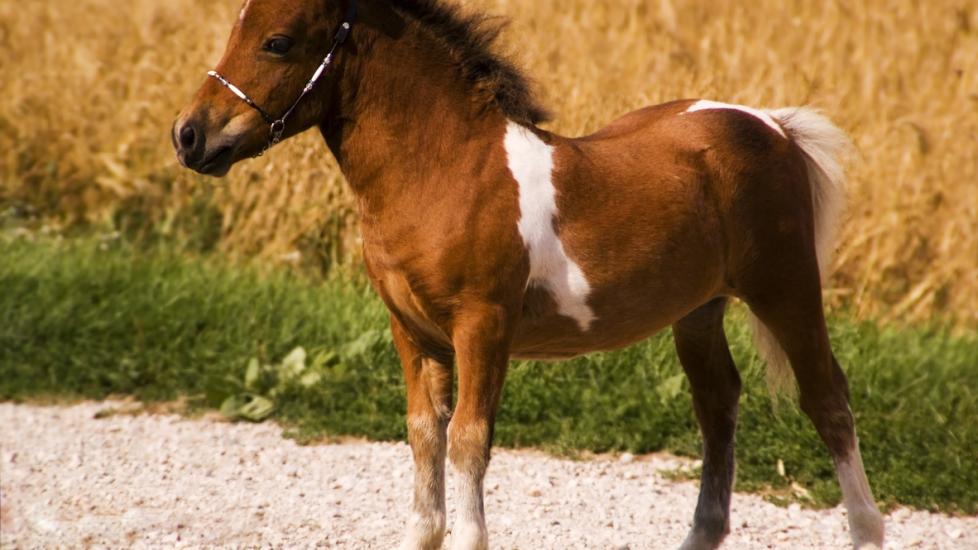
Reviewed for accuracy December 8, 2022. The American Miniature is a unique yet common horse breed in the United States. Although its proportions conform to current standards, it is distinctively small. Nevertheless, it is still used for several disciplines including jumping, driving, and halter. Physical Characteristics At most, an American Miniature horse can measure 8.5 hands (34 inches, 86.4 centimeters) high at the withers. One centimeter more and it cannot qualify for the American Miniature classification.Essentially a full-size horse that has been miniaturized, the American Miniature has lengthy and angled shoulders; a long and flexible neck; well-formed forearms; wide-set and large eyes; flaring nostrils; and medium-sized, pointed ears that seem to be perpetually standing at attention. Though muscular, the American Miniature moves smoothly and gracefully, which may be due to its short back, straight legs, and long, sloping pasterns. Its head is not overly large or small but rather proportional to the rest of its body, while its neck is long and flexible. The American Miniature comes in various coat and eye colors.
In This Article Summary View 6 More +
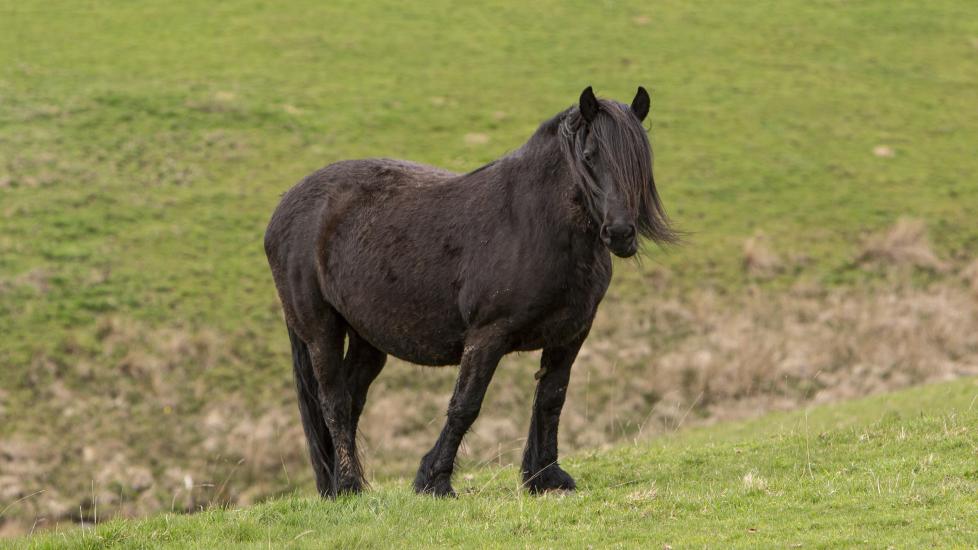
An ancient breed, the Highland pony is thought to have inhabited Scotland before the Ice Age, or been brought over by prehistoric nomads. Though small, the pony is used for pack duty and draft work, as well as for riding and jumping. Physical Characteristics Highland ponies are unique in their own right. With a well-balanced facial profile, stunning eyes, and proportionately set muzzle, the Highland pony is considered an attractive horse by most. Their winter coat is quite thick, but it slicks off well in the spring. Colors include shades of dun, grey, black, bay, and liver chestnut; some Highland horses even have tiger stripes on their limbs and dorsal stripes along the back. They have strong and nimble feet, which makes them ideal for packing through rough or steep terrain. The Highland measures between 12.1 to 14.2 hands high (48-57 inches, 122-144 centimeters). Although short, they are typically hefty and can weigh up to 1300 pounds. Surprisingly, though, the Highland pony is capable of carrying heavy loads due to their sturdy build.
The symptoms of arthritis might not be obvious at first, but they will become apparent as the condition worsens. Equine arthritis symptoms include: Lameness, limping, abnormal gait Painful joints Pain, stiffness in the back/spine Swollen joints Heat surrounding the joints Stiffness, especially before warming up for activity Cracking or popping sounds with movement Reluctance or inability to move, get up, exercise, or work Impaired range of motion Bumps on the joints ,Arthritis, also known as osteoarthritis or degenerative joint disease, causes inflammation and deterioration of joints and cartilage, resulting in pain and lameness. It’s common in horses, especially as they get older, but can occur at any age. Unfortunately, it is chronic and progressive, so you can’t reverse it, but it can be treated and managed. Osteoarthritis is actually one of several types of arthritis in horses, which also include: Traumatic arthritis, caused by an injury Septic arthritis, caused by a bacterial infection Osteochondrosis, which causes the cartilage to develop abnormally Subchondral cysts, which form under cartilage and cause lameness. We consulted three equine veterinarians to learn about the symptoms, diagnostic methods, and treatments available to help horses with osteoarthritis.

In This Article Mane Pulling Supplies View 5 More +

What Is a Horse Whisperer? Your Guide to Natural Horsemanship

The 5 Best Winter Dog Sports and Activities to Try With Your Pup