How To Transition Horses Off Pasture Safely
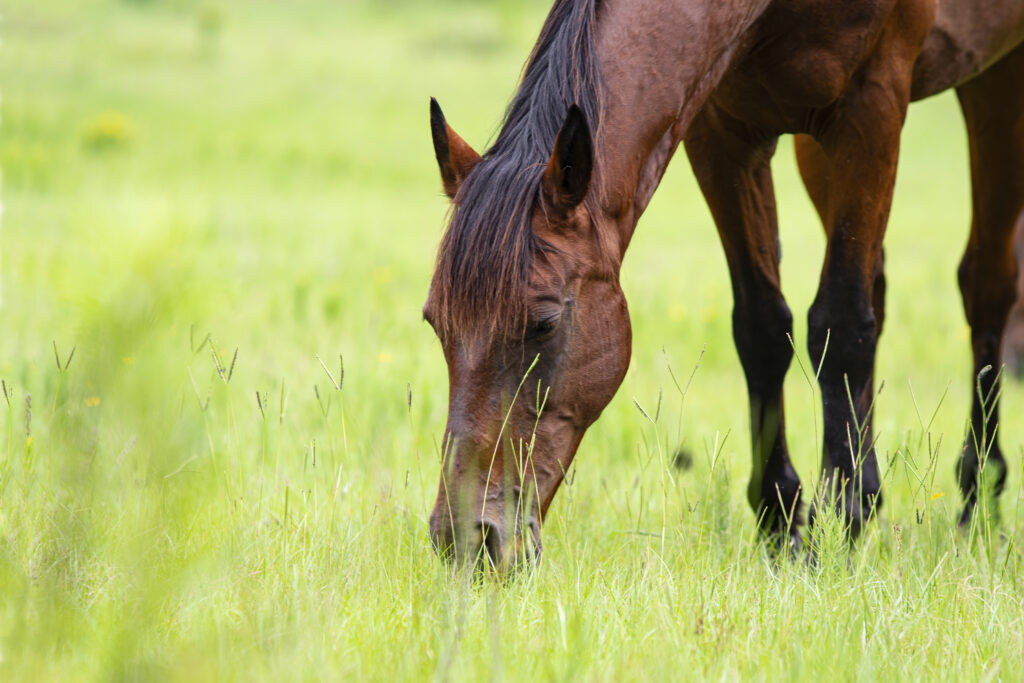
Pasture grass quality shifts with the seasons and maturity of grass. According to Devan Catalano, PhD, equine extension specialist at Colorado State University, fresh pasture is the “gold standard” for horse diets: It’s economical and natural. But in winter, pasture grass goes dormant and stops growing, making it an unreliable food source. Catalano notes the two main reasons to transition horses back to hay during this time: Not enough forage: Without intensive management, winter pasture likely won’t provide enough forage. Low nutrient levels: Dormant grass contains less crude protein, sugar, and NSCs (nonstructural carbohydrates) compared to actively growing green grass. Fiber content appears to increase, but only because everything else goes down, says Catalano. Digestible energy drops as well. Mineral content remains fairly stable, but vitamin content also decreases in dormant grass. When temperatures hit 28 F (also called a “killing frost”) for more than a couple of hours, plants go fully dormant. During the fall, after a killing frost but before the grass is totally dormant, experts recommend waiting seven days to have your horse graze again. Nutrients, particularly carbohydrates, can get trapped in the leaves during this time and can cause elevated sugar levels immediately after a frost. Once fully dormant, grass offers little nutrition. During this period, most horses will need supplemental roughage, such as hay, hay cubes, or beet pulp—especially horses with dental issues who struggle with long-stem hay.,Grazing fresh pasture is ideal for many horses’ digestive health—and your wallet. But as the seasons change, so does the quality and quantity of grass. Winter pastures often go dormant, offering less nutrition and limited forage. To keep your horse healthy through the colder months, it’s important to gradually shift from a pasture-only diet to one that includes hay, concentrates, and essential nutrients. Here’s how to make that transition safely.