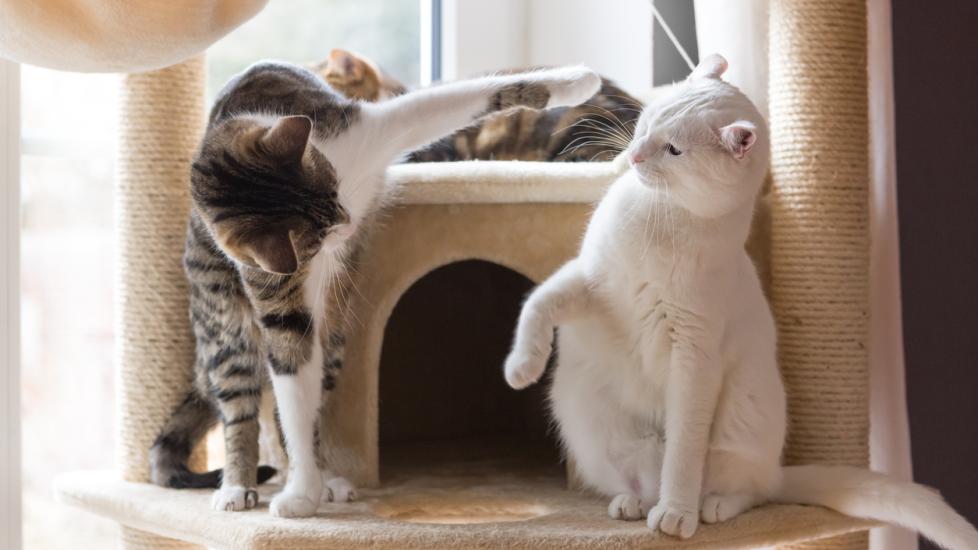
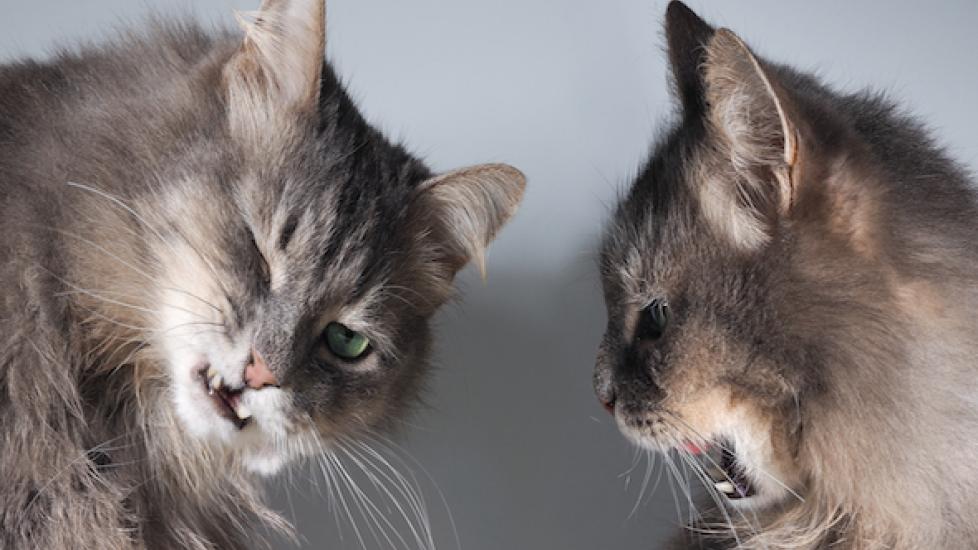
Aggression between Cats Bringing a new cat into a home where there is already a cat, or cats, can cause some problems — both passive and active aggression. Females will usually live peaceably with each other. However, if aggression and conflict rear their ugly heads in a household of formerly nonviolent female cats, it’s probably because one has reached the status of social maturity, which occurs at around four years of age. In addition, non-neutered males will aggressively compete for mates. When the cat is introduced to your other pets, the most typical behavior is active aggression — the resident cat goes after the intruder, biting, hissing, and scratching. Some cats are very confident and will not back down, regardless of the size of the other cat. Also, very confident cats will often use passive aggression. In this case, a stare and a lowering of the head are all that are required to bring the other cat into submission. Symptoms and Types Overt Aggression Overt aggression is any hostile behavior that is obvious. The most clear sign of aggression is attacking and fighting, but before that there are other signs that can be observed; clear indications that there is going to be trouble. If you become aware of this behavior, you can be sure that without intervention, there is going to be a fight. Behavior typical of the aggressor includes staring the other cat down, hissing and swiping at the other cat, raising its back and hackles (the erectile hairs on the back are raised), and thrashing its tail back and forth. Involuntary physical reactions to aggression will also show. The ears will be flattened back against the head, and the eyes will be dilated. The aggressor will mark areas of the home to establish its dominance, either by using the scent glands under its chin, or by urinating. Covert Aggression Covert aggression is less apparent. The aggressor will use different methods to keep its rival away from resources like food and water, the litter box, and sleeping areas. Human attention will also be an opportunity for the aggressor cat to show its dominance, as it will block the other cat from receiving attention or even getting near to people. Favored areas of the victim cat may be marked by the aggressor, causing the victim to avoid those areas. The victim will urinate and defecate in other places in the house if it is kept away from the litter box.