How to Find the Best Dog Wellness Plan
In This Article What Are Wellness Plans for Dogs? View 4 More +



In This Article What Are Wellness Plans for Dogs? View 4 More +

Have you ever noticed that when you are feeling fearful, your dog becomes more attentive and clingy? Have you also noticed that your dog may behave differently around people who like dogs versus people who are afraid of dogs? Dogs have an incredible sense of smell, but can they smell fear? And if so, how? Is It True That Dogs Can Smell Fear? The science is in, and the answer is a resounding YES—dogs can smell fear. Dogs have olfactory superpowers that can detect a human’s emotional state by the scent that a human emits. That’s right—you can’t hide fear from dogs. They’ve got your number! Until recently, the idea that dogs can smell fear was only a theory, but a study called “Interspecies transmission of emotional information via chemosignals: from humans to dogs” actually proves that dogs (or at least Golden Retrievers and Labrador Retrievers) can smell human emotions and respond accordingly. When a person gets scared, their sweat glands will start secreting moisture, especially in the armpits. This sweat contains chemical signals that dogs can pick up on. Can Dogs Smell the Difference Between Fear and Happiness? Researchers correctly postulated that dogs would respond differently to human odors that were emitted under different emotional states—namely, fear and happiness. In the study, dogs were exposed to three stimuli—their owner, a stranger (the control) and an odor dispenser. Dogs were assigned to different odor conditions randomly. They collected odors from humans in three different emotional states: fearful, happy and neutral (no sweat). The odors were collected from the armpits of random male donors who were not otherwise involved in the experiment procedures. The dogs were then observed for responses, including behaviors directed at the three targets, stress behaviors and heart rate. Researchers found that when the dogs were exposed to “happy odors,” they interacted more with the stranger and had lower heart rates. In contrast, when the dogs were exposed to the “fear odor,” they displayed more stress behaviors and had higher heart rates associated with the fight, flight or freeze response—a bodily response of the autonomic nervous system that is essential for adaptation and survival. The dogs also sought more reassurance from their owners and interacted with the stranger less than the dogs that were exposed to the “happy odor.” Researchers concluded that chemosignals—odors that we emit in response to our emotional state—communicate across species to dogs. So, if we are scared, they can smell it and get scared, too. What Your Dog’s Senses Can Tell You About Your Own Emotions Dogs can help us recognize our own emotional states. Many people who have chronic anxiety may not even be aware that they are walking around in fight, flight or freeze mode. A dog that’s in tune with how you exhibit stress or fear can help signal the onset of these emotions and help you better work through feelings of anxiety. It’s also important to acknowledge that dogs can feed off of your energy. So, try to temper your mindset throughout tense situations—say, like at your next vet visit—to help keep your pet more at ease. Your mental health and that of your pet are both important. If you take note of how your dog is behaving, you might learn more about your own mood and mental state than expected. By: Dr. Sarah Wooten Featured Image: iStock.com/Marsco Roasario Venturini Autieri

A rise in temperature can cause a host of issues in your fish pond, including:,When the weather heats up, so does your backyard pond—and your fish feel it. Hot days can lower the oxygen levels in the water, cause algae blooms, and make it harder for your fish to stay healthy. But with a few steps and good planning, you can keep your pond cooler, even in the summer heat.

In This Article Summary View 6 More +
In This Article Summary View 6 More +

Congratulations on your new girl dog! It’s time for your first pet parenting task: choosing the perfect name. Browse our A-Z list of 500 female dog names that are ideal for puppies and grown lady dogs alike. For inspiration, we provided a brief character description of each name to help you decide what to call your new furry friend. Looking for boy dog names? We’ve got 500 ideas for your male dog, too.

Dog howling is a form of communication. Reasons why dogs may howl include: Expressing emotion—good or bad Seeking attention As a response to certain noises (such as a siren) Separation anxiety Mimicking (for example: someone is singing, or another dog is howling) Underlying health issues “Each dog will have its own reason for howling—and, yes, they can be happy or sad when they howl,” says Sandra Mitchell, DVM, DABVP. “They may also be worried, nervous, excited, or just looking for attention!”,My dog howls and makes loud, high-pitched noises whenever they hear a siren or another dog howling. It’s almost like they’re trying to mimic the sound. Is this normal? What should I do about it?

Whether it’s a high-pitched whimper or a prolonged vocalization, dog whining is a form of communication that can leave pet parents concerned, perplexed, and frustrated. Adult dogs whine for many reasons, from wanting your attention to being in pain, to urging you to pause your rewatch of “Succession” and get their ball from underneath the couch. The solution to whining depends on the reason behind it. We spoke with a dog training expert to understand the many possible reasons behind dog whining and how to best support your four-legged companion in such instances.

In This Article What Is Horse Teeth Floating? View 5 More +
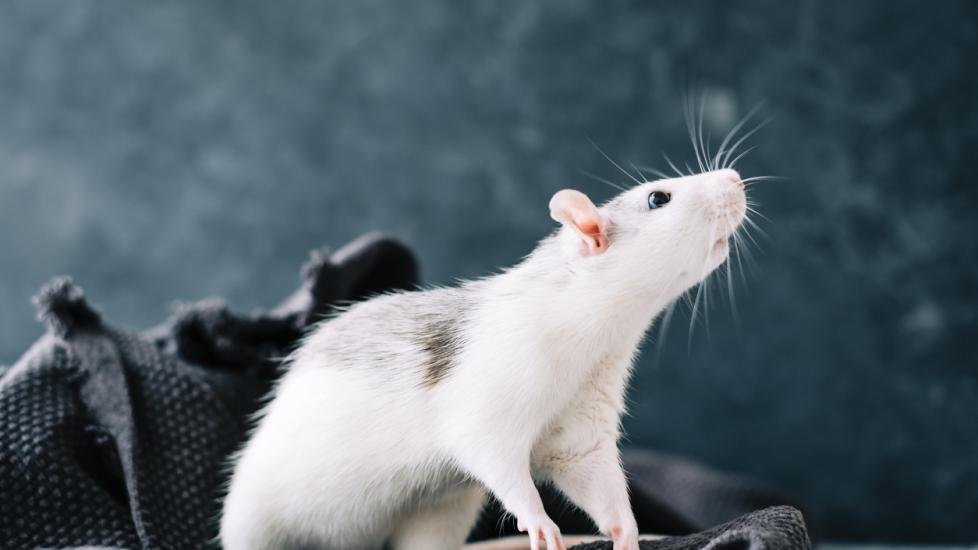
Ringworm Infections in Rats Despite its name, ringworm is actually not a worm, but a fungal organism that infects the skin, feeding off of keratin, the material that makes up the skin, nails and hair of the body. The set of fungi that cause ringworm in rats are from a class of fungi called deuteromycetes, with Tricopyton mentragrophytes being the primary fungus that is responsible for cases of ringworm infection in rats, though they can be infected by other fungal species as well. Ringworm is a zoonotic infection, meaning that the infected rat is contagious to other animals and to people. Unless care is taken in handling an infected rat, the ringworm infection can easily spread to humans and other household animals. Symptoms and Types Usually rats that are infected by the ringworm fungus never show symptoms apart from the skin lesions, which will vary from mild spots of hair loss to marked hair loss with thick scaly skin. Other symptoms may include: Reddened skin Irritated skin Flaky skin Itching Causes Ringworm infection often spreads through direct contact with infected animals or humans, but it may also be spreadh via contaminated bedding, litter, and cage supplies. Diagnosis Your veterinarian will perform a thorough physical exam on your rat, taking into account the background history of symptoms and possible incidents that might have led to this condition, such as contact with other animals, or even with other people. A microscopic examination of skin scrapings taken from the infected area may also be done to confirm the visual diagnosis. Treatment Although it is possible for the infection to clear up on its own, oral or general treatment of ringworm infection is very important for the prevention of a recurrence at a later time. Ringworm infection can be treated both with locally applied and oral fungicidal and antibiotic medications, both of which have the ability to kill fungi. You will also be advised to use topical lotions and medicated shampoos for completely healing your rat. Living and Management Infected rats should be isolated from other rats in the group to prevent the spread of ringworm infection to healthy rats. You will also need to follow a regimen of hygiene and cleansing as per the advice of your veterinarian. Prevention You can help to prevent spreading ringworm infection by maintaining good hygiene of your rat’s cage and surrounding environment. If your pet rat has been infected with ringworm you will need to carefully disinfect the cage using a weak solution of bleach. Rather than rinsing the cage thoroughly, air it well afterwards and completely change the flooring and bedding of the cage. Because this infection is spread by direct contact with the fungal organism that causes ringworm, it is important to be mindful of hygiene when you have had contact with other rats. This is one among many diseases that can be spread to rats by way of human contact, so it is essential that you always wash your hands and clothing thoroughly after handling other rats, before handling your own again.


What Is a Horse Whisperer? Your Guide to Natural Horsemanship

The 5 Best Winter Dog Sports and Activities to Try With Your Pup