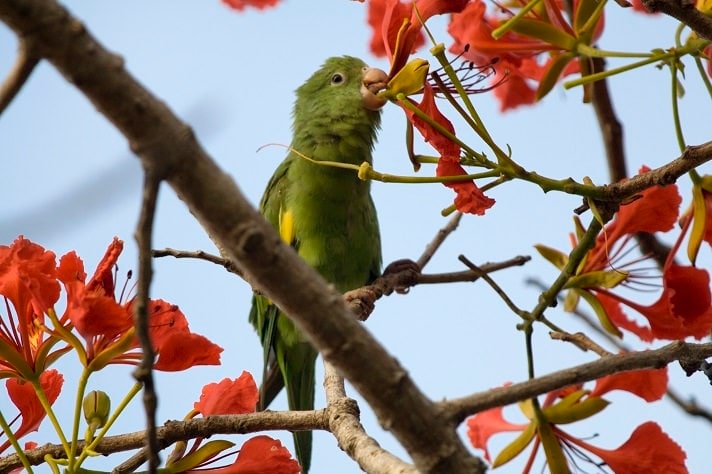
Canary-winged parakeets (Brotogeris versicoluris), members of the genus Brotogeris, are small, South American parakeets. Their engaging personalities and gentle temperament made them much sought-after pets during the 1970s and ’80s, when they were imported by the tens of thousands. No longer imported due to the 1992 Wild Bird Conservation Act, canary-winged parakeets are now domestically raised. Hand-raised babies are truly a joy to own. Their owners often describe them as affectionate, intelligent, playful and bold little parakeets. Active, inquisitive and outgoing, canary-winged parakeets seem to enjoy spending time with their owners and can be affectionate with all members of the family. “I have two canary wing girls that have been with me for five years now,” said David from New York. “They are wonderful companion birds. They will give you as much affection and attention as you give them, so if you’re looking for a bird to do everything with you, you’ve found the one.” They can learn a variety of tricks, and some even learn to imitate human speech. Canary-winged parakeets can be social with other Brotogeris species as long as patience and care is used when introducing the birds. They do not lose their bonding with their human owners if they receive daily one-on-one attention. Canary-winged parakeets, like other Brotogeris, produce a loud, shrill call. Single pet canary wings make less noise than several birds. With lots of appropriate attention from their owners and large, roomy bird cages, interesting bird toys and a healthy, nutritious diet, canary wings don’t engage as much in constant, loud calls.