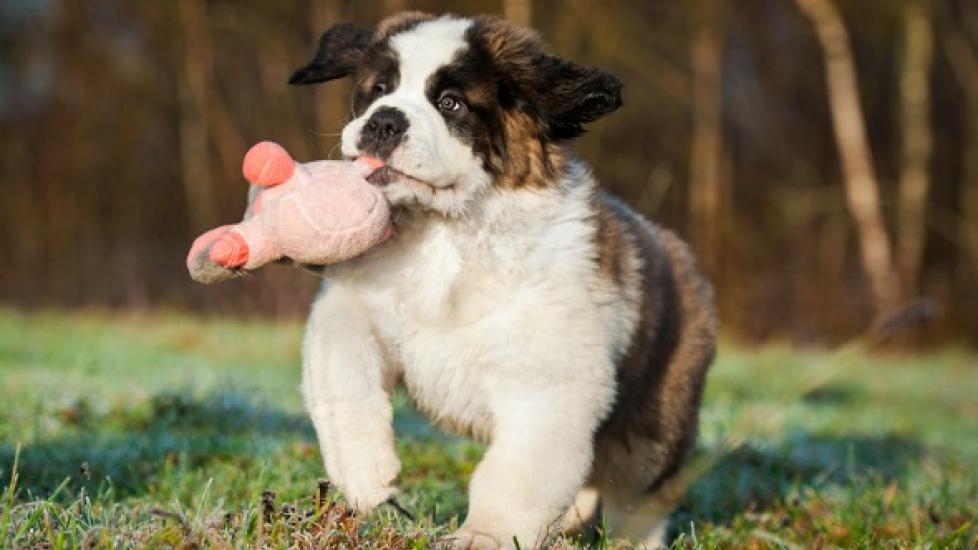
By Carol McCarthy If a young dog has joined your pack recently, you likely have questions about what the first year or so in her life will look like from a developmental perspective. When will she stop growing? What do those big paws really mean? Dr. Susan O’Bell, a primary care doctor at Angell Animal Medical Center in Boston, and Dr. Matthew Rooney, owner of Aspen Meadow Veterinary Specialists in Longmont, Colo. and a board-certified specialist in surgery, have the answers. When Do Dogs Stop Growing and How Big Will My Puppy Get? Most dogs’ growth plates close at around 9 to 11 months of age, the doctors say. By that point you should have a good sense of your dog’s ultimate height and length, with giant breeds growing until they are a little over a year old, O’Bell says. Smaller dogs reach full growth a bit sooner, between six and eight months, Rooney says. “Many medium and large breed dogs retain a ‘juvenile’ appearance for their first one to two years of life, but technically they aren’t still growing,” O’Bell says. So, although your dog’s demeanor and behavior can still appear juvenile, and sometimes their features retain that “puppy” look (with a coat of soft hair, rounded facial features and ears and a narrower chest), your dog should no longer be growing after it turns two. If you know the breed of your dog or, better yet, the parents of your pup, you can estimate how large your dog will be from that, Rooney says. Otherwise, it can be tough. One of the best predictors of ultimate stature are your dog’s siblings, O’Bell says. If you can check out a previous litter of the same sire and dam, you will get a glimpse of your dog’s future size. “For purebreds, there are some general ranges available, so your dog’s ultimate size shouldn’t be a huge surprise,” she adds. Unfortunately, while pet parents are quick to comment on the size of a puppy’s paws and ears, they don’t tell us much about how big a dog will be. “We often comment about how big a puppy’s paws or ears are, but these are not reliable indicators,” O’Bell says. Rooney agrees that, while a puppy can have ears or paws that seem too large or small for their frame at the time, they don’t indicate how big that puppy will become.