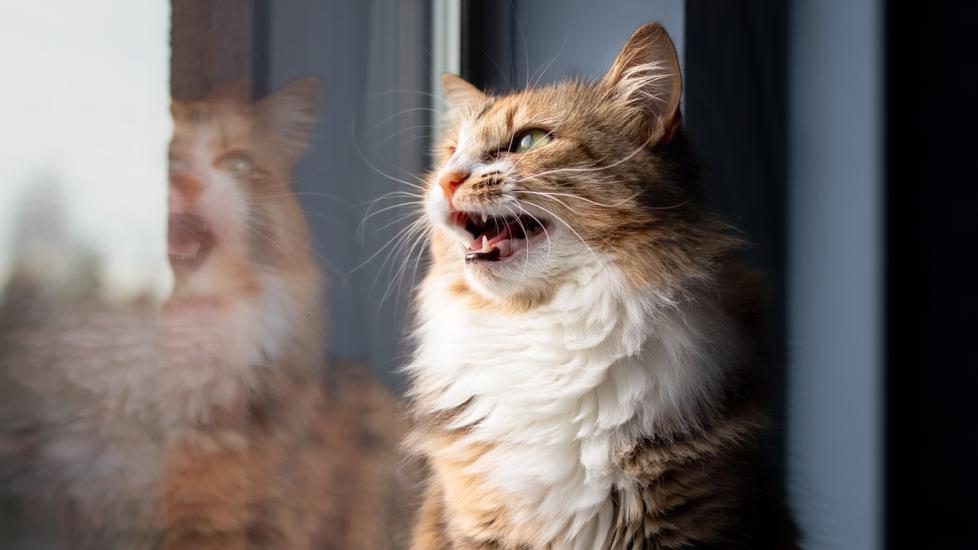
6. Growling and Hissing A growl is a low, rumbling sound used to warn or scare off a threat. It can be directed toward humans or other cats or animals. Growling is an indication that a cat feels threatened, frightened, or is about to become aggressive. This sound often increases as the cat’s fear grows. A hiss is a low, drawn-out sound produced by rapid exhalation of air from the mouth. A hissing cat will have their mouth open and teeth exposed. It’s often an involuntary reaction that occurs when a cat is surprised by a perceived threat or enemy. Like growling, hissing is used as a warning. Both are often accompanied by fear-related body language, including an arched back, flattened ears, twitching tail, and puffed-up hair—the classic Halloween cat posture. When a cat growls or hisses, they are saying they do not give consent to whatever action is happening, like if a person is trying to pet them. They’re essentially telling you, “hey, back off. I don’t like this.” If a cat growls or hisses at you, move away from them. If you see your cat hiss at something else, like another animal or an object, then remove the perceived threat. Family members should not attempt to pet or pick up a growling or hissing cat, as the kitty can become so scared that they may resort to aggression.,7. Spitting A spit is a sudden, short, explosive burst of noise, often accompanied by a quick, lashing-out movement. The spit is basically a more intense variation of a hiss and, like hissing, it’s an involuntary reaction in response to a perceived threat or enemy.,Like humans, cats have a vast vocabulary. Up to 21 different feline vocalizations have been described in scientific research, but their vocal repertoire probably contains even more. Cats can use these vocalizations to create complex phrases—sort of like sentences created by people—and there are many reasons for why they speak up. And while not all cat breeds are chatty (Maine Coons tend to be much quieter than talkative Siamese cats), knowing about cat sounds (along with reading a cat’s body language) allows pet parents to better understand their kitty’s needs, moods, and intentions. Here are some common cat noises and what they mean. 1. Meowing Meowing is synonymous with cats and is a distinctive and common high-pitched call. Kittens meow to attract their mothers, but in adult cats, the meow is almost exclusively used to communicate with humans. So what do cat meows mean? Felines make this sound for many reasons, including when: Greeting someone Soliciting play Expressing excitement or frustration Asking for something, such as attention, food, or access to a particular space (such as to come inside or to be let into a room) But sometimes a cat meow can indicate anxiety, boredom, frustration, or even illness, particularly if it’s lower-pitched and more drawn out compared to the short, high-pitched meow that often signifies a greeting or a want. If your cat is meowing more than usual or if their meows start to sound different, call your veterinarian.