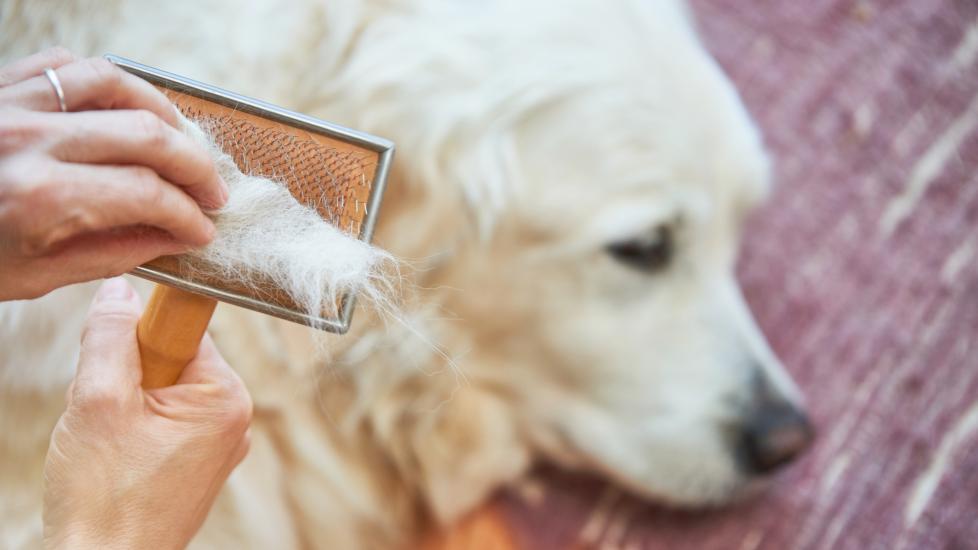
Reviewed and updated on May 8, 2020, by Katie Grzyb, DVM Try as you may to keep up with your pet’s grooming needs, chances are you may face a hairy situation from time to time: matted fur. Figuring out how to deal with matted fur can be stressful, especially for pet parents with long-haired animals. Here are some tips for safe ways to remove and prevent matted fur—and when to seek professional help. Why Pets Get Matted Hair Here’s a breakdown of the most common reasons why pets get matted hair. Lack of Proper Grooming While unsightly and frustrating to deal with, in most cases, matted fur is the result of one common reason—the absence of grooming. Individual hairs rub together every time your pet moves, says Brooke Strong, a groomer with Reserved Barking in Alexandria, Virginia, and unless the coat is short or brushed regularly, mats are bound to form. “The frequency of brushing needed depends on the length of the coat, the coat type (curly vs. straight, soft vs. wiry, etc.), and the activity level of the pet,” says Strong. “Pets get matted fur either from having long fur that is not combed out frequently, or in cats, it’s more common when they stop grooming themselves due to discomfort or illness,” says Dr. Stephanie Liff, DVM, medical director of Pure Paws Vet Care in Manhattan and Brooklyn, New York. Dr. Liff often finds that in cats, arthritis and general systemic illness will lead to decreased self-grooming and, therefore, matting. Cats with diabetes, cancer, and/or kidney disease are known to have unkempt fur that is more prone to matting. “In dogs, it’s more often related to lack of appropriate grooming from the owner, though,” she says, as dogs with long or thick coats “rarely self-groom effectively.” Also keep in mind that non-shedding, long-haired pets, like Poodles or Doodle breeds, or those with a thick undercoat are more prone to matting, and therefore will likely have extensive grooming needs. Consult your veterinarian for advice on how to best handle your pet’s grooming based on his or her breed. Other Causes of Matted Fur Besides a lack of grooming, a few other factors may cause your pet’s mats to form more easily or to get worse, says Strong. Matted fur is frequently seen in obese pets. If a cat, in particular, is too obese to properly groom herself, she will end up with mats in hard-to-reach areas like across the lower back. Strong says that these environmental factors can also lead to an increase in matting: Static electricity Dry climates Winter season