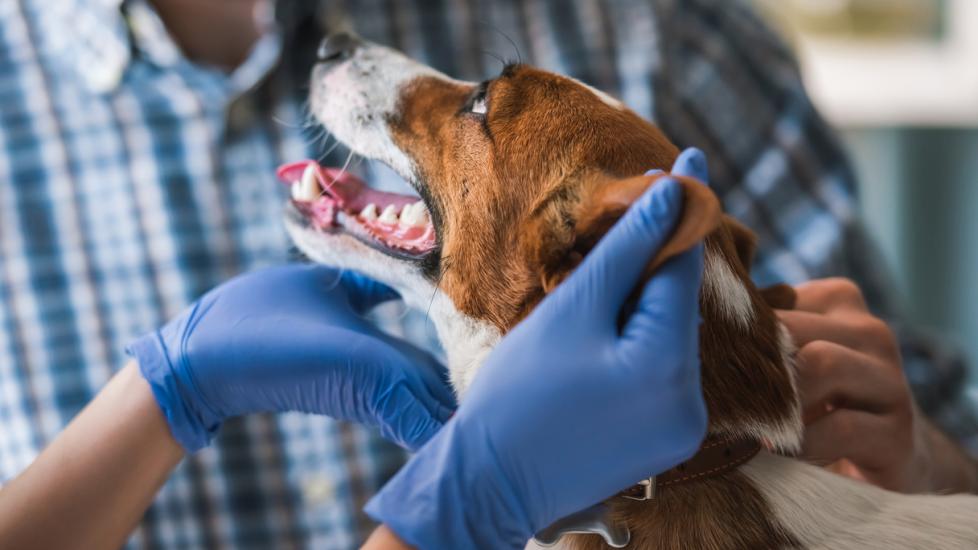
According to Dr. Margaret Gruen, clinical assistant professor at NC State Veterinary Medicine School, the majority of a dog’s adult teeth will be in place by about six months of age. This is a good time for pet owners to start thinking about dental care. “Brushing dogs’ teeth is a great idea, and starting when their adult teeth have come in can help them to be comfortable with the procedure,” she says. Gruen suggests starting small, with short and positive sessions to get the dog used to the process. “Finger brushes can be used for young dogs, and aim to brush the outside surface of the teeth at least three times per week,” she says. The Nylabone Advanced Oral Care dog finger brush is a great dog grooming tool for introducing your pup to dental care. You may also introduce dog dental treats, like Dr. Lyon’s grain-free small dental dog treats, as a part of your dog’s dental routine. With their new adult teeth, adolescent puppies will be able to handle slightly firmer dog toys, although Gruen recommends not giving anything too hard, as it can initiate dental wear.,We’d all like to believe that our puppies will never grow up, but puppies can’t stay puppies forever and it’s our job to properly care for them as the become adult dogs. But how do you tell when a young dog is approaching adulthood? And what changes do you need to make once a pup starts to grow up? Here are nine signs that your puppy may no longer be a puppy, as well as tips on how to handle the transition.