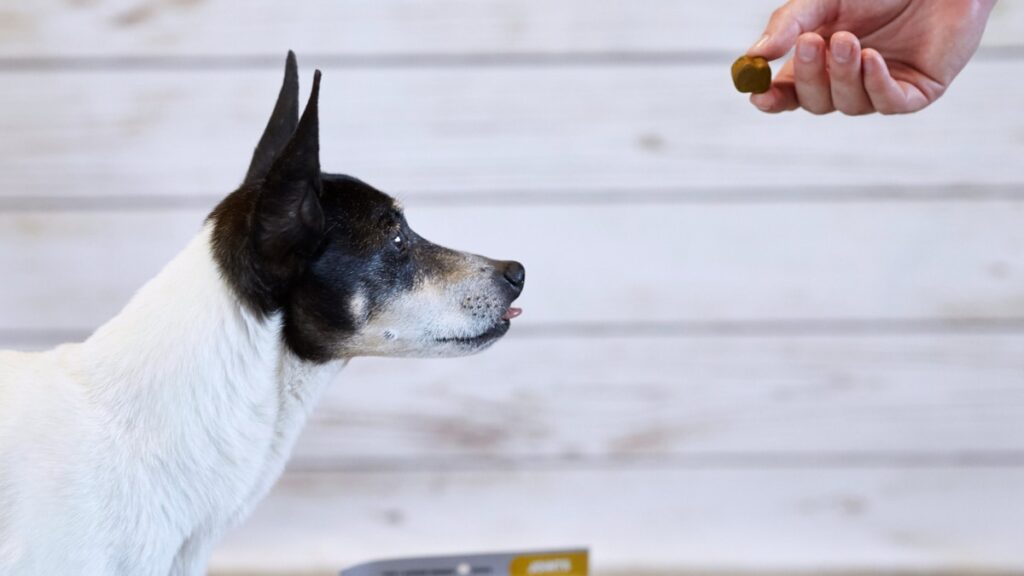
How To Prevent Fear Aggression in Dogs To prevent fearful and/or aggressive behavior from forming in the first place, pet parents should: Socialize your puppy by taking him to socialization classes when he’s eight to 16 weeks old. Closely supervise your dog’s interactions with people, children, and other dogs and animals, ensuring your pet doesn’t appear fearful or overwhelmed. Carry high-value treats to help your dog form positive associations with stimuli he initially appears uncomfortable with. Never use punitive techniques and avoid teasing or threatening behaviors that trigger an aggressive reaction (like pulling on a dog’s tail). Be gentle, kind, patient, and consistent with your dog and reinforce the appropriate behaviors you want to see your pup exhibit by offering verbal praise and rewards.,References Herron, Meghan E., Frances S. Shofer, and Ilana R. Reisner. Applied Animal Behaviour Science. “Survey of the Use and Outcome of Confrontational and Non-Confrontational Training Methods in Client-Owned Dogs Showing Undesired Behaviors.” Todd, Zazie. Journal of Veterinary Behavior. “Barriers to the Adoption of Humane Dog Training Methods.” Featured Image: iStock/DemureDragonfly,When a dog is labeled as “aggressive,” people typically think this means the dog is a bad animal. But that’s far from the case. He’s not a bad dog—he’s a dog that has not been heard, a dog that needs space, or a dog that experienced some trauma that’s changed how he responds to real or perceived threats. There are many underlying reasons why a dog can escalate to aggressive behavior such as growling, barking, lunging, baring teeth, snapping, or biting—one of which is fear. Fear is a negative emotional response to a trigger. A trigger can be a person, another dog, an object, or a situation that ignites an emotional response, and it can be either a true or perceived threat.